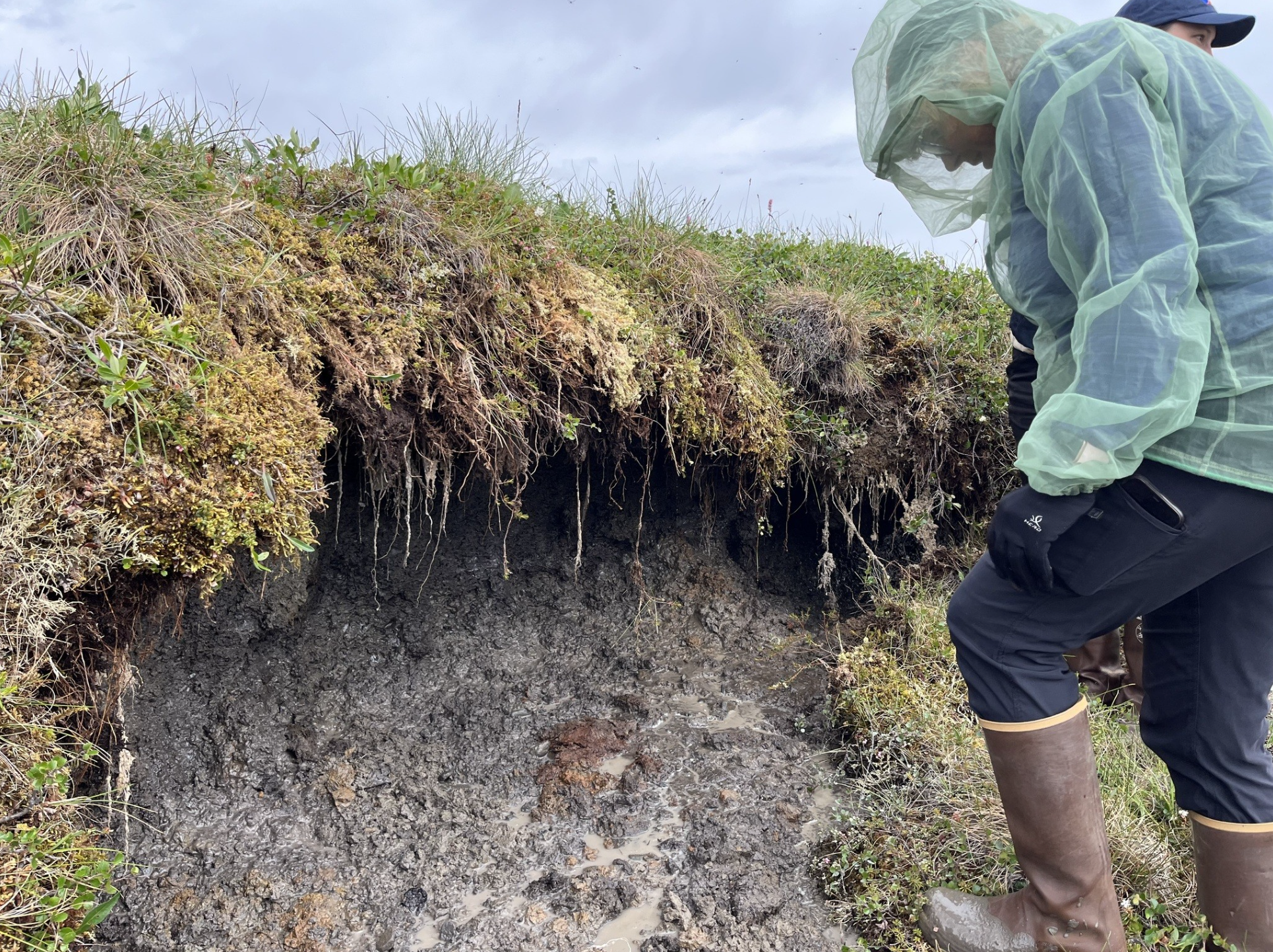
photo by Jenny Watts


The Arctic is warming nearly four times faster than the global average, threatening long-frozen permafrost. As it thaws, the ground can sink, collapse, and erode, transforming landscapes and threatening communities. Thawing permafrost also leads to the release of carbon dioxide and methane, adding to global warming.
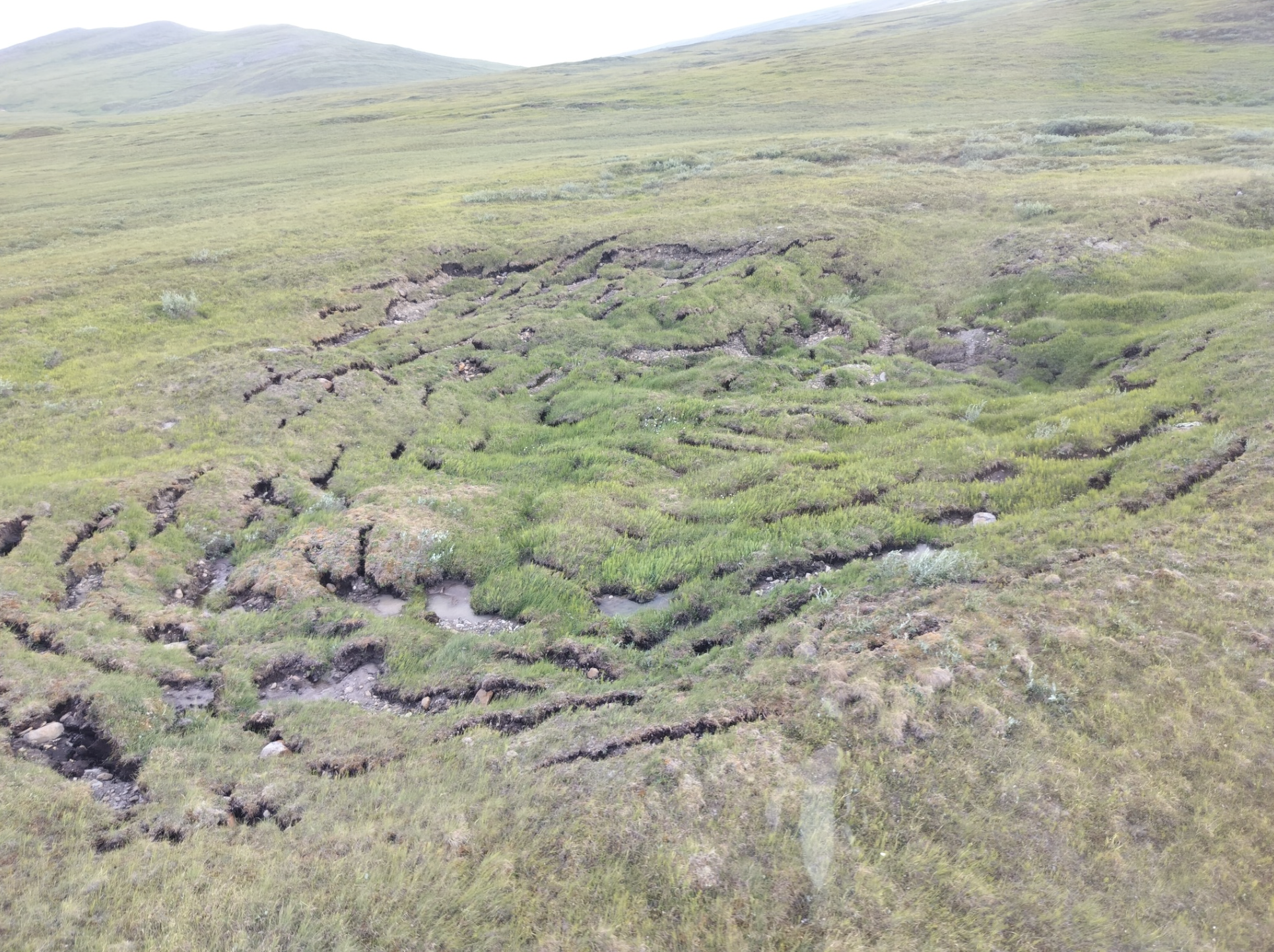
photo by Kaj Lynöe
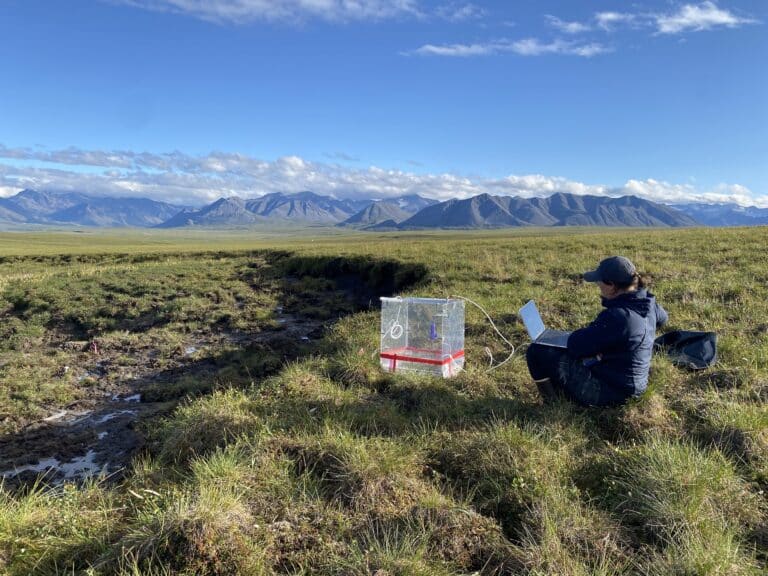
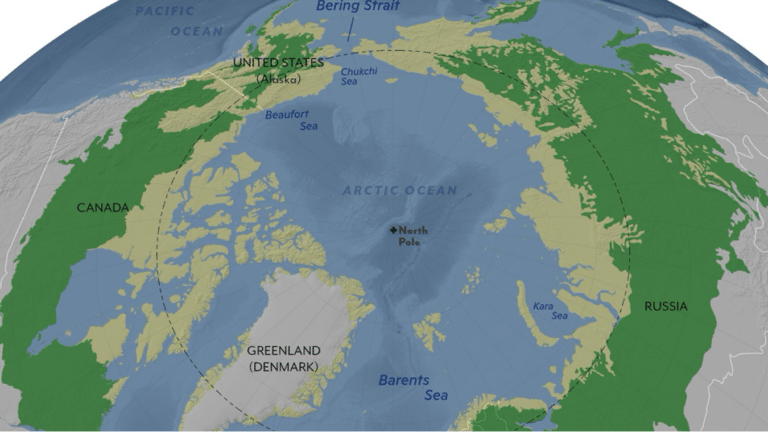
Permafrost is ground that remains frozen for at least two consecutive years. Found across Arctic, sub-Arctic, and high mountain regions, it influences water movement, vegetation, and the stability of the land. Soils in these regions hold vast amounts of carbon in organic matter accumulated over thousands of years. As this material thaws and decomposes, it releases carbon dioxide and methane, adding to global warming and driving further permafrost thaw in a self-reinforcing feedback loop.
photo by Jenny Watts
As ice-rich permafrost thaws, once-stable ground can sink or collapse, damaging homes, roads, airports, pipelines, water systems, and other essential infrastructure. Nearly 70% of existing infrastructure across the Arctic permafrost region lies in areas where the ground near the surface is projected to thaw by 2050, with infrastructure damage expected to affect about 3.6 million people. In Alaska alone, damage to buildings and roads could reach $37–51 billion around mid-century, depending on future emissions.
Life above ground is changing as well
For northern and Indigenous communities, the consequences go even further. Permafrost thaw can make travel dangerous, restrict access to traditional harvesting areas, and disrupt fishing and other activities that sustain families, livelihoods, and traditional ways of life.
In some Alaska Native communities, thaw and other climate hazards are already contributing to difficult decisions about where and how communities can safely live.
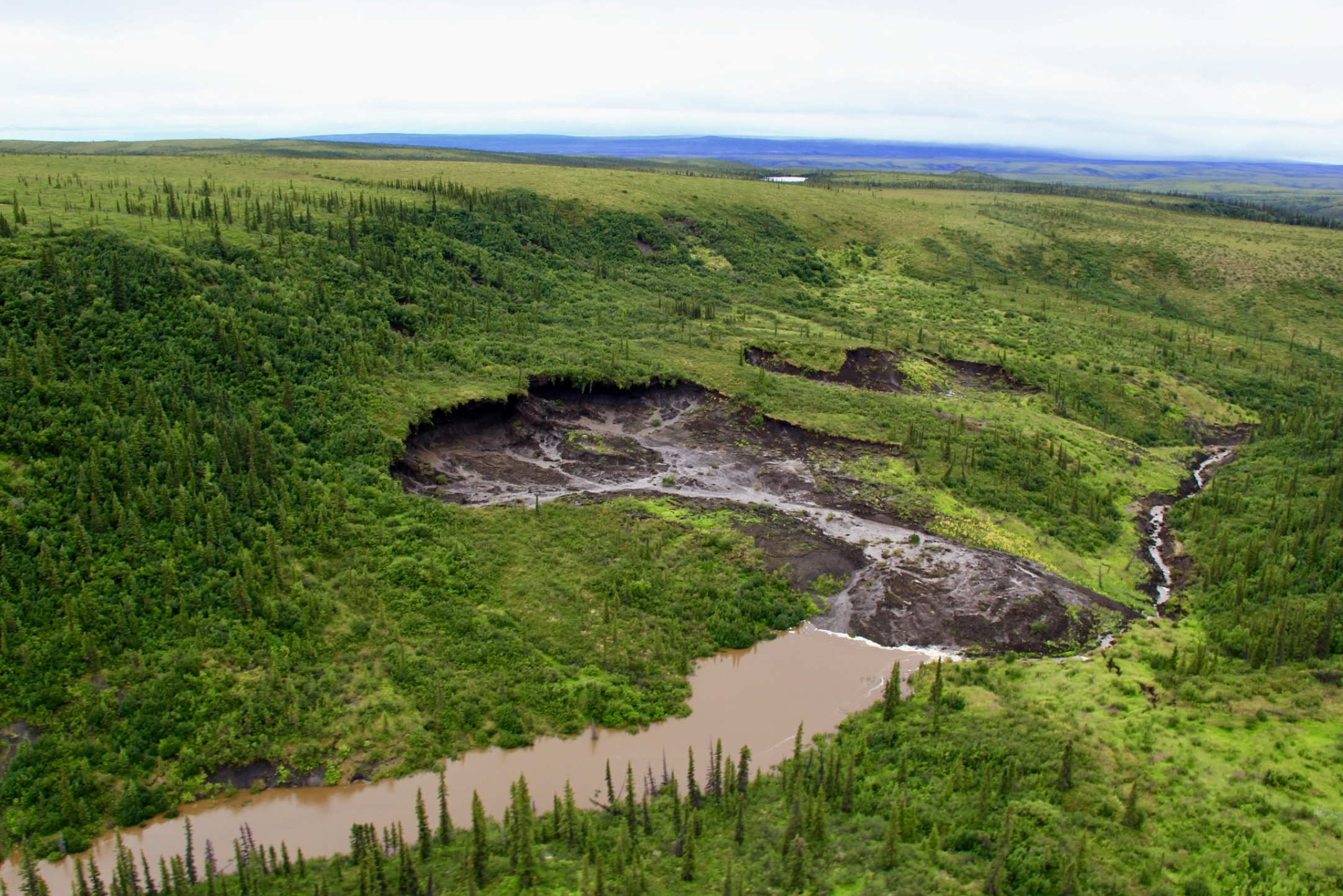
photo by Scott Zolkos
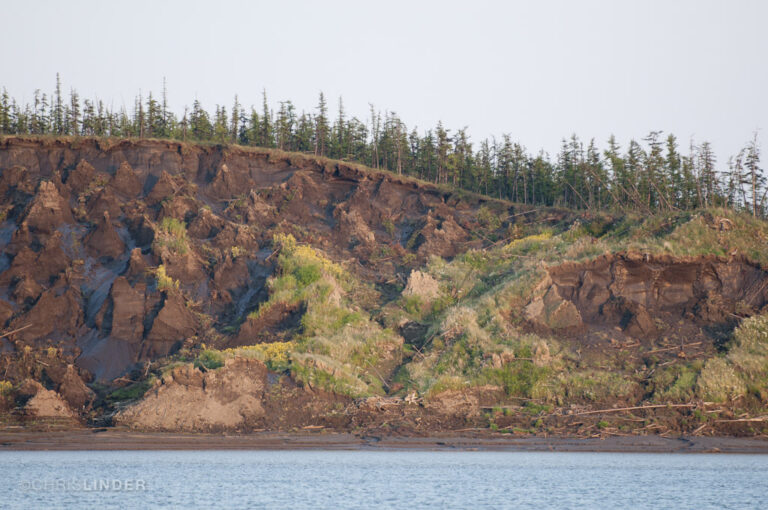
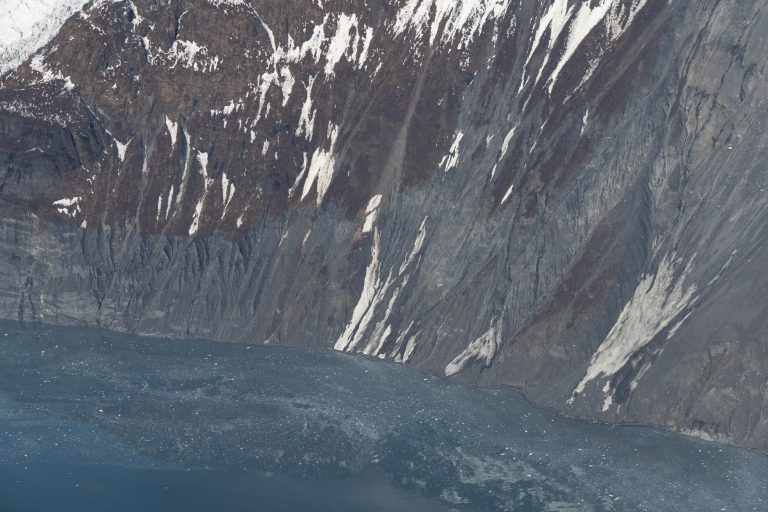
Permafrost can thaw gradually over years or decades. But where the ground is rich in ice, thaw can also trigger sudden collapse and erosion. Hillsides can slump, coastlines can retreat, and once-stable ground can sink or fill with water. Some of these changes may be effectively irreversible on human timescales.
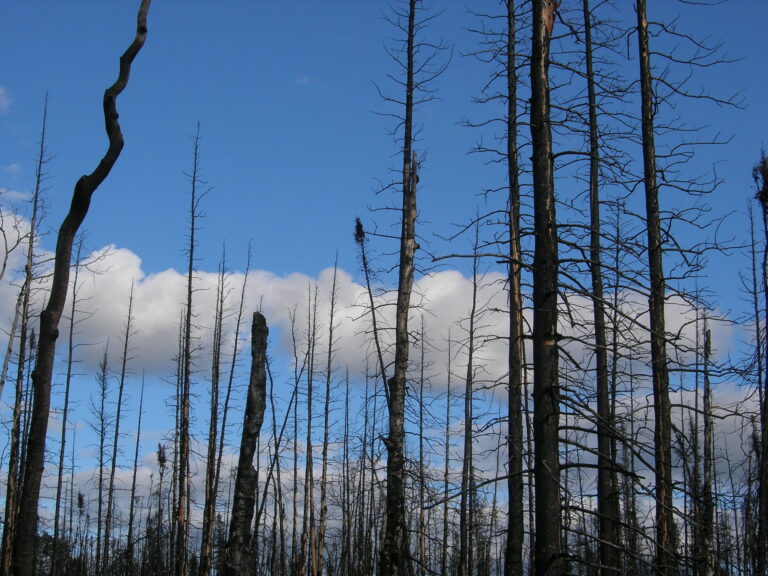
Wildfires can accelerate this transformation by burning away vegetation and soil layers that insulate permafrost. With more heat reaching the frozen ground, thaw can happen much faster, increasing the potential for abrupt changes.
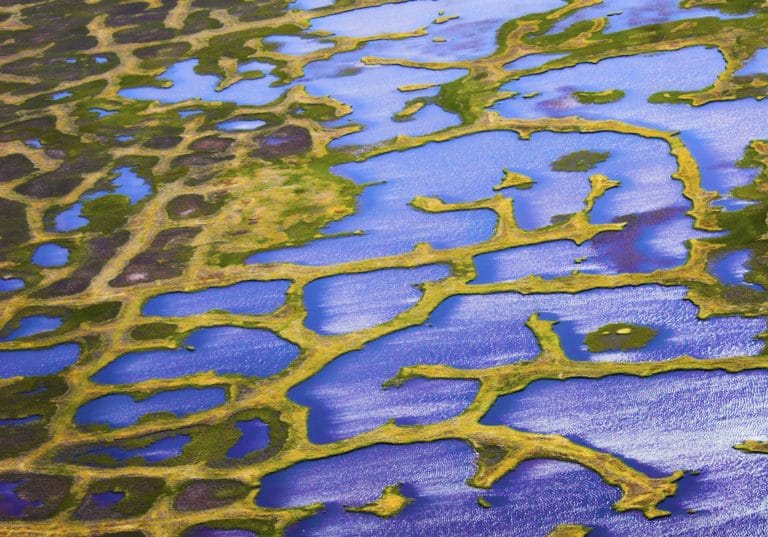
Lakes can grow or disappear overnight.
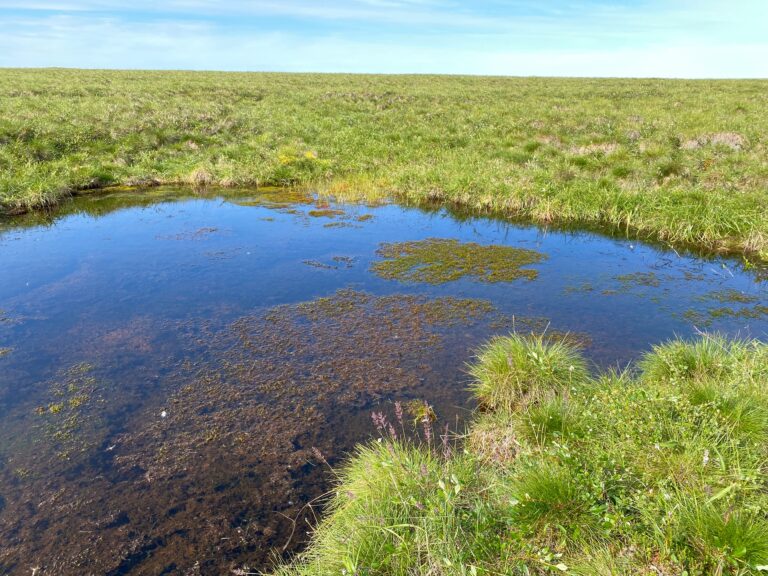
As permafrost thaws, lakes can expand or drain, new ponds can form, and rivers can carry more sediment, nutrients, and organic material. Some landscapes become wetter while others become drier, changing aquatic ecosystems and the life they support.
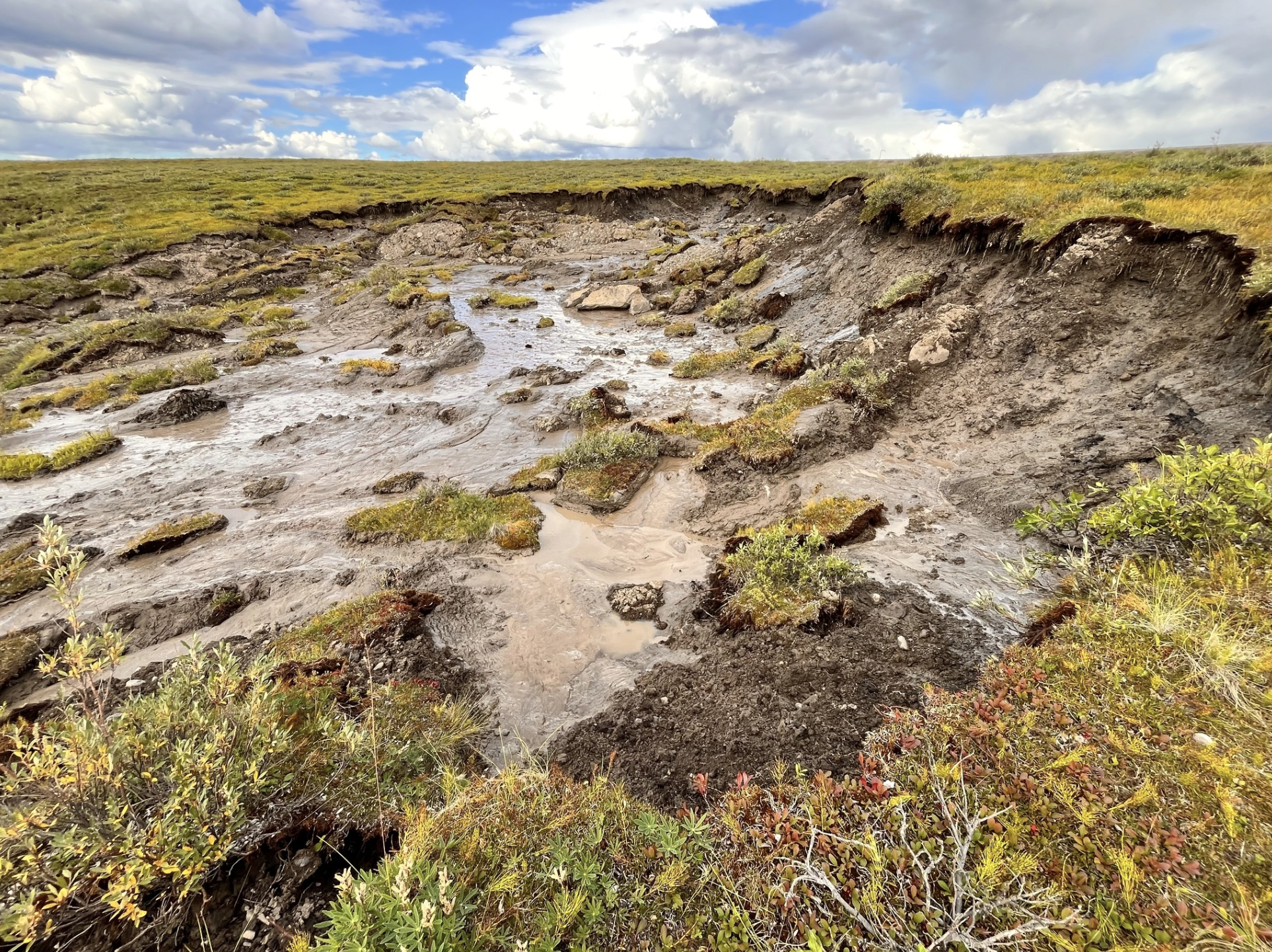
photo by Maura Barry
Permafrost thaw also has major implications for the global climate. Whether thaw happens gradually or abruptly, microorganisms can break down previously frozen organic matter, releasing carbon dioxide and sometimes methane. Abrupt thaw can expose deep, ancient organic matter much more quickly, potentially accelerating these emissions. These greenhouse gases contribute to global warming, driving further permafrost thaw.
A 2026 Woodwell-led study found that carbon released from permafrost thaw and northern wildfires leave less room for human-caused greenhouse gas emissions. To account for these additional emissions, we might need to reduce other emissions by more than 15% to stay within globally agreed warming limits.
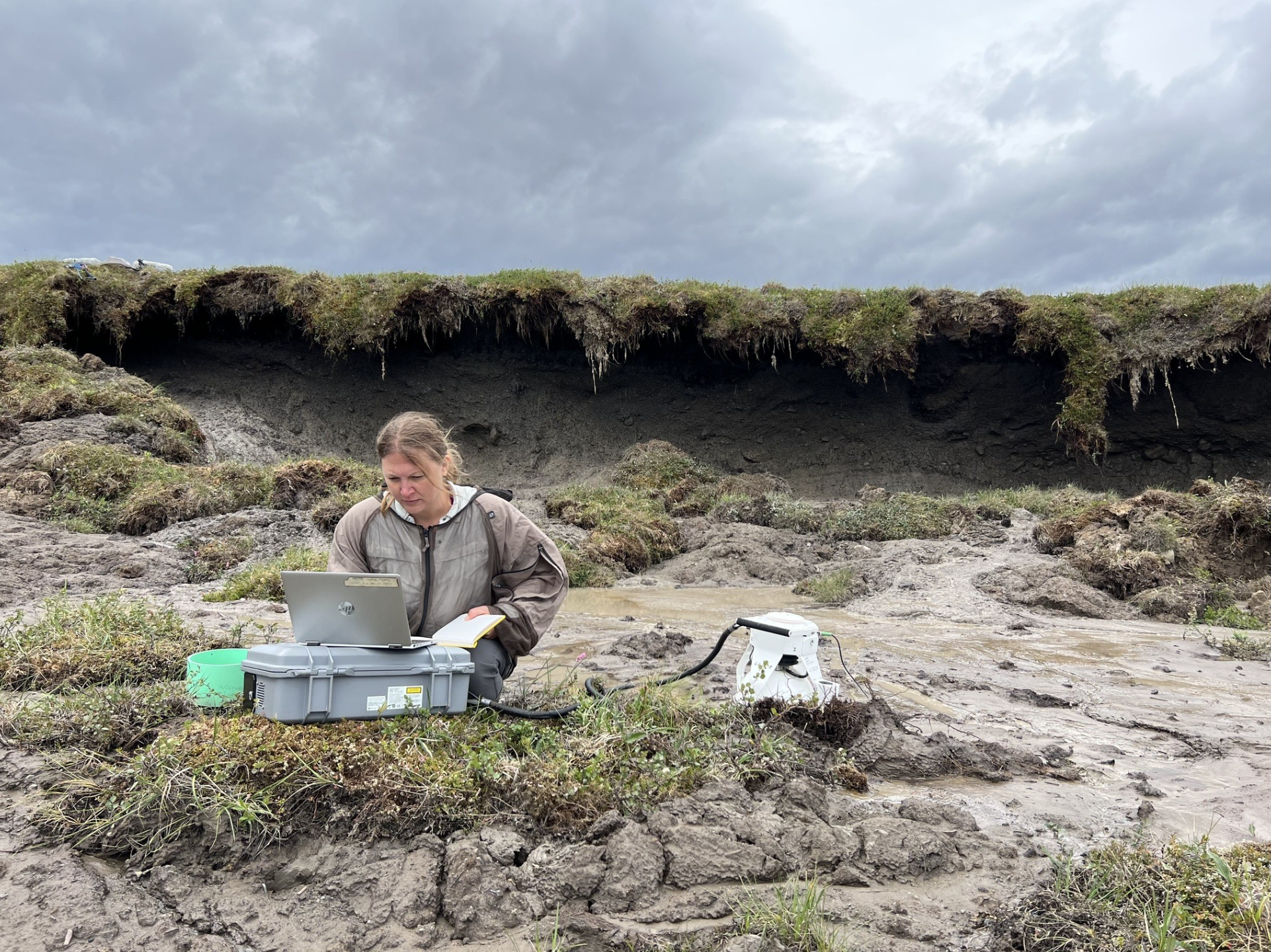
photo by Jenny Watts
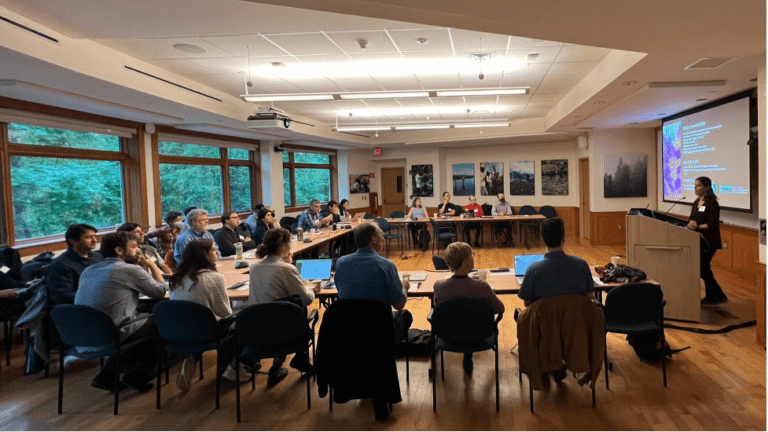
Woodwell scientists study how permafrost is changing, from gradual thaw to sudden ground collapse, and what these changes mean for ecosystems, communities, and the global climate. Our research examines carbon dioxide and methane emissions, the role of wildfire in accelerating thaw, and how these processes influence future warming.
Putting our science to work.
Our research helps bring permafrost into climate assessments and policy, while supporting communities already facing the consequences of thaw. Working with Alaska Native and other Indigenous partners, we combine scientific research, Indigenous Knowledge, and local observations to better understand emerging risks, inform adaptation decisions, and help protect the places and ways of life most at risk.