


Yes, the climate crisis is now ‘gobsmacking.’ But so is some progress
This is the year that “absolutely gobsmackingly bananas” summed up the climate emergency. But dramatic descriptors extend to the huge gains humanity has made too.
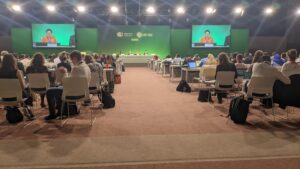
Scientists are running low on words to adequately describe the world’s climate chaos. The National Oceanic and Atmospheric Administration could already say earlier this month that there was more than a 99 percent chance that 2023 was the hottest year on record. That followed September’s sky-high temperatures—an average of 0.5 degrees Celsius above the previous record—which one climate scientist called “absolutely gobsmackingly bananas.” When one of this summer’s rapidly intensifying hurricanes, fueled by extraordinarily high ocean temperatures, leapt from a 60-knot tropical storm to a 140-knot Category 5, one scientist simply tweeted: “Wait, what???”
Here’s how experts graded US climate progress in 2023
Climate experts give the U.S. mixed grades on its efforts to mitigate climate change — but they all agree there’s room for improvement.

’Tis the season to be merry … and get graded. As students across the country anxiously await their report cards, we thought it would be a good time to ask climate experts to grade the United States’ efforts to address the issue over the last year.
They were more than happy to play along.
Longleaf pine restoration—a major climate effort in the south—curbs its ambitions to meet harsh realities
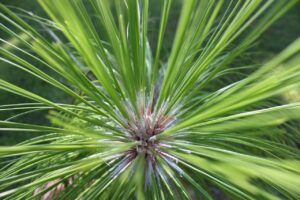
A public-private partnership confronts the challenges of nature-based solutions, including urban growth, logging pressures and a warming planet
On a fall walk through Tuskegee National Forest, ecologist John Kush kept his eyes on the ground, looking for sprouts of hope.
“It’s not too bad,” he said, cautiously. “The overstory is longleaf. But it’s the understory that tells the picture.”
A retired Auburn University research fellow, Kush has spent much of his life studying Pinus palustris—the longleaf pine. The state tree of Alabama, it once reigned throughout the southeastern United States, but was all but given up for dead not long ago. Beginning with European settlement, and accelerating after the Civil War, logging and resin extraction drove the sturdy, long-needled species to near-extinction. Less than 3 percent of its original 92 million acre range remained by the 1990s.
Continue reading on Inside Climate News.
Making Sense of COP28
Insights and reflections from members of Woodwell Climate’s delegation to the 2023 UN Climate Change Conference.
Markey, Braun, Houlahan, Garbarino announce bipartisan, bicameral legislation to increase resources for farmers to protect the environment
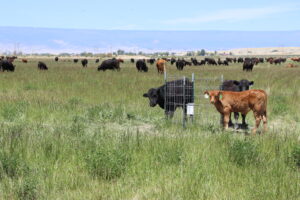
Senator Edward J. Markey (D-Mass.), chair of the Senate Environment and Public Works Subcommittee on Clean Air, Climate, and Nuclear Safety, and Senator Mike Braun (R-Ind.), along with Representatives Chrissy Houlahan (PA-06) and Andrew Garbarino (NY-02), today announced the introduction of the Natural Climate Solutions Research and Extension Act. The bipartisan, bicameral legislation would advance sustainable agriculture practices across the United States by making natural climate solutions a high research and extension priority at the U.S. Department of Agriculture (USDA), unlocking federal funding for farmers to protect the environment via land management practices that increase carbon storage and reduce greenhouse gas emissions.
Continue reading on Senator Markey’s website.
A year of ‘unreal’ fire and warming in the Arctic
Observations from researchers and residents, published annually in a report by NOAA, reveal a region grappling with rapid change.
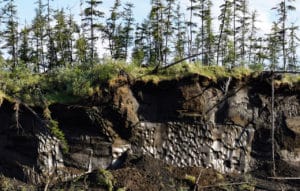
This summer was the Arctic’s warmest on record, as it was at lower latitudes. But above the Arctic Circle, temperatures are rising four times as fast as they are elsewhere.
The past year overall was the sixth-warmest year the Arctic had experienced since reliable records began in 1900, according to the 18th annual assessment of the region, published by the National Oceanic and Atmospheric Administration on Tuesday.
“What happens in the Arctic does not stay in the Arctic,” said Rick Thoman, a climate specialist at the University of Alaska Fairbanks and an editor of the new report, called the Arctic Report Card.
Read more on The New York Times.
T-shirt weather in December is a sign of what winter has in store
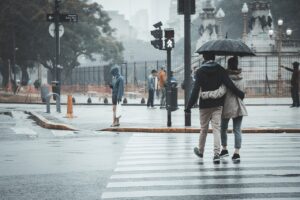
It’s the cusp of winter in the Northern Hemisphere, but in many places from the US to Japan, it feels more like spring — and forecasters say that’s a sign of what to expect over the next couple of months, until a late-season cold snap arrives.
In New York City this weekend, temperatures will soar above 60F (16C). Warmer-than-average weather will also blanket London and Tokyo. And longer-term outlooks show mild conditions lingering for much of North America, Europe and East Asia into January.
Continue reading on BNN Bloomberg.
Impact of Amazon’s climate-driven drought may last until 2026
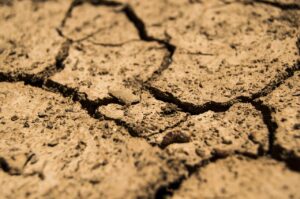
The Amazon rainforest’s record-breaking drought hit home for Raimundo Leite de Souza one October morning, he said, when he woke to find the stream that runs behind his house had dropped nearly a foot overnight, stranding his skiff in a mudflat.
As weeks passed, Souza said, rotting fish washed up on the banks of the Jaraqui, a tributary of the Rio Negro. Rodents thrashed in the mud searching for water. Carcasses of caimans and cobras turned up in the forest.