


Carbon market for climate smart agricultural practices
Why rigorous measurement, modeling, and scalability matter to farmers
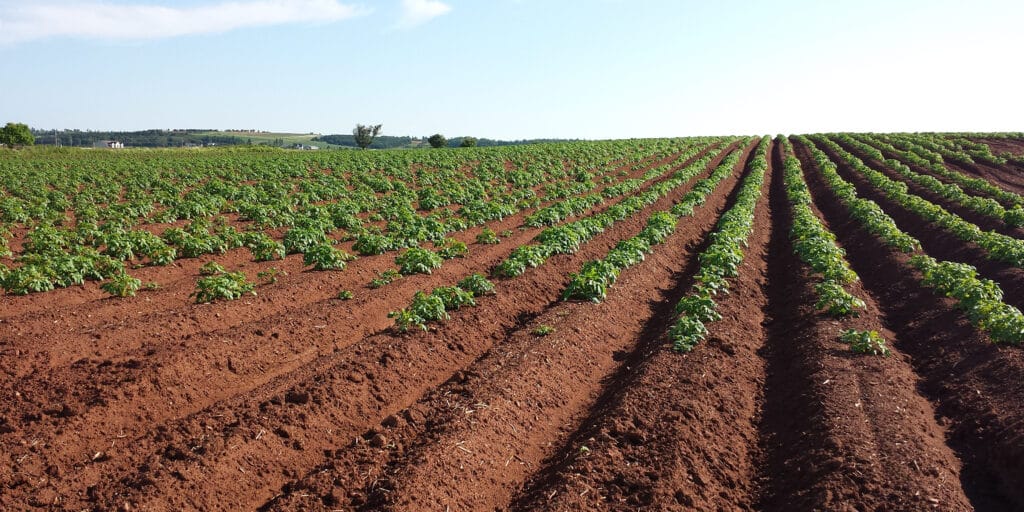
Climate-smart agricultural practices that improve soil health and sequester carbon can provide financial benefits to farmers while concurrently improving environmental conditions by increasing biodiversity, reducing GHG emissions from
undisturbed land, minimizing the need for fertilizers and pesticides, and improving water quality and drought tolerance.1
Farmers currently lack financial incentives to implement climate-smart management practices. Through a carbon credit
program, farmers can increase their profitability and simultaneously implement farm management practices that
enhance soils, improve environmental conditions, and mitigate climate change.2 Generatinghigh-quality carbon credits requires meticulous and transparent standards for GHG mitigation (for example, realistic baseline, additional, and permanent, etc.). Therefore, policy initiatives must focus on high-quality carbon credits underpinned by robust monitoring, reporting, and verification to ensure the long-term viability of carbon crediting program. This provides financial resilience to farmers and ensures long term environmental benefits. The government can support these initiatives by providing market assurance via certification of acceptable soil carbon offset standards, and by providing technical assistance to encourage grower enrollment in the most robust programs. This document serves as a primer on the current state of the science that enables robust measurement, reporting, and verification.
Key Takeaways
- A combined monitoring approach encompassing direct measurement, modeling and remote sensing technologies promotes an accessible and scalable program to farmers, helping to reduce their GHG emissions while securing their long-term financial resilience. See Table 1, which describes ways to improve the quantification of carbon credits in the future.
- The key to managing a complex, multi-field approach is very detailed tracking of field level reporting and verification activities so that the carbon program can be assured that there is no reporting overlap at the field level.
- Harmonization between government reporting and farm data systems could take several forms: collaboration between the USDA and carbon markets standard-setting bodies on what data are needed and how those requests are worded; development of a system for carbon project developers, verifiers, and/or registries to digitally access farmer data directly from the USDA, with safeguards for data privacy and security; and development of platforms by carbon market participants whereby carbon project data collection can be leveraged to generate government reports directly.
- By continually assessing which data are hard to obtain as well as which parameters are most important to GHG outcomes, we can simplify the inputs required (by sourcing default values) without sacrificing the collection of program critical data. If we align modeling and reporting with the types of data the farmers are generating, it reduces friction at the field level. Alignment along the chain from field to model to GHG reporting will reduce confusion, complexity, and conversions, and make it easier to implement software to increase automation and reduce effort and potential sources of error.
- Research is needed to understand the drivers of carbon loss and the related indicators that can be monitored remotely.
- Software and digitization of farm data can reduce the complexity of a multi-field project, enable faster payments to growers, and lower the burden of data collection and increase the quality of data collected.
- It is critical that federal policies support and enhance farmers’ ability to generate high-quality (i.e., credible and verifiable) carbon credits and avoid policies and programs that place unintentional and unnecessary roadblocks to farmer participation in carbon markets.
1 Popkin, G. 2020. March 31. Can ‘Carbon Smart’ Farming Play a Key Role in the Climate Fight? Yale Environment360. https://e360.yale.edu/features/can-carbon-smart-farming-play-a-key-role-in-the-climate-fight
2 National Academies of Sciences, Engineering, and Medicine. 2019. Negative Emissions Technologies and Reliable Sequestration: A Research Agenda. Washington, DC. The National Academies Press. https://doi.org/10.17226/25259
Policy opportunities for climate smart agriculture
U.S. growers are struggling to remain profitable, production expenses1 have increased2, government payouts to farmers are breaking records, and the acceleration of per acre productivity seen over the past century is slowing3. Simultaneously, soil health has declined, and extreme weather events are proliferating, exacerbating the negative impacts of climate change. Our climate and the economic resiliency of our rural communities are compromised. Farmers need ways to increase their profitability and resilience if they are to continue farming, feeding our population, and fueling our economy for decades to come. Climate smart agriculture presents an opportunity to leverage proven agricultural management practices to improve rural livelihoods via enhanced grower profitability, and to enhance environmental and economic security through restored and more resilient lands.
Despite growing interest from the voluntary carbon market, and decades of effort by government agencies, advocacy groups, and grower initiatives, adoption of climate smart agricultural practices remains limited. The federal government can play a critical role in catalyzing practice adoption and carbon market participation by instituting policies that:
- decrease barriers to adoption of climate smart practices, and amplify awareness and assistance;
- offset cost risk for growers via incentives, including transition payments and tax credits; and
- endorse rigorous standards for the measurement, verification, and monetization of on-farm carbon
A variety of policy opportunities can be pursued, including endorsing quality criteria via the Growing Climate Solutions Act (GCSA), developing a carbon bank, supporting a price on carbon, expanding tax credits and low carbon fuel standards, modifying existing policies that currently impede widespread regenerative practice adoption, and supporting research and private-public sector work on soils, management practices, and carbon.
New policies that encourage climate smart activities on working lands can be implemented in a way that is compatible with existing programs that benefit farmers and ranchers. Conservation programs including CSP, EQIP, the grassland reserve program, the farmable wetlands program, and the conservation technical assistance program should continue to be funded. Working lands policies will complement established programs by allowing farmers to maintain productivity and profitability, while minimizing leakage.
The policies recommended here allow private markets and voluntary efforts to thrive, while avoiding the costs, consolidation, and burden associated with heavy-handed regulation. Regulation would inhibit the ability of individual producers and actors to make the decisions that are best suited for their unique circumstances, and would add costs via procedural requirements and administrative burden.
Given the array of policy opportunities and the importance of the US agricultural system for food, fuel, and its role as an economic engine in rural communities, agriculture presents an opportunity to advance meaningful policy instruments in a unified, bi-partisan manner.