

Beneath the frozen surface: How AI is uncovering the secrets of permafrost


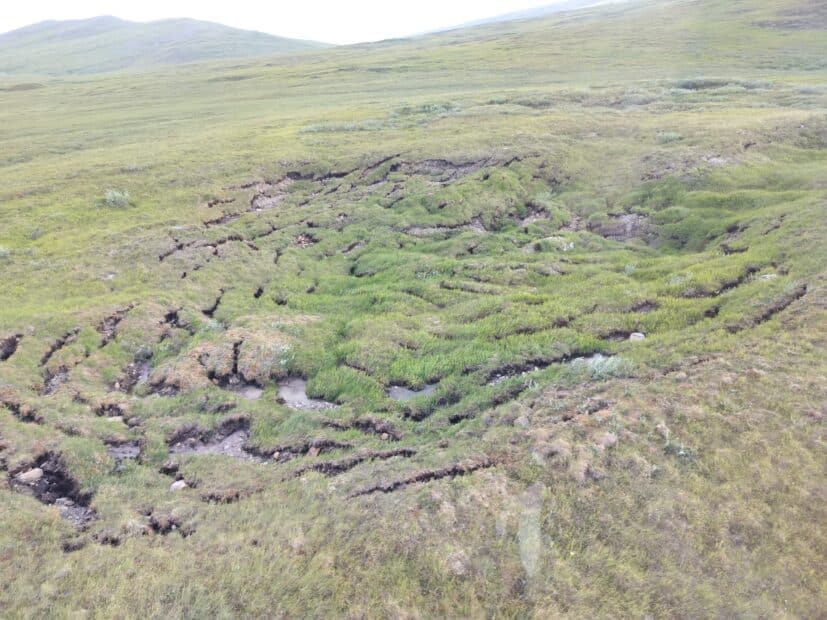
photo by Kaj Lynöe
Beneath the frozen surface: How AI is uncovering the secrets of permafrost
Beneath the surface of the Arctic, frozen ground holds clues about our planet’s past and its critical information about its future. Known as permafrost, this ground remains below 0°C for at least two years at a time and stores massive amounts of ice, organic carbon, and environmental history accumulated over thousands of years. But understanding how permafrost is changing throughout the Arctic landscape is no small task.
These regions span millions of square kilometers, and the datasets used to study them (from satellite imagery to high-resolution terrain maps) are often too large for most researchers to access or explore. Now, researchers working with the Permafrost Discovery Gateway, a platform hosted by the Arctic Data Center at the National Center for Ecological Analysis and Synthesis (NCEAS), are using artificial intelligence to change that. In collaboration with Google.org, the gateway combines satellite imagery, high-performance computing, and machine learning, opening a new window into Arctic change. One that anyone with an internet browser can explore!