

These tiny organisms could be unsung climate heroes
From forest to field, Woodwell researchers are studying how microbes help remove and store atmospheric carbon


Methylomonas methanica, a type of methanotroph found in water and soil.
photo by Dennis Kunkel Microscopy/Science Photo Library
While natural and managed ecosystems like wetlands, forests, and agricultural fields often receive credit for emitting or absorbing carbon, there is an equally important yet largely overlooked contributor, acting within these ecosystems. Microbes, tiny single-celled organisms that live everywhere on Earth, are a powerhouse of carbon exchange, capable of absorbing and storing greenhouse gases like carbon dioxide and methane. Woodwell Climate researchers are studying both forests and fields to understand how natural microbial communities might be optimized into “climate heroes”, enhancing the carbon absorption capacity of natural and managed ecosystems.
One project leading the charge on this is Boreal Biosequester. Led by Associate Scientist Dr. Jennifer Watts and Senior Research Scientist Kathleen Savage along with collaborators at Arizona State University and the University of Maine Orono, this project is studying a particular class of microbe that “eats” methane, called methanotrophs.
Methane is 28 times as adept at trapping heat in the atmosphere as carbon dioxide. Today, atmospheric methane is around 2.6 times higher than during pre-industrial times. While some of these emissions are due to human sources, such as landfills and fossil fuels, around one-third of global methane emissions come from wetlands, and approximately 20-35% of wetlands are found in boreal and northern temperate forests. As a potent greenhouse gas, removal of atmospheric methane is a key natural climate solution that would help mitigate climate warming. The Boreal Biosequester team seeks to optimize the power of methane-eating microbes present in and on trees to turn methane-emitting landscapes into methane absorbers.
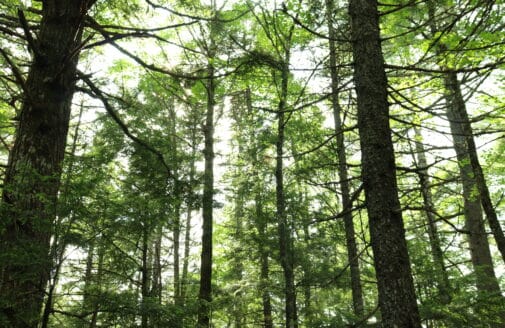
With funding from CarbonFix, a philanthropic organization dedicated to funding potential climate solutions, the Boreal Biosequester team has begun the first phase of the project: identifying microbial species present in the tree bark and foliage of Maine’s Howland Research Forest and studying their behavior. The researchers are investigating how trees in this northern forested wetland absorb and emit methane and how this capacity changes with environmental conditions like light, soil moisture, acidity, and temperature, to determine optimal environmental conditions for methane absorption
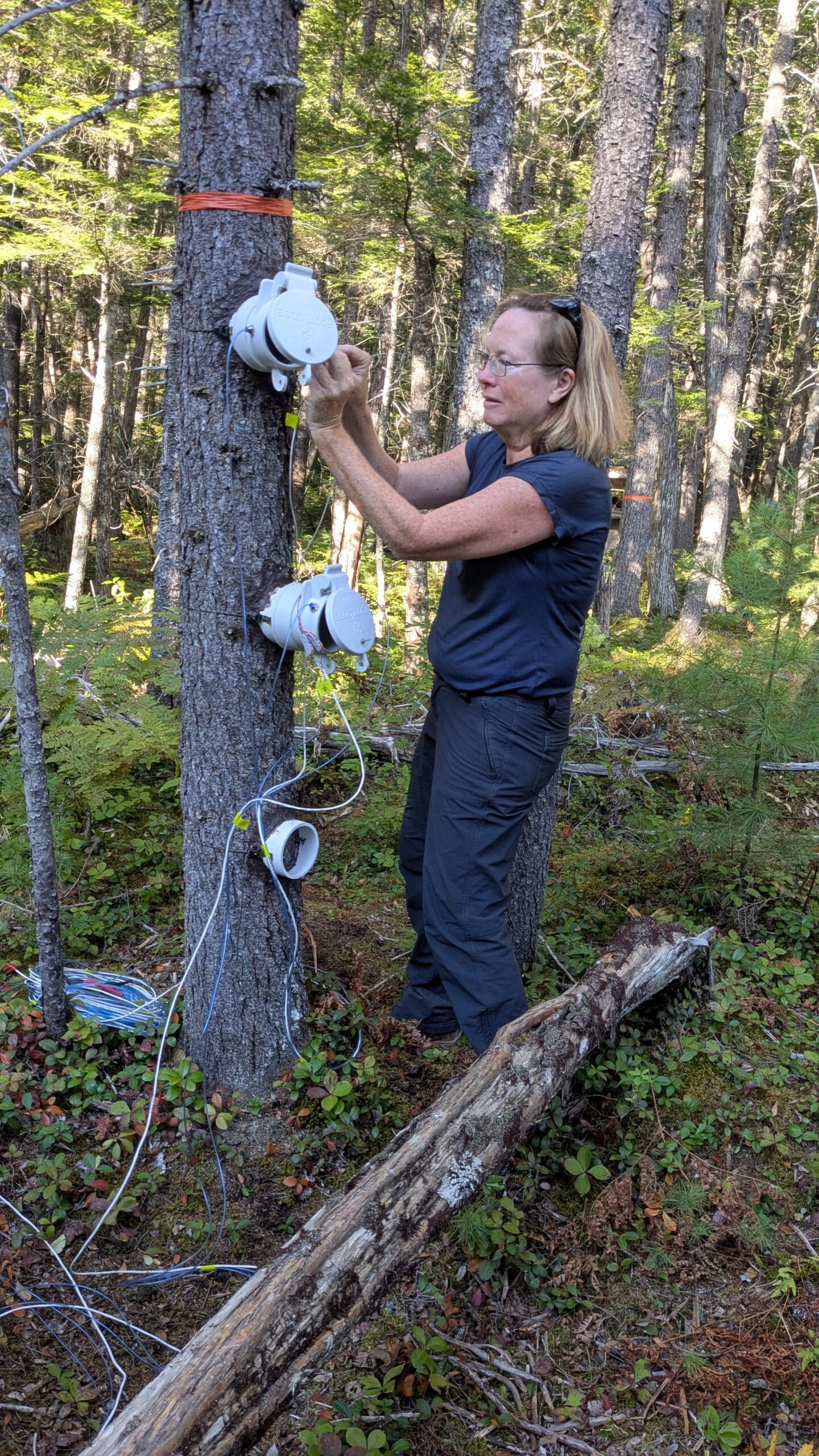
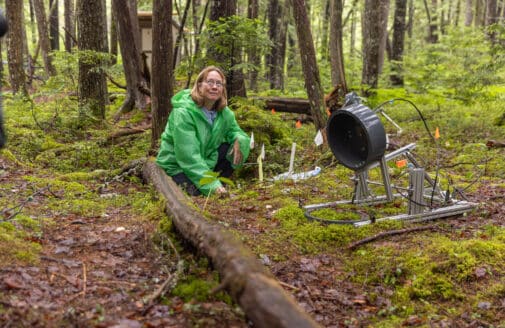
Kathleen Savage fits a tree with a carbon flux monitoring collar.
photo by Jenny Watts
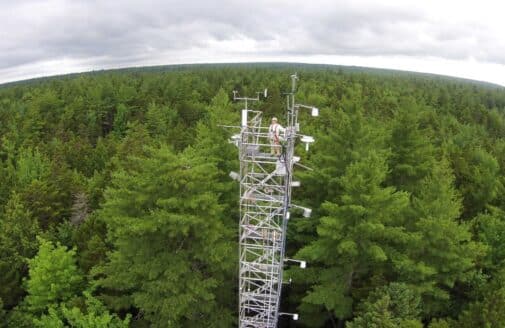
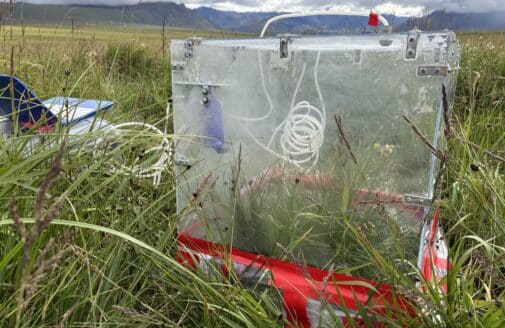
Much of this data is gathered from 30-meter-tall towers in the Howland Research Forest that measure methane and other gases being emitted and absorbed from this northern forest landscape. Howland boasts one of the longest global records of carbon dioxide and methane fluxes; these tower observations are paired with data collected directly from tree trunks and canopies to complete a comprehensive picture of microbial methane activity across the landscape.
“The different types of organisms that are in the trees absorbing methane have different sensitivities to temperature and how much nitrogen or sulfur or other [nutrients are] available to them,” says Watts. “What we really don’t know is: How do they live in the same space? Are there shared resources? We want to know what those preferences are.”
Boreal Biosequester team member Dr. Hinsby Cadillo-Quiroz, an ecology of microorganisms and ecosystems professor at Arizona State University, is leading the effort to isolate and study methanotrophs, sequencing their RNA and DNA to learn more about who they are and where they “like to live” in the forest.
“Plant surfaces host methanotrophs undoubtedly, although at low apparent density, so a critical question in this project is to figure out where, when, and how plant methanotrophs have the highest activity and potential to maximize their work,” says Cadillo-Quiroz. He is currently testing this question in sites around the world, including Howland.
The next phase of the Boreal Biosequester project will apply the knowledge gained from this early work to look at how the identified optimal environmental conditions can be “harnessed” to maximize methane absorption from trees using controlled greenhouse experiments.
“With greenhouse experiments, we can manipulate their environments and different tree species and then see how those microbes respond, so we can get a better sense of what those microbes like versus not, and how to optimize their behavior,” Savage says.
The final research phase of this project focuses on inoculating a forested wetland with “hardy” natural versions of these methane-eating microbes and tracing the response in landscape methane uptake. “If we can start to cultivate them successfully in the lab, we can start to select populations through natural selection,” Watts says. “We don’t want to do any direct genetic modification, but [we want to] grow the microbes that are a little bit more hardy.”
This work could yield natural climate solutions that are cost-effective and scalable for use by governments and land managers, and provide multiple benefits for carbon removal in restored or regenerating forests.
Nature-based solutions [like microbes] are critical because they are the only tools we have that address the triple crisis of climate change, biodiversity loss, and food insecurity simultaneously.Taniya Roy Chowdhury, soil microbial ecologist
“If we understand what drives the natural activity of methanotrophs, it can inform the industry practices and plans,” Cadillo-Quiroz says.
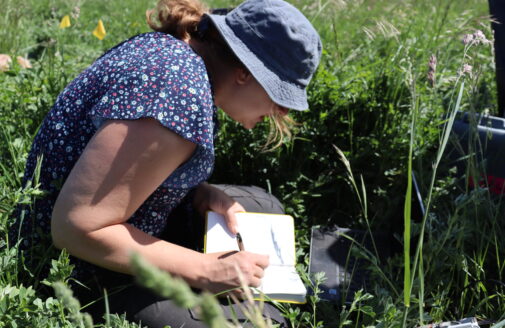
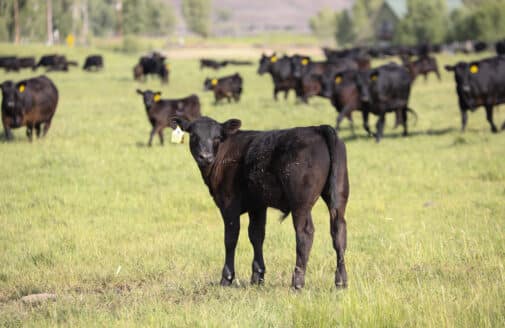
Microbes could also be a powerful natural climate “ally” in other human-managed systems, like agricultural fields. Microbes in agricultural fields function as active climate engines by converting plant-derived carbon into stable carbon in soil, a process that could be optimized by using different land-management practices. According to Woodwell, soil microbial ecologist and biogeochemist, Dr. Taniya RoyChowdhury, properly managed croplands have the potential to become major carbon sinks.
“Global croplands have the theoretical capacity to sequester up to 2.6 gigatonnes of CO2 (carbon dioxide) annually,” RoyChowdhury says. “The research being pursued at Woodwell Climate is the critical link in the chain, providing the data needed to shift soil carbon storage from a ‘theoretical’ possibility into a ‘verifiable’ climate solution.”
RoyChowdhury is studying how regenerative agriculture practices like cover cropping could enhance a process called “necromass formation,” where carbon absorbed from the atmosphere by plants is consumed by soil microbes that then die. This carbon-rich “necromass” is then stored more permanently in the soil. This process is unique to microbes, so RoyChowdhury wants to understand how altering agricultural management practices, like cover cropping, could alter microbial activity in our favor.
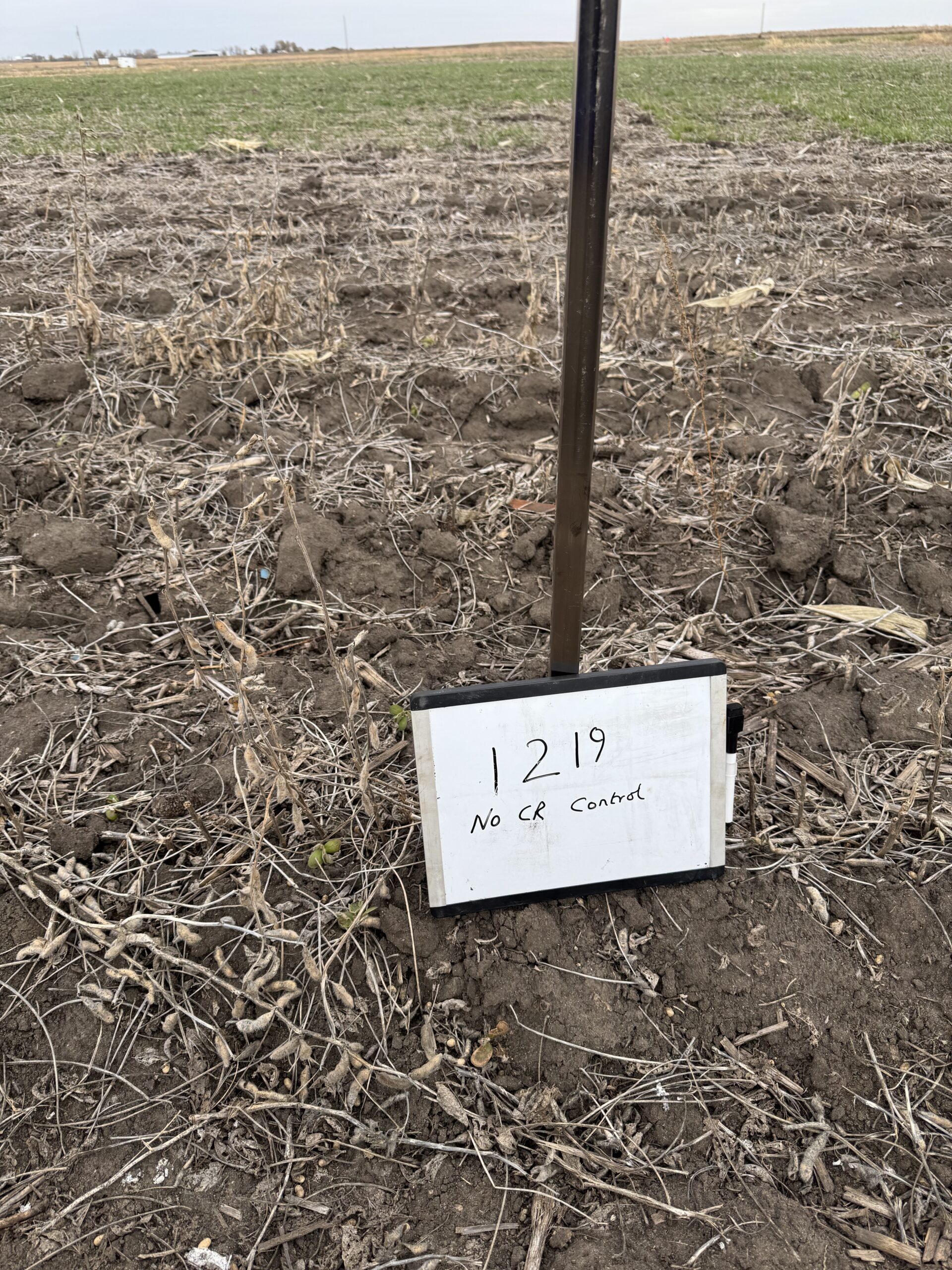
“We’re trying to look at what the cover crop actually does to the microbial community. We’re genetically sequencing the microbial community in its totality and also looking at their functions,” says RoyChowdhury.
She says that working with microbes could also have co-benefits beyond carbon removal.
“Nature-based solutions [like microbes] are critical because they are the only tools we have that address the triple crisis of climate change, biodiversity loss, and food insecurity simultaneously,” says RoyChowdhury.
The other benefit of using natural climate solutions like microbes across ecosystems, RoyChowdhury says, is that once they are established, they manage themselves.
“Rightly managed natural systems are self-sustaining; once a wetland is restored or a forest is established, it continues to remove or sequester carbon and provide ecosystem services with minimal human intervention, making it a suitable strategy for long-term planetary stability,” RoyChowdhury says.