

Scientists call for enhanced methane monitoring
New paper in Science proposes global network to track unaccounted for methane emissions from natural ecosystems


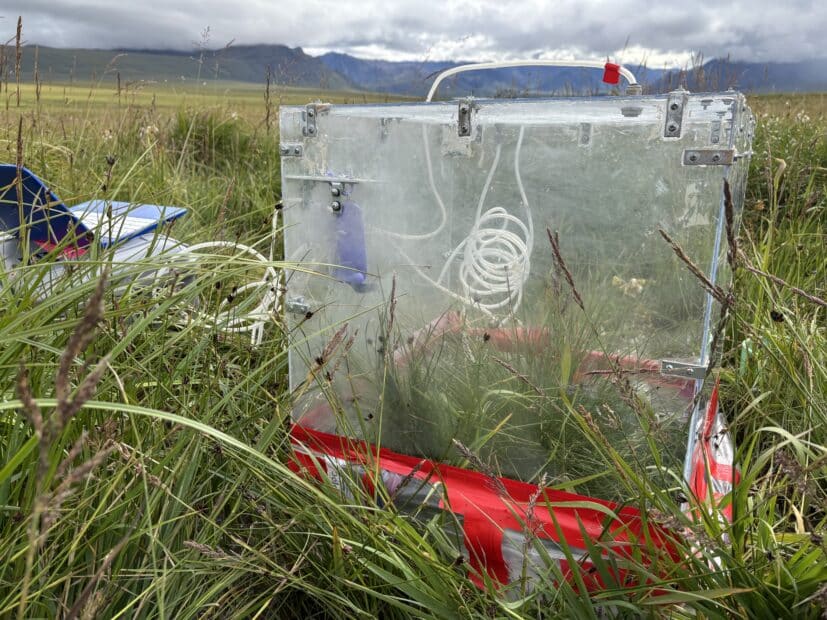
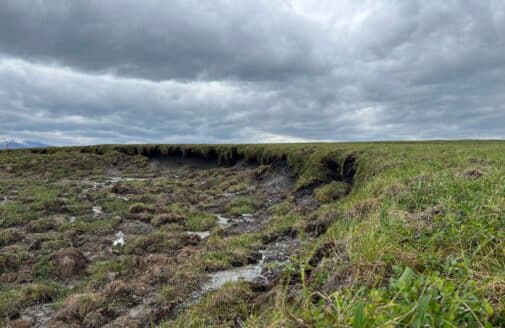
A methane monitoring chamber sits on the Alaskan tundra.
photo by Jennifer Watts
In a new paper, published today in Science, climate scientists from Woodwell Climate Research Center and leading research institutions across the world propose the creation of a new, global methane observation system to track methane emissions from natural ecosystems in near real-time and inform mitigation strategies and global climate policy.
Methane’s powerful near-term warming effects–80 times that of carbon dioxide–position methane mitigation as an urgent and important target for actionable global climate policy. Over the past decade, scientists and policymakers have made important strides in tracking methane emissions from anthropogenic sources, including fossil fuels, livestock, agriculture, waste management, and integrating those emissions in international climate policy and mitigation strategies. However, escalating methane emissions stemming from natural ecosystems driven by global temperature increases and climate feedbacks, such as tropical wetlands and thawing permafrost, make up more than one-third of the global methane budget, and yet remain largely omitted from global methane budgets and decisionmaking due to gaps in monitoring.
“As the planet warms, methane emissions from these natural systems, including permafrost, lakes, and wetlands, are rising quickly, bringing the potential for increased frequency and impact of extreme weather events like flooding, drought, wildfire, and extreme heat. Our ability to track and detect these emissions will be critical to informing solutions to the climate crisis,” said Dr. Jennifer Watts, Scientist at Woodwell Climate Research Center and lead author of this paper. “We are calling on national governments, international institutions, philanthropies, the private sector, and other partners to invest in adequate infrastructure to detect and monitor temperature-driven methane emissions from ecosystems to guide solutions that curb the impacts of methane and the climate crisis.”
This paper grew out of a multi-day convening of more than 30 leading methane scientists, modelers, and policy experts held in Aspen, Colorado in October 2025, organized through the Aspen Global Change Institute (AGCI). Co-chaired by scientists from Woodwell Climate Research Center/Permafrost Pathways, Stanford University, Arizona State University, and Spark Climate Solutions, the workshop brought together participants from universities, federal agencies, and research institutions spanning six continents to identify critical gaps in natural methane monitoring and chart a course for an integrated global observation system. The findings and recommendations in this paper reflect the collective expertise of that broader scientific community.
As global leaders in methane science, policy, and innovation prepare to gather at Methane 250 in Italy next week to chart a path forward for methane mitigation, this paper makes the case for investing in the development of an integrated Global Ecosystem Methane-Observation System to inform future Global Methane Pledges and action. Specifically, this system would close gaps in methane monitoring by securing and expanding ground-based networks of greenhouse gas observing towers, including flux towers, across underrepresented regions including rapidly thawing Arctic permafrost and wetlands in the tropics.
“Through Permafrost Pathways, we’ve seen firsthand how critical it is to fill the monitoring gaps in the Arctic, where thawing permafrost releases methane across landscapes so vast and varied that our current observation systems cannot fully capture them,” said paper co-lead and workshop co-organizer, Dr. Sue Natali, Senior Scientist at Woodwell Climate and lead of Permafrost Pathways. “This paper charts a path toward the integrated, global monitoring infrastructure we need to account for these emissions in climate policy before they outpace our ability to act.”
“Methane from natural systems is one of the biggest emerging climate risks,” said Dr. Danie Potocek, paper co-author and scientist at Spark Climate Solutions. “And right now, we simply don’t have the monitoring infrastructure to fully understand what we are up against. The global community has made real progress in building systems to track methane from human sources. Now we need to extend that to the rest of the methane challenge.”