

photo by Tiffany Windholz
Reflections from project lead, Dr. Jennifer Watts.
Summer 2023
Thaw slump discovery campaign
We had been hearing about more and more severe ground collapse across the Arctic tundra, resulting from severe polar warming. We finally had the opportunity to visit one of these sites—GTH89/Lake395—while staying at the Toolik Field Station approximately 11 km north, with a team of filmmakers who were documenting the impacts of climate change on the Arctic (documented in the experimental film, The Great Thaw). We hiked for hours to reach the site, carrying heavy camera equipment and a gas analyzer.
What we found at this site left a lasting impression. The contrast of exposed, breaking ice and oozing mud, set against the backdrop of the Brooks Range, was visually stunning. Yet, seeing the severe imprint on the landscape caused by human emission of fossil fuels around the planet was truly horrifying. We walked away from the thaw slump determined to raise funding to instrument this site as a research station to document the impact of climate change on fragile tundra and, in turn, the impact that gas emissions from thawing tundra have on Earth’s climate system.
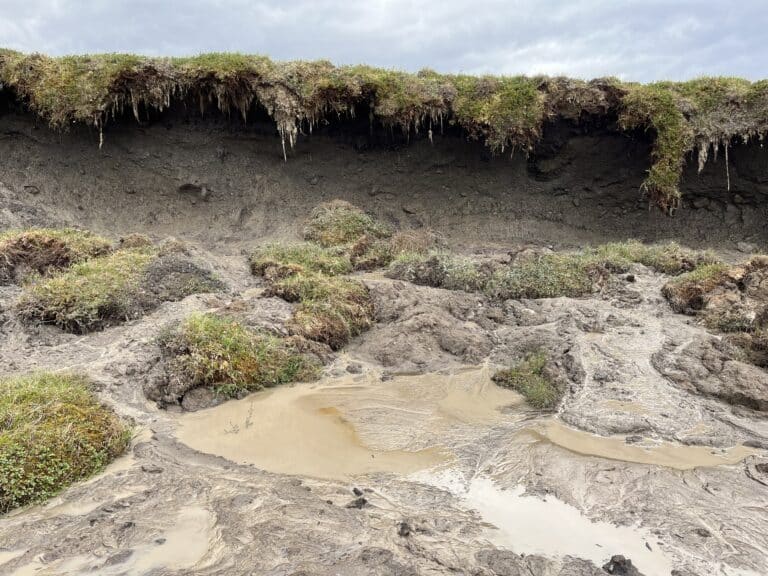
photo by Jennifer Watts
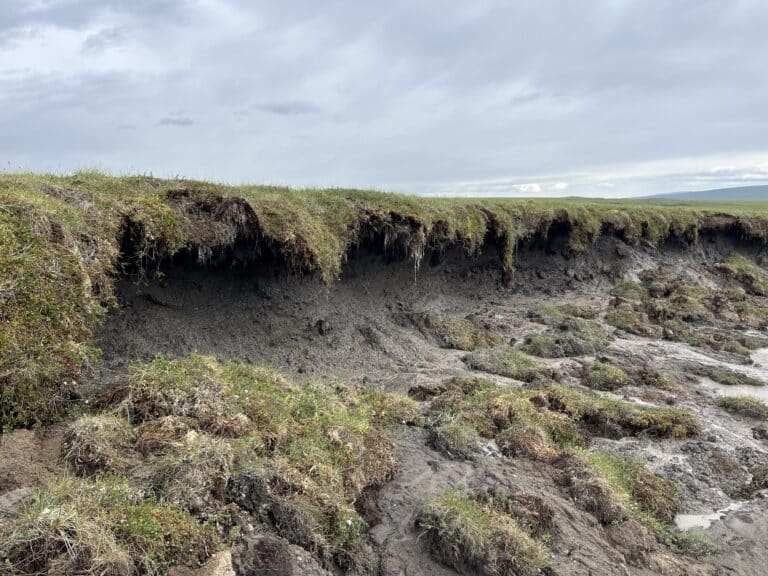
photo by Jennifer Watts
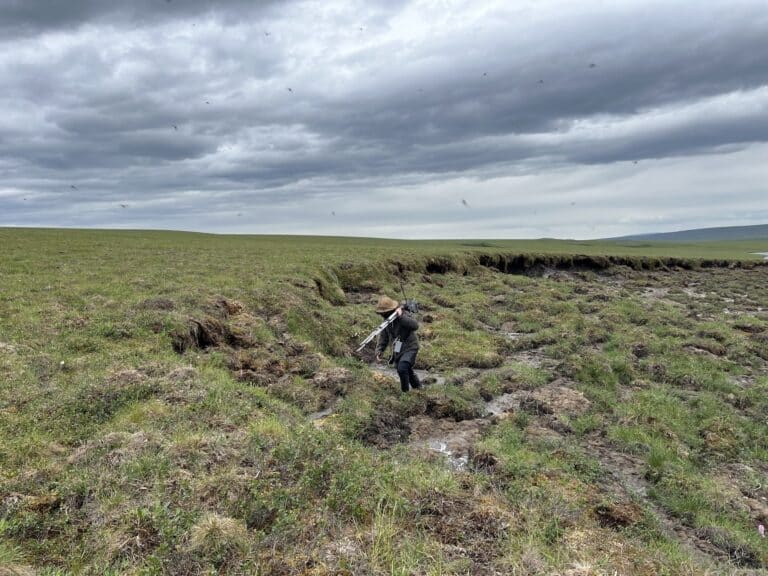
photo by Jennifer Watts
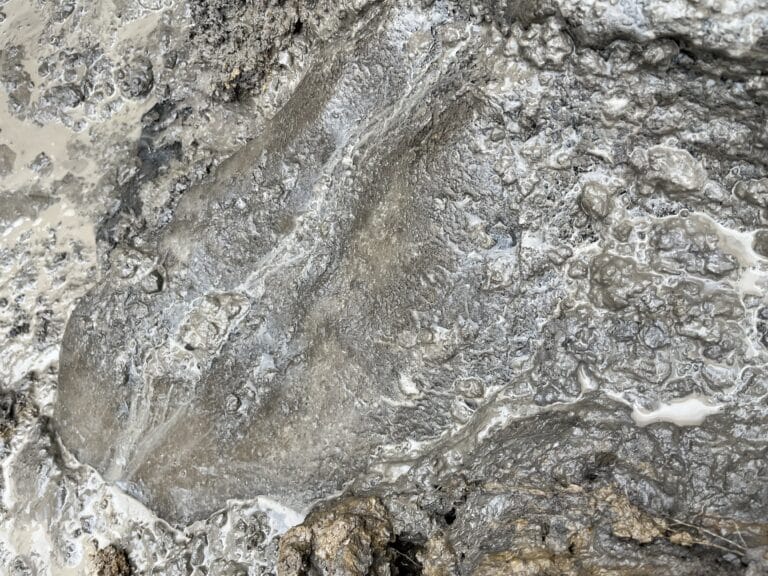
photo by Jennifer Watts
Spring 2025
Tower installation, with help from Protect Our Winters
Almost two years later our team returned to the thaw slump to install a greenhouse gas monitoring station (flux tower), the first of its kind ever set up for year-round monitoring at a severe permafrost collapse site. This was made possible with the generous support of Woodwell’s Fund for Climate Solutions (FCS) program, support from Protect our Winters, infrastructure support from the U.S. Department of Energy (DOE) AmeriFlux program, and logistics support from Toolik Field Station.
Our installation campaign was timed to avoid the polar winter and severe cold, while aiming for a warmer (15 deg F!), sunny window before the rapid snowmelt of spring. As we hauled our equipment across the tundra via snowmachine, we couldn’t help but to stop multiple times to take in the stillness of the sparking snow, the magic of prancing caribou, and the beauty of the vast mountains beyond us. After a week of tower set up and problem solving, we finally stood back and listened as the flux tower, named after the Inuit word Sila, representing the “breath of the world” and “spirit of the wind and weather,” hummed to life.
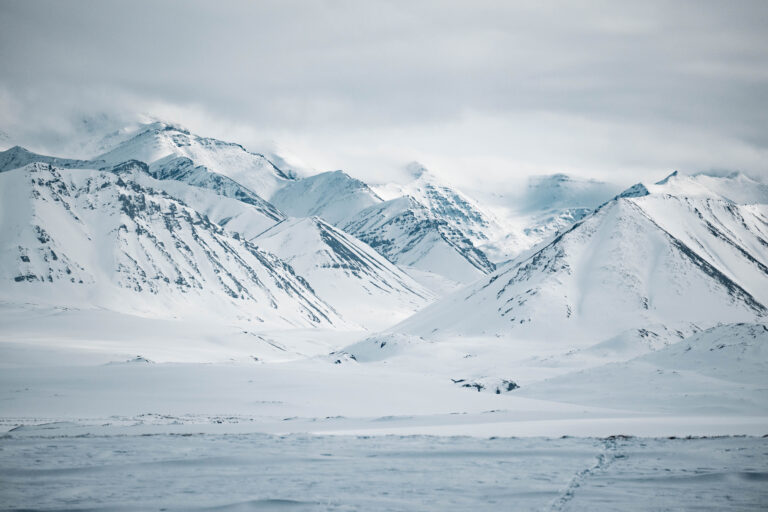
photo by Protect Our Winter Creative Alliance member, Jayme Dittmar/Northern Exposure Studios
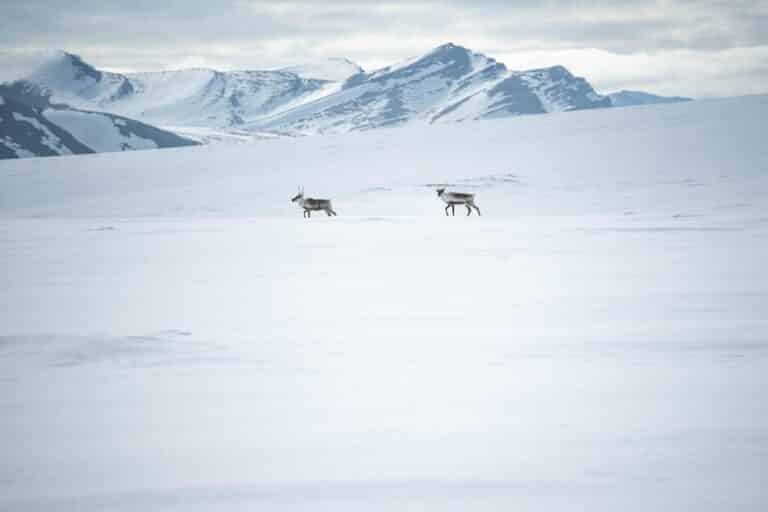
photo by Protect Our Winter Creative Alliance member, Jayme Dittmar/Northern Exposure Studios
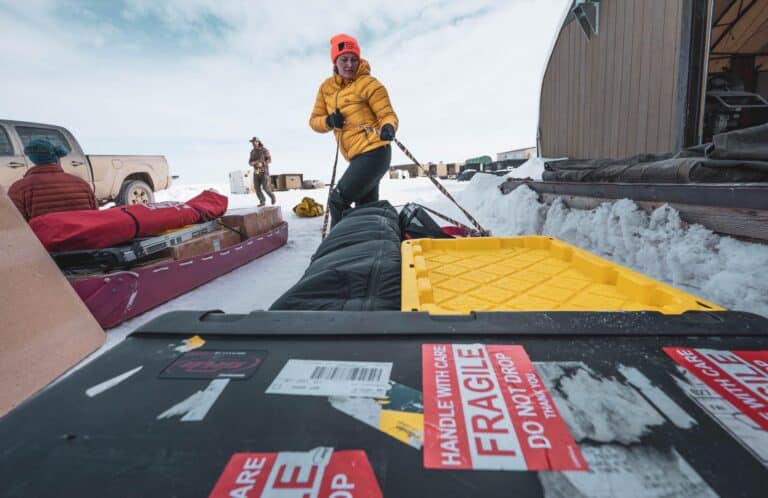
Christina Minions packs gear and equipment on sleds at Toolik Field Station. / photo by Protect Our Winter Creative Alliance member, Jayme Dittmar/Northern Exposure Studios
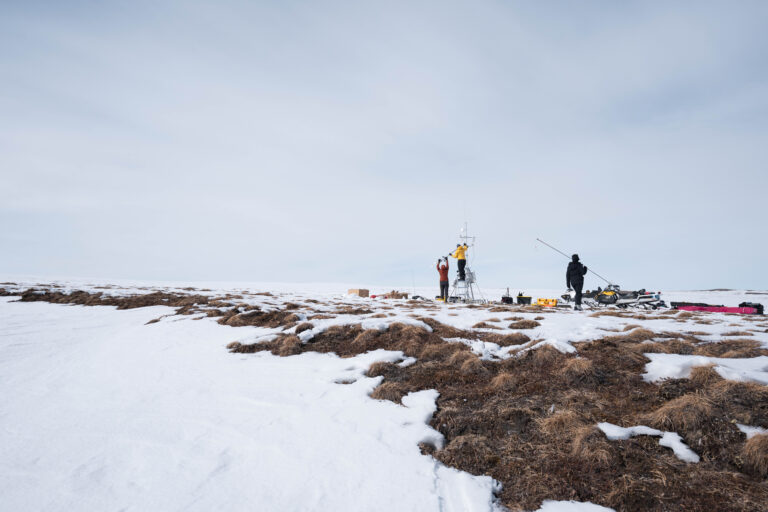
The team begins assembling the tower structure at the thaw slump site. / photo by Protect Our Winter Creative Alliance member, Jayme Dittmar/Northern Exposure Studios
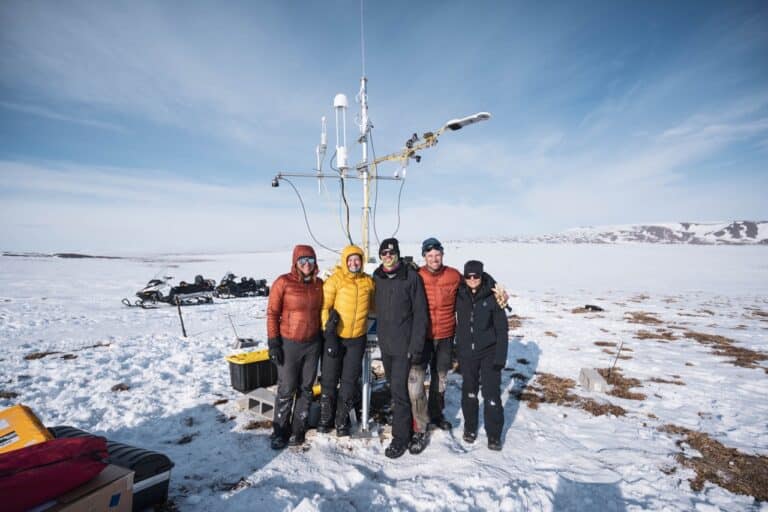
Project team members (from left to right) PI Dr. Jennifer Watts, Christina Minions, Co-PI Dr. Kyle Arndt, Kaj Lynoe, and visiting snow scientist Dr. Kelly Gleason (Portland State University). / photo by Protect Our Winter Creative Alliance member, Jayme Dittmar/Northern Exposure Studios
Summer 2025
GHG Flux Chamber Survey Campaign
Our summer 2025 field campaign was designed to document plant and soil characteristics at the site. We also spent long days sampling greenhouse gas (CO2 and CH4) emissions within the thaw slump and the surrounding landscape. Our observations shed light into the complex, dynamic world of destruction (e.g., at the rapidly calving slump headwall) and recovery and ecological succession (e.g., plants re-establishing in older, lower portions of the slump).
We also witnessed first-hand the danger of a warming arctic, as we watched the rampant bubbling of CH4 being “belched” into the atmosphere by the thawing, eroded, landscape. We could even hear the bubbling from a distance, which sounded like “pop, pop, pop.” We are now brainstorming innovative ways to document the bubbling (and to determine the amount of CH4 being released) through a combination of microphone-based digital recording and AI. Stay tuned for our next field visit in spring 2026!
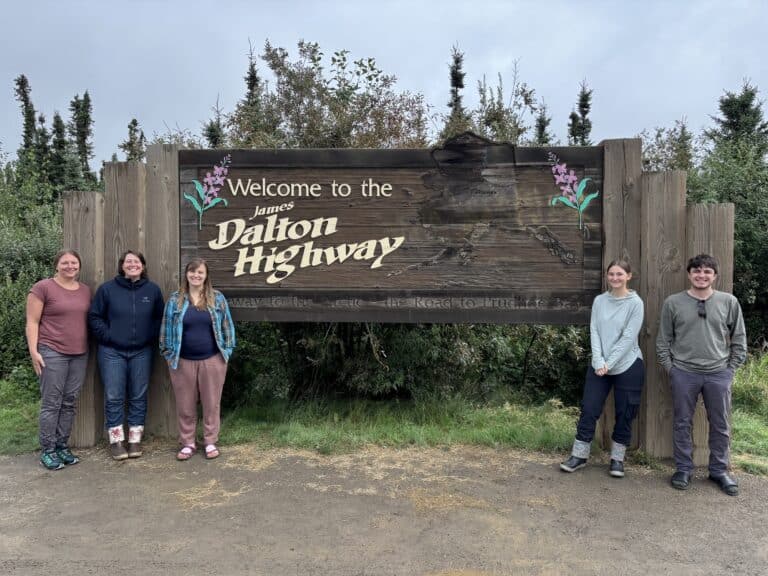
The summer field team at the start of the Dalton Highway, towards the beginning of the 8+ hour drive north to Toolik Field Station. (left to right) Dr. Jennifer Watts, Christina Minions, visiting Woodwell postdoctoral scientist Beth Sutherland, Tiffany Windholz, and Andrew Mullen. / photo by Jennifer Watts
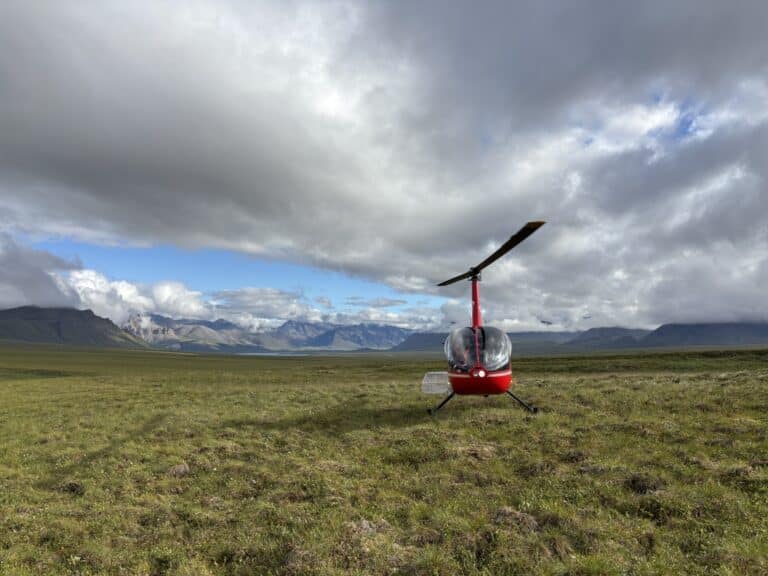
The Arctic LTER donated helicopter time to support the project. / photo by Jennifer Watts
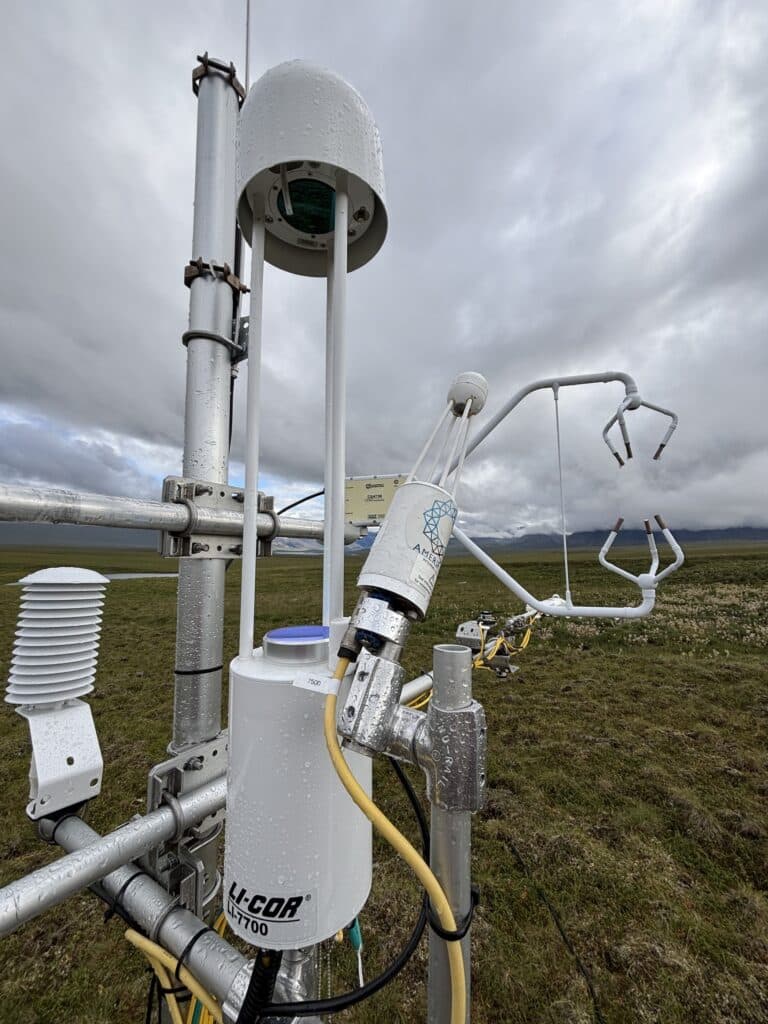
photo by Jennifer Watts
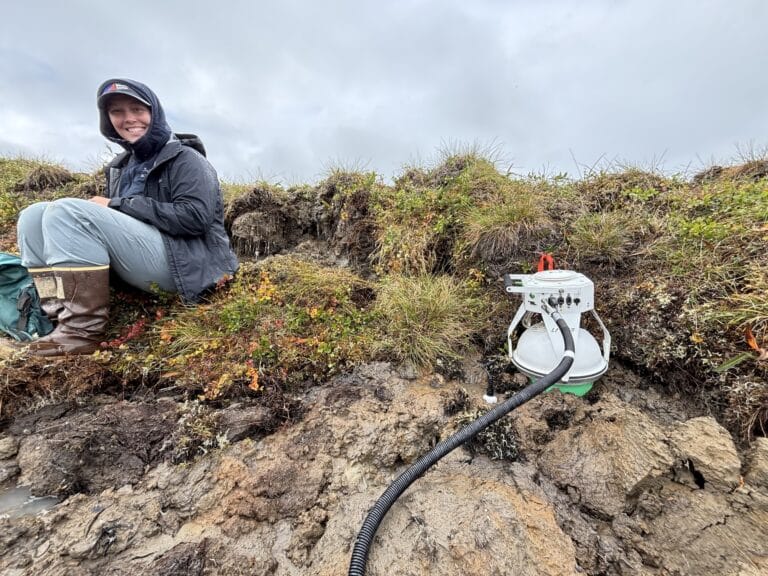
Team scientist Christina Minions sampling CO2 and CH4 emissions over a bubble hot spot in the thaw slump. / photo by Jennifer Watts
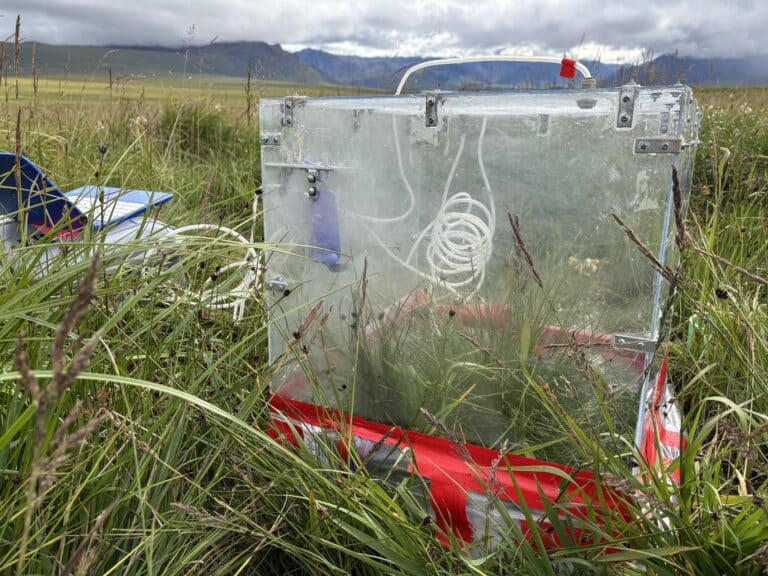
Sampling vegetation and ecosystem gas exchange
along post-disturbance plant recovery gradients within older (recovery) sections of the thaw slump. / photo by Jennifer Watts
along post-disturbance plant recovery gradients within older (recovery) sections of the thaw slump. / photo by Jennifer Watts
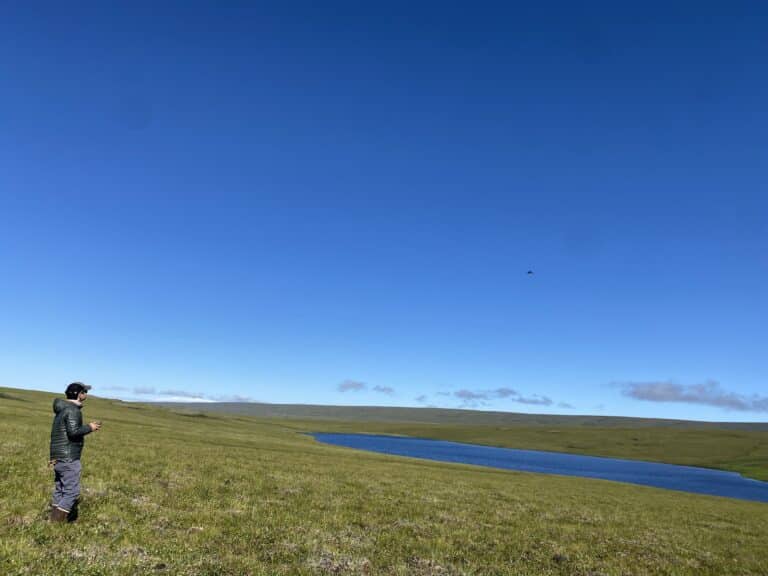
Andrew Mullen collecting drone-based imagery over the site. / photo by Tiffany Windholz