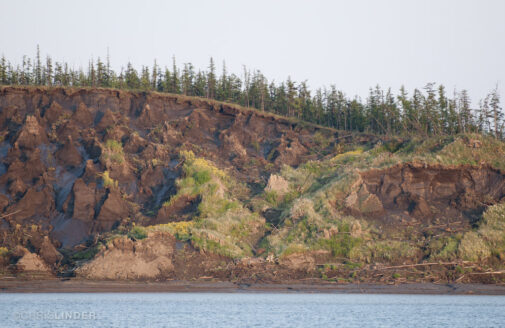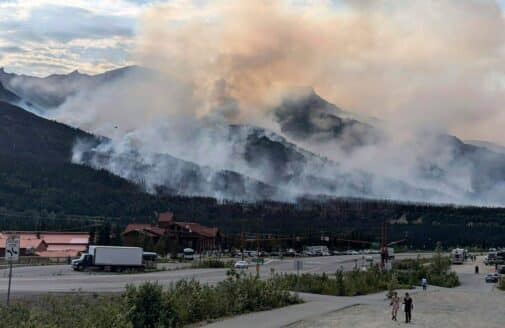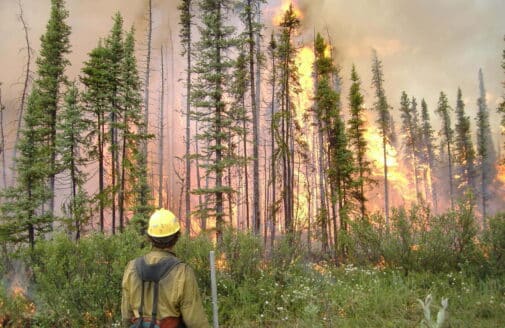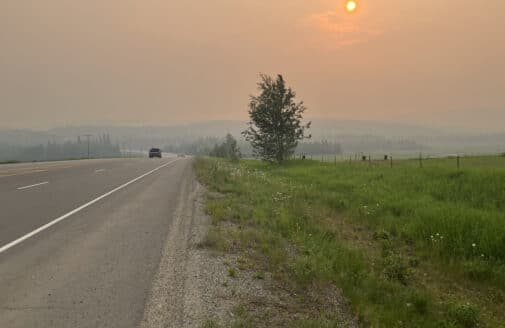


I work with the Permafrost Pathways team to advance understanding of the climate impacts of wildland fire and accompanying abrupt permafrost thaw in the Arctic-boreal Zone. I help to explore and elevate scientific analyses, Indigenous Knowledge, and Indigenous mitigation practices for potential policy solutions to help address the accelerating wildland fire regime in the north. I also assist the Permafrost Pathways adaptation team in building capacity and resilience in Arctic communities at the forefront of the climate crisis.
I grew up north of the Arctic Circle, in Fort Yukon, Alaska, in the heart of the boreal forest, and have a deep concern for the health of the land on which I was raised. I am also particularly interested in local, national, and international governance and their interrelation to wildland fire mitigation and preparedness in the Arctic context. Accordingly, I am acutely aware of the risks affiliated with accelerating wildland fire in the Arctic and permafrost thaw, and endeavor to increase collaboration and circumpolar cooperation on these related issues.
In my work outside of Woodwell Climate, I was appointed by the Chiefs of Alaska to represent the Gwich’in internationally as the Co-Chair of Gwich’in Council International for five terms. Gwich’in Council International represents all of the Gwich’in of the USA and Canada on international matters. In this capacity, I have served as the Head of the Delegation to the Senior Arctic Officials, and to the Arctic Council working groups on Conservation of Arctic Flora and Fauna (CAFF) and Emergency Prevention, Preparedness, and Response (EPPR). I have also served as the Co-Chair of the Arctic Council’s Chairship Initiative on Wildland Fire from 2023 to 2025, and as the 2nd Chief of the Gwichyaa Zhee Gwich’in for seven years.
Currently I serve as the HOD for EPPR, and the Co-Chair for a pan-Arctic Informal Working Group on Wildland Fire with the Kingdom of Denmark, for all of the Arctic States and Permanent Participants. I was also appointed by the United Nations to represent the Arctic as a whole to the Food and Agricultural Organization’s International Indigenous Led Fire Adaptation Network (IIFAN) board, which is part of the UN Global Fire Hub.
I love to be on the land in Gwich’in country, fishing, hunting, gardening, and exploring cultural sites with my wife Alisa and our children.