

A winter weather puzzle is raising the risk of meteoric energy inflation
A winter forecasting enigma is poised to send prices for energy and food on a bumpy ride in the next few months, with commodities from natural gas to wheat at risk of breakneck gains against a backdrop of geopolitical turmoil.
Earlier in the year, meteorologists expected this December, January and February to be dominated by the La Niña climate pattern, which influences the world’s weather in specific ways. But La Niña has yet to arrive, and if it does, it will probably be weak. That makes the outlook for the northern hemisphere’s winter much more uncertain.
Why cranberry country is turning into wetlands
Massachusetts farmers began draining wetlands to make cranberry bogs more than two centuries ago. Now there’s a race to restore them.
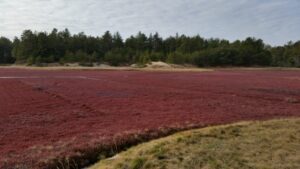
As the sun set on a November afternoon, Brendan Annett walked through a wetland preserve, greeting everyone who passed him by with the enthusiasm of a mayor at a ribbon cutting.
Which he kind of was. Annett, who oversees conservation projects for the nonprofit Buzzards Bay Coalition, had recently finished work on the site known as Mattapoisett Bogs that, for more than a century, had been a working cranberry farm. As the industry waned here, the family who owned the land had sold it to the conservation group, which had set about transforming it back to the wetland it once was. Walking trails had just reopened to the public. But as ducks paddled in placid water and late-afternoon light turned the reeds and rushes to gold, it was easy to imagine it had been this way forever.
Continue reading on The Washington Post.
What the Earth’s recent heat uptick could mean for the climate fight
And why one climate scientist still has reasons to hope.

Scientists monitoring Earth’s climate have identified a concerning trend in global warming starting in April 2023. While climate change has been steadily heating up the planet for decades, in 2023 global average temperatures suddenly jumped by about 0.2 degrees Celsius and have remained elevated.
The spike in temperature has raised alarm among climate scientists about how fast the climate crisis is progressing as they scramble to explain Earth’s worsening fever.
Jennifer Francis studies climate and weather in the Arctic at the Woodwell Climate Research Center and has had her eyes on the planet’s rising temperature for decades.
Read more on Inside Climate News.
Dr. Matti Goldberg, the Director of International Government Relations at Woodwell Climate, explains the stakes of COP29 from Baku, Azerbaijan.
It’s already official: You’re living through the hottest year on record
According to the European Union’s climate agency, 2024 is also the first year to breach a key climate threshold.
Nine months ago, the oceans became bathwater. As historically hot sea temperatures forced corals to expel the microorganisms that keep them alive, the world endured its fourth mass coral bleaching event, affecting more than half of all coral reefs in dozens of countries. As the temperatures continued to climb, many died.
It was an early taste of what would become a year marked by the consequences of record-breaking heat. And now it’s official: Last week, when much of the world’s attention was turned to the U.S. presidential election, scientists from the European Union’s Copernicus Climate Change Service crowned 2024 as the hottest year on record — and the first year to surpass the 1.5 degrees Celsius benchmark. And that’s with two months left to go in the year.
Where has all the rain gone? Bone-dry October strikes much of US
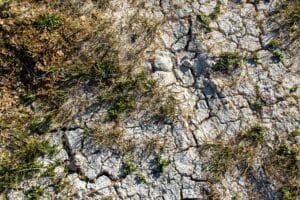
A bone-dry October is pushing nearly half of the United States into a flash drought, leading to fires in the Midwest and hindering shipping on the Mississippi River.
More than 100 different long-term weather stations in 26 states, including Alaska, are having their driest October on record, through Sunday, according to records by the Southern Regional Climate Center and Midwest Regional Climate Center. Cities that have had no measurable rain for October include New York, Houston, Dallas, Philadelphia, San Francisco and Sioux City, Iowa, along with normal dry spots such as Los Angeles, Las Vegas and Phoenix, National Weather Service records show.
The Y-K Delta’s permafrost could be entirely gone within decades
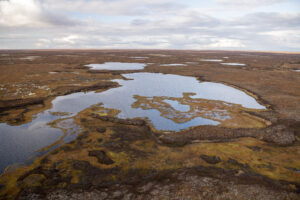
All over Alaska, perennially frozen ground, or permafrost, is melting. During a panel discussion at the Arctic Encounter Symposium in April, an ecologist said the Yukon-Kuskokwim Delta is set to lose nearly all of its permafrost in the next two decades. And a warming climate is to blame.
“It’s bad news,” said Sue Natali, a Senior Scientist and leader of the Permafrost Pathways Initiative at the Woodwell Climate Research Center. The goal of the initiative is to help develop strategies to manage and adapt to the enormous impact permafrost thaw is having on Y-K Delta communities. “It’s worse if you don’t know, it’s worse if you don’t plan and it’s worse if you’re not part of the planning process,” she said.
The economic impact of shifting to climate- smart agricultural and conservation practices in the Bwindi Ecosystem: A Targeted Scenario Analysis.
Executive summary
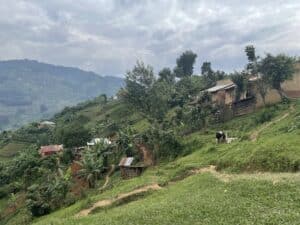
Since the 1950s, southwestern Uganda has faced significant environmental challenges due to population growth, particularly in Kabale, Kisoro, and Rukungiri districts. Over 75% of Kisoro’s population relies on natural resources, leading to issues like wetland and soil degradation, deforestation, overgrazing, water pollution, and poor sanitation. These problems contribute to low productivity, income, and living standards. Climate change exacerbates these challenges, increasing dependency on national parks and environmental resources.
To address these issues, nature-based tourism and climate-smart agriculture (CSA) aim to diversify livelihoods and reduce food insecurity, thereby decreasing the environmental impact. Through sustainable farming techniques, CSA practices enhance productivity, resilience, and emission reduction. Sustainable Ecosystem Management (SEM) alternatives, including CSA, significantly improve productivity and potential revenues compared to Business-As-Usual (BAU) strategies under a changed future climate scenario. SEM can lead to an average revenue increase of 117%, particularly benefiting key agricultural crops for food security and income generation. However, technical and institutional barriers like limited knowledge, asset access, and insecure land rights hinder the design of effective policy and action, limit access to potential sources of capital, and weaken the potential of CSA to deliver resilient economic growth and poverty alleviation.
Effective policy implementation requires improved agricultural extension services, better management of revenue-sharing schemes, and enhanced inter-sector coordination. Public investment in agricultural extension, climate finance mechanisms, and participatory policy approaches are essential. Strengthening policy also includes improving tourism-related revenue- sharing transparency and accountability, which can accelerate sustainable development and conservation efforts in the region.