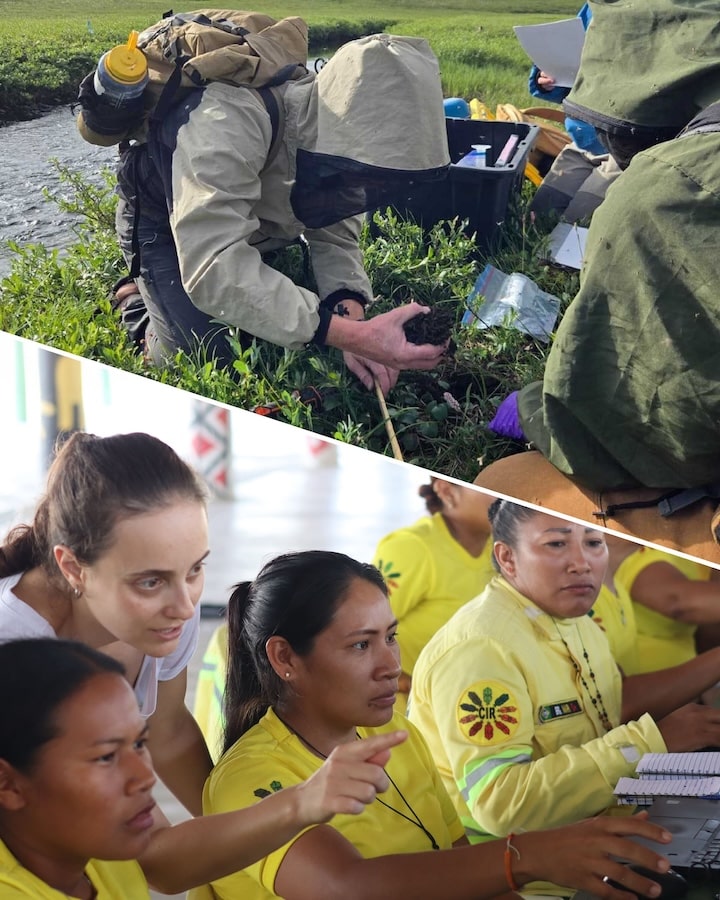


In a world plagued by rapid change and challenges, I think many of us are asking the question: “How can I help?” As individuals, it can be hard to find a way to give back and help steward the natural resources we rely on. But, for those who love fly fishing—anglers—Science on the Fly offers a path to do just that.
Science on the Fly engages the enthusiastic and passionate fly-fishing community, in the US and abroad, as community scientists. Members of the fly-fishing community have close relationships with their local rivers—from having a favorite fishing hole, to knowing the seasonally anticipated flows of the river and when certain bugs are hatching. They also are more aware than most of the impacts of climate change on local fisheries. In states like Colorado or Montana, anglers have given up the opportunity of even casting a fly rod at some points in the summer season. Why? The trout are too stressed and lethargic due to the droughts and rising water temperatures.
Crowdsourcing climate data
Our fly-fishing community scientists are excellent resources for data collection and observation of climate trends to create a clearer picture of how rivers are changing over time. With their help, we can increase the number of rivers subject to long-term studies of water quality and watershed health. Since Science on the Fly was founded in 2019, we have collected data on nutrients and organic compounds from over 350 river sites across the United States each month.
The science collection process is straight-forward and easy. Sample locations are chosen for their accessibility and interest to fly-fishing volunteers, who are responsible for collecting a small bottle of sterile river water from each location once a month, as well as data on air and water temperature. They then freeze the bottles and bulk ship them back to Woodwell Climate Research Center one or two times a year.
At Woodwell Climate’s Environmental Chemistry Lab, we analyze the concentrations of nutrients such as nitrate, phosphate, silica, ammonium, dissolved organic carbon, and total dissolved nitrogen. All data is shared publicly, and after we have a year’s worth of data, we write a report of the state of the river for those sampling locations.
A rapidly expanding network
This project got to where it is extremely quickly. A year after the program was founded, we had grown from two community scientists to 140 enthusiastic river activists. Over the course of four years, more than 7,000 bottles have been placed into the hands of our empowered community scientists.
It is easy to see how we got here so fast; when we offer a tool-kit that is free to the passionate angler and can help them give back to their watershed, they want to get involved. While it isn’t necessarily cheap for us, at a cost equaling $100 a bottle, it is an extremely effective way to add novel data to the climate science dataset on many watersheds—information we wouldn’t be able to gather otherwise.
We’re now exploring how best to integrate Science on the Fly’s water quality sampling and community scientist model with Woodwell Climate’s important research in the Alaskan Yukon-Kuskokwim Delta region. Located at the lowest section of the permafrost belt, this region is experiencing rapid thaw as the climate warms. We ask: Could water quality collection be done in a way that tells the story of the rivers over time? Could anglers floating down these remote rivers provide samples in a timely manner? The answers, we’ve found, are yes, but it has taken some practice to get there, and the region presented unique challenges that we didn’t encounter in other regions.
Our core team at Science on the Fly now rafts, researches, and fishes vulnerable and wild rivers in this region—including the Arolik, Kanektok, Kisaralik, Kwethluk, and the Goodnews—each summer season. Each morning of the trip, the teams gear up and take a variety of samples and water quality measurements—including the collection of our 60 mL sterile river water samples. We also install or retrieve water temperature monitoring sensors in the watershed, so we can see river temperatures from the entire year. Some samples collected during the trips are used directly for the Science on the Fly program, while others help collect data for different research projects associated with Woodwell Climate or other organizations.
Building partnerships to sustain science
These research trips are only answering some of our questions, however. We still want to see these rivers’ nutrient concentrations throughout the summer season—not just when we’re floating (which is normally 10 or fewer days per river). Like most science, it’s not cheap. It’s also not easy to logistically coordinate a river research trip—all the gear, travel, food, science supplies, safety equipment, and qualified team members to float—from afar.
PapaBear Adventures in Bethel, Alaska is our answer to the other half of the questions. PapaBear is an operation that helps the adventurous outdoors person get to the headwaters of remote rivers, and gives them the tools they need to float the rivers on their own. They have been instrumental in meeting the transportation needs of other Woodwell Climate projects like the Polaris Program, and now they are helping Science on the Fly get anglers out to the rivers throughout the summer season.
Beyond working with PapaBear on transportation, Science on the Fly now stations a team member—me or Joe Mangiafico, for now—at PapaBear for the summer months. This team member preps the research team’s trips, making sure they are properly prepared to go down the rivers with all materials needed. But their main goal is to encourage other PapaBear clients and their groups to be involved in the sampling. Pre-made kits are handed out to groups floating these rivers. After the groups get off the rivers, our team member retrieves the filled sample kits and freezes them for shipping back to Woodwell Climate.
The data that has returned from these endeavors is already exciting.
In summer 2021, our Science on the Fly research team sampled 2 rivers, the Kwethluk and Kisaralik, and by a lucky ask to some passing groups of anglers, the Kanektok and Goodnews Rivers were sampled as well. There were a total of 45 samples collected that summer. The following summer, the combination of Science On The Fly research teams and new efforts to increase engagement with volunteer community science groups, allowed us to increase collection to 248 sample bottles. We were able to successfully increase data collection on the other rivers of the Yukon-Kuskokwim delta, and added the Arolik to our list. We hope to accomplish even more in years to come.
Four years of Science on the Fly has shown that community scientists and community science programs can be a powerful way to collect data, conduct research, and educate the public through our reports. Now that we’ve built a solid project structure, with data coming in consistently, we are beginning to switch gears and make an impact with report writing and affecting policy—all while continuing to add to the growing body of water and climate science. We’ll be using community-collected data to create tangible reports for anglers to better understand their watersheds. We will then use these reports to help make an impact on policies, with the goal of creating or maintaining healthy watersheds, especially in the face of climate change. We look forward to continuing to give back to our community scientists and to our rivers.
To learn more about Science on the Fly, visit our website.
A recent paper, led by Woodwell Climate postdoctoral researcher Dr. José Safanelli, revealed that Brazil’s farms have been steadily moving out of the most suitable regions for agriculture—opening up a significant portion of the world’s agricultural production to vulnerability from the changing climate.
The study, published in Applied Geography, used an index to assess “Grain-cropping suitability” for two key staple crops—soy and maize. Suitability was determined by climatic factors (temperature and precipitation), as well as soil quality and terrain. The result was a continuous map detailing the areas of the country with the best biophysical conditions for growing crops.
Overlaying land use change data from the past two decades with this new map revealed a historical trend of agricultural lands expanding towards areas with poorer soil quality and lower suitability for grain-cropping, primarily in the north central and northeastern portion of the country.
Understanding Brazil’s agricultural migration
Farmers in Brazil have been moving north to this “agricultural frontier” since the 1980s— drawn primarily by economic opportunity, as well as the higher quality climate and terrain conditions along the southern edge of the Amazon.
Despite the favorable climate, the soil is inferior. Farmers are seeking cheap land, which often comes in the form of degraded pasture, originally created by clearing forest. Rainforest soils are not naturally nutrient rich and, without any additional inputs, the soil quality becomes depleted after just a few years. Many farmers know this fact, but come anyway. Dr. Safanelli has even seen this trend unfold within his own family.
“I was born in the south of Brazil, a region that has good soil conditions. Recently, two of my uncles who are farmers emigrated to Mato Grosso. There, the climate is wetter and more stable, but the soils are poor—depleted of nutrients.”
Additional research by Woodwell Climate Assistant Scientist Dr. Ludmila Rattis suggests that climatic advantage may be short-lived. Her work indicates that the climate in these areas is changing— becoming drier and hotter as global temperatures rise—and deforestation for agricultural expansion just makes the problem worse.
“We showed in our paper that these places have good climate and terrain suitability for now,” says Dr. Safanelli. “But they are restricted in soil quality. In Mato Grosso—the largest agricultural production state in Brazil—for example, the climate has been more stable and favorable than in other parts. The problem is that, according to projected climate scenarios, climate change may push these areas out of a good suitability space.”
What this means for agriculture in Brazil
Brazil is currently the world’s top producer of soy, and in the top three for maize. But this expansion into lower-suitability regions has introduced greater vulnerability into the agricultural system. Farmers already must provide greater investment in fertilizing the soil to make it productive, which cuts into their margins for profit. Add to that the fact that poor-quality soils, typically low in organic matter, can make crops less resilient to extreme heat and drought.
“Crop evapotranspiration—a process that directly governs crop growth and yield—depends on soil for absorbing rainfall and storing water. These marginal soils can make farmers more susceptible to climate change’s expected drier and warmer conditions, as they have limited capacity for storing water,” says Dr. Safanelli.
Reducing these vulnerabilities, Dr. Safanelli says, will require an integrated approach— improving land management practices and increasing crop yields on existing land to reduce the pressure to expand. “Reducing the vulnerability of croplands may be possible by adopting management practices that increase the resilience of the farming system, such as fully incorporating the principles of conservation agriculture, integrated production through agroforestry, crop-forest-livestock systems, or irrigation to control dryness. And perhaps allocating some of these marginal lands for land restoration, concentrating our resources in more highly suitable croplands.”
Carbon cycling is an essential part of life on the planet. Plants and animals use the element for cellular growth, it can be stored in rocks and minerals or in the ocean, and of course it can move into the atmosphere, where it contributes to a warming planet.
A new study led by Dr. Megan Behnke, a former Florida State University doctoral student and Woodwell Polaris Project participant who is now a researcher at the University of Alaska, found that plants and small organisms in Arctic rivers could be responsible for more than half the particulate organic matter (a carbon-rich nutrient) flowing to the Arctic Ocean. That’s a significantly greater proportion than previously estimated, and it has implications for how much carbon is sequestered in the ocean versus how much moves into the atmosphere.
Scientists have long measured the organic matter in rivers to understand how carbon cycles through watersheds. But this research, published in Proceedings of the National Academy of Sciences, shows that organisms in the Arctic’s major rivers are a crucial contributor to carbon export, accounting for 40 to 60 percent of the particulate organic matter—tiny bits of decaying organisms—flowing into the ocean.
“When people thought about these major Arctic rivers and many other rivers globally, they tended to think of them as sewers of the land, exporting the waste materials from primary production and decomposition on land,” said Dr. Rob Spencer, a professor in the Department of Earth, Ocean and Atmospheric Science at FSU, and collaborator on the paper. “This study highlights that there’s a lot of life in these rivers themselves and that a lot of the organic material that is exported is coming from production in the rivers.”
Scientists study carbon exported via waterways to better understand how the element cycles through the environment. As organic material on land decomposes, it can move into rivers, which in turn drain into the ocean. Some of that carbon supports marine life, and some sinks to the bottom of the ocean, where it is buried in sediments.
The study was supported by the Arctic Great Rivers Observatory, and it examines six major rivers flowing in the Arctic Ocean: The Yukon and Mackenzie in North America, and the Ob’, Yenisey, Lena, and Kolyma in Russia. Using data collected over almost a decade, they built models that used the stable and radioactive isotope signatures of carbon and the carbon-to-nitrogen ratios of the particulate organic matter to determine the contribution of possible sources to each river’s chemistry.
Not all particulate organic matter is created equal, the researchers found. Carbon from soils that gets washed downstream is more likely to be buried in the ocean than the carbon produced within a river. That carbon is more likely to stay floating in the ocean, be eaten by organisms there and eventually breathed out as carbon dioxide.
“It’s like the difference between a french fry and a stem of broccoli,” said Dr. Behnke. “That broccoli is going to stay in storage in your freezer, but the french fry is much more likely to get eaten.”
That means a small increase in a river’s biomass could be equivalent to a larger increase in organic material coming from the land. If the carbon in that organic matter moves to the atmosphere, it would affect the rate of carbon cycling and associated climate change in the Arctic.
“I always get excited as a scientist or a researcher when we find new things, and this study found something new in the way that these big Arctic rivers work and how they export carbon to the ocean,” Dr. Spencer said. “We have to understand the modern carbon cycle if we’re really going to begin to understand and predict how it’s going to change. This is really relevant for the Arctic at the rate that it’s warming and due to the vast carbon stores that it holds.”
The study was an international endeavor— a feature that, Dr. Behnke notes, is critical to Arctic work, especially as climate change advances.
“That pan-Arctic view of science is more important than ever,” Dr. Behnke said. “The changes that are occurring are far bigger than one institution in one country, and we need these longstanding collaborations. That’s critically important to continue.”
Located in Eastern Alaska, the Yukon Flats National Wildlife Refuge is larger than many U.S. states. It’s a roadless landscape of rocky mountain outcroppings, flat meadows, treeless tundra, and dense spruce forests, bisected by the Yukon River and dotted with thousands of lakes and wetlands. Several Alaska Native communities call the refuge home and subsist off of its natural resources. This diverse, expansive wilderness is well adapted to fire, and it’s not uncommon to see pink fireweed blooms or young grass and seedlings sprouting from burn scars.
But the relationship between fire and land here—as in many places—has been changing as the climate warms. Yukon Flats sits atop ancient, ice-rich ground, called Yedoma permafrost, formed during the last ice age. Thawing Yedoma is a significant source of carbon dioxide and methane emissions to the atmosphere. Fire, made more intense and frequent by climate change, threatens to accelerate that thaw. In an effort to preserve carbon stores, the U.S. Fish and Wildlife Service recently dedicated 1.6 million acres of the Yukon Flats refuge to piloting a new firefighting regime, one designed to protect carbon, in addition to human lives and property.
Science builds the case for policy change
This decision was, in part, influenced by research led by Dr. Carly Phillips, during her time as a research scientist at the Union of Concerned Scientists, alongside Woodwell Climate Senior Science Policy Advisor, Dr. Peter Frumhoff, and Associate Scientist, Dr. Brendan Rogers. In a 2022 paper in Science Advances, the group quantified the threat boreal forest fires pose to climate goals. Wildfires in boreal North America alone could, by mid-century, use up 3% of remaining global carbon dioxide emissions associated with keeping temperatures below the Paris Agreement’s 1.5°C limit. This is a conservative estimate—the authors suggest the true numbers could be even larger as the accelerating effect of fires on permafrost thaw, and the release of other greenhouse gasses, were not included in the analysis.
The study also examined the cost-effectiveness of combatting those fires as a potential climate solution. Molly Elder, an economics and public policy Ph.D. candidate at Tufts, performed an analysis of data from across Alaska’s fire management zones and found that actively suppressing boreal fires could cost less than 13 dollars per ton of carbon dioxide emissions avoided—putting it on par with other carbon mitigation solutions like onshore wind or utility-scale solar.
“The work we did in this project proved and quantified what the management community already knew, which is that management is effective at reducing burned area when fires are actively suppressed,” says Elder.
Combating boreal fires could provide much needed mitigation, and at a low cost, but there are some logistical obstacles between the hypothetical model and actual implementation. Typically, in Alaska, boreal forest fires are left to burn unless they present a risk to human life or property. This is partly because these forests are fire-adapted, but also partly due to the sheer vastness of boreal wilderness. With limited resources, it is not always practical or possible to track down and put out a fire, especially in a place without roads like Yukon Flats. Firefighters are already stretched thin with lengthening and increasingly high-intensity fire seasons.
So the research group worked with the fire management community in Alaska, facilitated by the Alaska Fire Science Consortium, to better understand the needs of firefighters and demonstrate the co-benefits of fire suppression in addition to preserving carbon.
“Many of the fire managers expressed how stretched their resources already were and resistance to the idea that yet another mandate would be added to their plate,” says Dr. Phillips. “However, after discussing the implications of our research, and the ambition that additional funding would come with any mandate, we got more buy-in.”
Fire suppression: It’s not a dirty word
The other concern managers raised was whether fire suppression would ultimately be successful in achieving their goals. Historically, fire suppression efforts in the US have been counterproductive to protecting forests.
In the late 1800s, lack of understanding of the ways Indigenous communities in Western states have used fire to maintain healthy forests resulted in decades of near-total suppression of fire in the region. In many western US forests, (adapted to what Dr. Rogers calls “high-frequency, low-intensity” fire) suppression allowed highly flammable, dry vegetation—which would normally be periodically burned away—to build up. When fires did spark, they were then capable of growing to a size and intensity that could damage, rather than activate, the forest.
But in boreal Alaska and Canada, it’s just the opposite. The spruce-dominated forests are adapted to high-intensity fires that only return every hundred or so years. As climate change speeds up the return of fires with hotter and drier conditions, boreal forests have begun to suffer major losses.
“The frequency of boreal fires, ultimately, is increasing. In many places we’re seeing more reburning and larger burned areas,” says Dr. Rogers. “Climate change and human actions are shifting that fire regime out of its historical range into this new realm. So the whole idea of fire suppression in the boreal is to keep fires closer to historical levels, to which the systems and fauna are adapted. Suppression can help delay permafrost degradation, limiting carbon emissions and buying us time to reach our climate targets.”
Past missteps with fire suppression have made fire managers cautious, though. Lisa Saperstein, Regional Fire Ecologist with U.S. Fish and Wildlife, notes that, with limited resources, priorities in intense fire seasons will have to shift to protecting human settlements over carbon and permafrost. But, given the co-benefits of keeping fire activity to historic levels—and the urgency of reigning in emissions in any way we can—managers in Yukon Flats were willing to try.
“This type of shift in values is always difficult, especially when the outcome is uncertain. Support from leaders of fire management organizations, in addition to land managers, has been a key factor in this effort moving forward,” says Saperstein.
If a fire starts in the woods, how do you fight it?
This change in tactics won’t mean that every fire that ignites will be put out—both impractical and unhelpful from an ecological perspective—but it will mean more aggressively targeting fires when they arise. Since the 1980s, when fire was detected in Yukon Flats, it would be monitored by the Alaska Fire Service, but not suppressed, except when presenting a threat to human communities.
“This pilot project is a new twist to a long-standing partnership between the U.S. Fish and Wildlife Service and Alaska Fire Service. For select areas of the Refuge, now if a fire start is detected, we ask the Alaska Fire Service to only send a crew if they are confident in 100% containment within three days,” says Yukon Flats Refuge Manager, Jimmy Fox.
The suppression teams will target fires that they judge as “quick fixes”, curbing the potential for them to grow into large, stand-replacing sized blazes. If a fire becomes too big to fight quickly, the teams revert to the old tactic of simply monitoring.
“If a crew is deployed, we ask that they cease suppression and return to base after three days, regardless of containment status,” says Fox. “This request is grounded in concern for the Alaska Fire Service having resources available if communities become threatened from other fires.”
Fox says refuge management and Alaska Fire Service members will stay flexible as the pilot project unfolds so they can respond to changing conditions.
“In conservation, we tend to focus on the technical aspects of a challenge and avoid the difficulties that come with asking ourselves to adapt,” says Fox. “This pilot project is both adaptive and technical. It has required me to stay curious and listen. It has required me to learn new information, and share it in a way that is comprehensible. It’s required being comfortable with uncertainty, and yet standing in purpose. It has been a learning journey so far, and will continue to be.”
Putting models to the test
On the research side, the team at Woodwell Climate hopes this new strategy will present an opportunity to study the practical implementation of fire suppression as a climate solution.
“This is the proof of concept,” says Dr. Frumhoff. “This is the opportunity to really see in a rigorous way whether we can apply this solution at a meaningful scale and gain meaningful carbon benefits with relatively modest cost. And it’s directly traceable to the conversations that the research team had with fire managers.”
The 1.6 million acres slated for fire suppression are small compared to the 8.6 million that comprise the entire refuge, or the 5.6 billion acres of permafrost in the northern hemisphere, but it’s a very important start. Research and analysis of the effectiveness of this solution could aid its expansion to other regions of the Arctic.
“It’s a big moment, because, while it’s obviously a relatively small area compared to all of Alaska, 1.6 million acres is still a lot of land,” says Dr. Rogers. “We’re hoping that it’s a jumping off point and can translate to other refuges and other agencies with the addition of proper funding and staffing.”
And each summer, the case for protecting permafrost and boreal carbon, while working to dramatically reduce emissions from fossil fuels, continues to grow.
“Every year that goes by, as fires intensify and climate change gets worse, this message might resonate just a little more, ” says Dr. Rogers. “Because it’s a problem that’s not going away if we do nothing about it. And we can do something about it.”
In October 2022, Scotty Creek Research Station—a prominent climate research facility in the Northwest Territories (NWT) of Canada—was almost entirely consumed by an unusually late-season wildfire. With five out of nine of the station’s buildings destroyed and an estimated two million dollars of damage to onsite housing, research equipment, solar panels, and lab space, the fire was a “gut punch” to one of the only Indigenous-led climate research stations in the world. But, with support from Permafrost Pathways, the Łı́ı́dlı̨ı̨ Kų́ę́ First Nation (LKFN) who now lead the facility are focusing their attention on rebuilding.
A cruel irony: when the impacts of climate change thwart climate research
The fire that destroyed Scotty Creek Research Station had been active for almost 100 days before finally reaching the camp. Usually, the area sees rain or snow for almost half of the month in October, and historically, it has even snowed as much as 12 inches with temperatures sometimes dropping as low as negative two degrees Fahrenheit (-19 degrees Celsius). But drier conditions, abnormally warm weather, and heavy winds in late 2022 led to an extended and extraordinarily active fire season in the NWT—which exceeded its 10-year average of total fires burned, with over 1.3 million acres affected by fire.
“It was just heartbreaking,” William Alger, LKFN’s lead Dehcho guardian at Scotty Creek told CKLB Radio after being the first to witness the extensive destruction left in the fire’s wake last fall. But now, “it’s just a matter of picking up the pieces and figuring out where we go from here,” Alger said.
Climate change is making it harder to conduct climate research, a harsh reality that the fire at Scotty Creek tragically represents. The obstruction of data collection and ecological stewardship caused by frequent environmental disasters is becoming a recurring setback, presenting a daunting challenge for carrying out this work in a perpetually warming world.
“I can’t help but notice the irony that a subarctic research station dedicated to understanding climate change burned down in mid-October due to a wildfire,” William Quinton, a professor at Wilfrid Laurier University and the original founder of Scotty Creek Research Station, said in an interview for CBC News.
The unusual time of year made it difficult to attack the fire, as temperatures suddenly plummeted and strong winds began to pick up. For several days leading up to the weekend of October 15th, the Scotty Creek team anxiously watched the fire burn closer and closer to the camp, mentally preparing for the worst but hoping for the best.
Unfortunately, common techniques for combating wildfire, such as cutting fire breaks and setting up sprinklers, failed when the cold snap led to the territory’s environment and natural resources department (ENR) removing sprinkler systems they feared would freeze—drawing criticism from LKFN—and changes in wind direction forced the early evacuation of research teams and firefighting crews helping out on the ground. Additionally, helicopters trying to combat the flames from the air were unable to pull water from surrounding water bodies that had begun to freeze over.
“When we’re fighting fires and protecting structures, it is highly unusual for there to be the threat of freezing temperatures,” Mike Westwick, a wildfire information officer for the territory wrote in an email to CBC News.
Impacts from the burning of Scotty Creek extend far beyond the research station and will have a ripple effect on the economies of nearby communities that benefit from the droves of international researchers coming to this unique region every year to study environmental change caused by rapid warming. The visitors Scotty Creek draws to the Fort Simpson area provide steady income to local businesses including hotels, grocery stores, and airlines.
“The loss of Scotty Creek facilities is going to have a series of impacts that will have an ongoing effect on our already delicate local economy. Our hotels, bed and breakfasts, and charter airlines will take the biggest hit. Important climate change research, youth education, and the economic activities that are part of keeping it going will now be temporarily halted” LKFN Chief Kele Antoine said in a press release.
A remote research station with worldwide influence
Since its founding in 1999, Scotty Creek has been a place to study the various impacts of climate change and permafrost thaw on delicate northern ecosystems in the Dehcho (“big river”) region where the facility is based. The station included an all-season research camp that doubled as an outdoor classroom and laboratory space. It established itself as one of Canada’s major northern research stations and the data collected there over the course of decades is now used by organizations across the globe, including the Intergovernmental Panel on Climate Change (IPCC).
In the years since its founding, the Scotty Creek Research Station experienced extreme landscape change firsthand — in 2012 they relocated due to thawing permafrost threatening the facility’s infrastructure. This type of fast-paced ecological change, known all too well by communities in the Dehcho and the rest of the Arctic, is what drew researchers across environmental disciplines to Scotty Creek, sparking new lines of scientific inquiry, educating young climate scientists, and even inspiring artists like Dominik Heilig to turn the unique history of Scotty Creek into a journalistic graphic novel.
The station marked another historical milestone in August 2022, just months before the fire, when a special ceremony was held to transfer ownership of the station to LKFN—making Scotty Creek Canada’s first Indigenous-led climate research station, and one of just a few Indigenous-led climate research stations in the world.
Indigenizing northern climate science to protect ancestral lands and traditional ways of life
Łı́ı́dlı̨ı̨ Kų́ę́ means “the place where the rivers come together” in the Dene Zhatie language, and the people of LKFN are the traditional keepers of the land and water of what is now known as Fort Simpson. Guided by Dene principles and values, LKFN has committed to uplifting their culture through intergenerational education and building connections that respect their traditional language (learn how to pronounce Łı́ı́dlı̨ı̨ Kų́ę́ People), elder and youth voices, and their self-determination as land stewards. For LKFN, taking the lead at Scotty Creek Research Station was a new way to honor that commitment.
LKFN’s director of lands and resources Dieter Cazon told Cabin Radio that a major goal of Scotty Creek Research Station has been to foster ethical climate research that combines Traditional Ecological Knowledge (TEK) and western science for a more holistic, co-produced understanding of the compounding climate impacts being experienced by First Nations in the region and how to adapt to environmental change.
“This collaborative work we’re doing together is going to be the only way we’re going to figure a lot of these answers out,” Cazon told CBC News.
The western scientific approach has a fraught history of unethical and disrespectful engagement with Indigenous peoples while working on their lands. At its worst, Arctic research has exploited communities for data collection that benefited their own research, without ever returning findings back to the villages where it was conducted. Other times it has ignored them altogether, failing to meet the needs and wishes of the communities and dismissing Indigenous Knowledge as a legitimate way of knowing.
“Too often in the past, scientists like me came north and then headed south without sharing the results of what they found,” Quinton said in an interview with Yale Environment. “It led to some distrust, even pushback in some cases. Partnering with Indigenous communities has changed that. A management approach that puts them in leadership positions is also critical because it’s their land now and their livelihood that’s at stake. They can also ground-truth what we are seeing or missing.”
According to Cazon, in the past Scotty Creek has contributed to this inequity. But the transition of ownership to LKFN places Scotty Creek among a growing movement of Indigenous-led research initiatives challenging this old model of science. Indigenous community members and researchers will collaboratively address the impacts of climate change in the circumpolar region, which Indigenous communities often face the brunt of. Any raw data now collected at the station is co-owned by LKFN. Researchers must demonstrate an understanding of the communities they will be working in before they arrive and uphold their commitment to respect the land and local people through ethical research practices onsite.
From the ashes, Scotty Creek rebuilds
The important research happening at Scotty Creek stalled in the months following last year’s fire, but not for long. LKFN has already begun the rebuilding process, with an eye towards improving the station’s resiliency in the face of what have become perpetual threats to the region due to climate change.
“It’s very unlikely that this is a one-off. I’m sure that things are changing, and that we will see this again, and for that reason—we need to be prepared” Quinton told CBC News.
Working with Dr. Oliver Sonnentag, an associate professor at the Université de Montréal and longtime researcher at Scotty Creek, Permafrost Pathways is supporting LKFN in their efforts to rebuild Scotty Creek, primarily the reinstallation of an essential carbon monitoring tower used to measure greenhouse gas fluctuations as they move between soils, plants, and the atmosphere. Woodwell Climate’s Dr. Kyle Arndt and Marco Montemayor, members of the Permafrost Pathways carbon flux network team, spent two weeks in March assisting LKFN and Dr. Sonnentag’s team with restoring the charred tower site, which has now been resurrected and is on its way to being fully operational.
“It’s very unique and essentially unheard of to have a decade of data that predated a wildfire and then be able to rebuild in the exact same location to be able to make a direct post-fire comparison,” Arndt said. “So, to help reassemble the tower site was an exciting opportunity for Permafrost Pathways to continue supporting LKFN and the Scotty Creek Research Station. From a scientific standpoint, getting that tower site up and running again will ultimately yield really interesting data.”
Keeping this tower operational will contribute to filling persistent carbon monitoring gaps across the Arctic where 80% of the Arctic landscape is not currently represented by year-round monitoring sites because data collection in these environments is often challenging and difficult to sustain financially. Permafrost Pathways is strategically identifying and closing these data gaps by upgrading and installing new equipment across the Arctic to reduce scientific uncertainty in current carbon budgets and future projections. More complete data will drastically improve permafrost emissions estimates, removing a major barrier to their incorporation into climate policy and adaptation strategies.
Scotty Creek Research Station is an invaluable contributor to this pan-Arctic carbon monitoring network, providing essential data for a territory experiencing rapid environmental change across the region. Permafrost Pathways will continue supporting Scotty Creek throughout recovery and beyond so that the station can continue hosting visitors, and serving local communities and scientists.
“Another goal of the restored tower site is to get more Łı́ı́dlı̨ı̨ Kų́ę́ First Nation peoples involved with maintenance of equipment and data collection,” Montemayor said. “This way, lines of communication are kept open, which allows for more data transparency and knowledge exchange while continuing to bring in diverse skill sets from members of the local community whose land this tower operates on.”
LKFN hopes the station will be able to partially reopen by August 2023. Although the wildfire claimed a large percentage of the research facility, Quinton said that the flames couldn’t destroy the partnerships and connections that Scotty Creek has built and nurtured over the years. “And that’s going to be the foundation on which we build and move forward.”
June 29, 2022— When Susan Tessier and her husband, Tim, went out for the day, they had a lake on their Native allotment. When they came back, It was gone.
“My husband Tim and I left home in the morning and when we came back around 8:00 in the evening the whole lake had drained,” she writes in a post on the Local Environmental Observation Network site—a community science website where observers can report unusual changes in their local environment. “There was a hole that had blown out and it had drained into the ocean… It looked like it was blown up with dynamite.”
Water is the ecosystem engineer in the Arctic. The lowland tundra landscape is a network of lakes and streams, mosaicked across an expanse of frozen ground riddled with wedges of ice. The freezing, thawing, moving, eroding dynamics of these features shape the larger landscape, and determine the habitats of fish, birds, plants, mammals—and, of course people—living in the Arctic.
Abrupt lake drainage, like Tessier described, is just one way that changes in water and ice can influence the landscape, but a recent review paper conducted by University of Florida Postdoctoral Associate, Dr. Elizabeth Webb, and Woodwell Climate Associate Scientist, Dr. Anna Liljedahl, indicates events like this may become more common as the climate warms— overtaking lake expansion and slowly drying out the Arctic tundra.
Evidence of lake drainage across the literature
This new paper comes on the heels of a 2022 study that Drs. Webb and Liljedahl also authored, which came to the same conclusion: despite the processes of lake expansion and drainage continuing simultaneously across the Arctic, net lake area is trending downward. The Arctic is getting dryer.
The review complements the strengths of the previous study, compensating for some of the limitations of using geographically coarse remote sensing data. Synthesizing data from 139 sites across the Arctic, pulled from 57 different studies, Drs. Webb and Liljedahl were able to corroborate their own past findings.
“Lake size can vary from one season to the next in response to factors like precipitation or evaporation, so if you’re only looking at a limited set of remote sensing images, that can influence a trend analysis,” explains Dr. Webb. “It’s actually really exciting from a scientific rigor perspective to have two completely different remote sensing methods showing the same result.”
The review also adds weight to the idea that permafrost thaw is the primary driver in the loss of Arctic lakes. A large portion of Arctic soil is ice-rich, perennially frozen ground called permafrost, and as the climate heats up, it has begun to thaw and destabilize. That thawing can both create new ponds, and help drain them. The review indicates that decreases in size and number of Arctic lakes are more prevalent than expected, dominating the dynamic in some areas.
This contradicts another leading theory that changes in precipitation and evaporation rates— called the “water balance hypothesis” — are driving changes in lake area. Prior to Drs. Webb and Liljedahl’s investigations, the prevailing thought was that lake creation would outpace drainage rates, for at least the next several decades.
Climate Change is Opening Drainage Channels in the Permafrost
It works like this: most Arctic lakes form when wedges of ice in permafrost melt, leaving behind a depression that fills with water. The water absorbs and holds more heat, slowly thawing and eroding surrounding permafrost, growing from puddle to pond to lake over the years.
Drainage can happen in one of two ways. The first is vertically, which occurs when the permafrost beneath the lake thaws down to the unfrozen ground beneath, allowing the water to seep out the bottom. This can take hundreds or thousands of years, depending on how deep the permafrost is.
The second way is horizontally, through what Dr. Liljedahl calls “capillaries”. Ice wedges are common across the Arctic, connected by an underground network of ice that pushes the soil above them upwards as they grow, creating ridges that impede water flow. But when the tops of these wedges melt, the ridged ground above them subsides, forming narrow channels between lakes and ponds. When an expanding lake meets one of these capillary channels, the lake can drain in a matter of hours, as if the plug has been pulled on a bathtub drain.
“The formation of lateral drainage channels can interrupt this lake expansion process at any time, and I think that’s what’s making it override expansion and cause the net drying effect,” Dr. Liljedahl says. “The lake that took millenia to grow can be gone in a couple of hours.
Fewer Arctic Lakes Leave Communities in the Lurch
So what does an Arctic with fewer lakes mean? In terms of carbon, the picture isn’t clear. Since lake expansion— a common source of methane emissions— and lake drainage are happening concurrently, the net effect is not easy to discern.
“With lake drainage, it’s much less clear what the carbon consequences are. The current thinking is that lake expansion releases orders of magnitude more carbon than lake drainage, but because it’s complicated, we’re not quite sure,” says Dr. Webb. “It’s definitely an open research question.”
Dr. Liljedahl notes that there is also documentation of permafrost recovering and re-growing in drained lake beds. “Over decades, they could develop new ice-wedges and vegetation on the surface. Lake beds could experience net carbon accumulation for at least a couple of decades after drainage,” Dr. Liljedahl says.
However, the ecological consequences of fewer Arctic lakes are more certain. Fish and other aquatic species will have the size of their habitat reduced and their freedom of migration restricted, as lakes drain and connecting streams dry up. Species that feed on fish or rely on wetland vegetation, like muskrats, will also be impacted.
Small lakes are an important source of freshwater for Arctic communities. Tessier wrote in her post about the lake drainage she witnessed, “We are sad to lose the lake because in winter, after it froze up, we used to go cut ice chunks for drinking water. It has really clear water. If we get enough snow we can use snow water instead, but it is not as good.”
As more lakes drain, clean freshwater could become harder to access. Combined with the destabilization of the ground itself as permafrost thaws, Arctic communities are facing massive changes.
Dr. Liljedahl hopes that refining our understanding of water dynamics in the Arctic will aid adaptation measures. She has been awarded a three year NSF grant to continue studying the ice wedge capillary network and its role in the Arctic hydrological system. She’ll use remote sensing to quantify the distribution of the ice-wedges contributing to increased drainage. She also plans to pull data from field measurements to figure out how permanent the capillaries are, since vegetation feedback loops could help permafrost recover and return the surface to its original elevation.
“We have more to do before we can feel like the models are representing a realistic scenario. We need to better understand what is happening at the sub-meter scale with water, because the presence or absence of surface water will have a major impact on how the landscape evolves,” Dr. Liljedahl says.
Global Hotspots and Hot Moments of Nitrous Oxide Emissions
Lead PI: Dr. Jacqueline Hung
Co-PIs: Dr. Marcia Macedo, Kathleen Savage, Dr. Yushu Xia, Dr. Chris Neill
Nitrous oxide (N2O) is a prevalent, powerful—and understudied—greenhouse gas. Soils are the largest contributors of N2O emissions, but understanding of N2O fluxes is limited by lack of real-time monitoring technology. Given our broad geographic coverage and long history of innovation in measuring greenhouse gases, Woodwell Climate is well-positioned to address this gap. This award will support the purchase of cutting-edge field equipment for instantaneous N2O measurements, as well as the development of a laboratory system for measuring multiple greenhouse gases in soil experiments. Together, these will enable advances in understanding how changing soil conditions around the globe—from permafrost thaw to wetland restoration, rangeland management to tropical deforestation—affect the balance of nitrous oxide.
Can forest harvesting contribute to natural climate solutions (NCS) while maintaining economic viability?
Lead PI: Kathleen Savage
Co-PIs: Dr. Wayne Walker, Dr. Rich Birdsey, Zoe Dietrich, Emily Sturdivant
Trees accumulate carbon as they grow, making them critical climate assets. However, many forests are also commercial sources of timber and wood fiber. Forest harvesting is generally assumed to result in a net release of carbon, even after accounting for the carbon stored in wood products. As the search for practical climate solutions intensifies, a central question is whether this either-or thinking could be reframed as yes-and. In other words, whether commercial forests could be managed to meet multiple goals—providing wood and paper products, creating economic returns from natural resources, and sequestering carbon? The proposed work builds on our longstanding research at the Howland Research Forest, addressing whether shelterwood harvesting can be both an economically viable harvest practice and a natural climate solution.
Shallow or Deep: Can cover crops make soil carbon stick?
Lead PI: Dr. Taniya RoyChowdhury
Co-PIs: Dr. Jonathan Sanderman
Cover crops have the potential to enhance carbon uptake and stability in agricultural soils and, under the Inflation Reduction Act, the USDA is poised to invest billions of dollars in adoption of cover crops as a climate-smart practice. However, current understanding of the effectiveness of cover cropping to deliver climate benefits is lacking a key consideration—microbial processes. Soil microbial communities are key regulators of soil carbon dynamics, and may determine whether a given land management practice results in net loss or gain of carbon. This work will characterize microbial processes and their role in soil carbon stabilization in surface and deep soils in dynamic, mixed-species cover-cropping systems. The result will be enhanced understanding of the outcomes of cover-cropping practices, with potential policy relevance.
Mapping carbon stocks across native Cerrado and Amazon ecosystems with a known history of fire disturbance
Lead PI: Dr. Manoela Machado
Co-PIs: Dr. Marcia Macedo and Dr. Wayne Walker
The Amazon and Cerrado biomes hold vast carbon stores that are threatened by fires associated with both land clearing and a warmer, drier climate. However, the long-term responses of fire-impacted areas within these ecosystems could be dramatically different. While Amazon forests have not evolved with fire as a pressure, transitional forests and the Cerrado are adapted for—and dependent on—regular fire for sustaining their structure and function. Understanding the effects of fire disturbance on carbon dynamics and the potential pathways of recovery in these ecosystems is critical. By mapping carbon stocks in fire-disturbed ecosystems and creating larger-scale scenarios, this work will provide a rich picture of what future carbon storage could look like under a range of possible fire disturbance/recovery dynamics.
Salt marshes across Buzzards Bay, in Southern Massachusetts, are experiencing significant stress from climate-change driven sea level rise, but also a range of other factors including tidal restrictions and nitrogen pollution. A recent report, “Buzzards Bay Salt Marshes: Vulnerability and Adaptation Potential,” released today by the Buzzards Bay Coalition, Buzzards Bay National Estuary Program, Woodwell Climate Research Center, and the U.S. Geological Survey assessed the loss and degradation of twelve salt marsh sites in Westport, Dartmouth, Fairhaven, Mattapoisett, Marion, Wareham, Bourne and Falmouth. Using regular field monitoring alongside remote sensing data, the report reveals the widespread loss of salt marshes – in some places measuring up to 20-percent over an 18-year period.
Buzzards Bay Coalition and Buzzards Bay National Estuary Program began field monitoring salt marsh vegetation and elevation four years ago.
“We knew that salt marshes face a number of stressors, and we’d heard from our members that marshes in their neighborhoods were changing, but there was no consistent monitoring to track the health or stability of these critical ecosystems around Buzzards Bay,” explains lead author Dr. Rachel Jakuba, Buzzards Bay Coalition’s vice president for bay science.
Salt marshes are important ecosystems that filter nutrients, store carbon, provide critical habitat for fish and birds, and protect coastal properties from storm surge. Salt marshes – existing at the interface of the land and sea – are adapted to a fluctuating environment with plants capable of tolerating regular inundation with salt water; however, salt marshes’ natural ability to adapt has limits, which this report documents.
“Looking at remote imagery of salt marshes all around Buzzards Bay, we documented how the marshes changed over a couple of decades. Marshes with low elevation appear most vulnerable to sea level rise and showed the greatest loss,” said co-author Dr. Joe Costa, executive director of the Buzzards Bay National Estuary Program.
Co-author Neil Ganju of the U.S. Geological Survey added, “We’ve applied one of the tools used in this report up and down the East Coast. Marshes in the region are facing the same issues as in Buzzards Bay, and researchers are working hard to better understand marsh loss and ways to mitigate it.”
The news is not all bad though, as these iconic features of the Buzzards Bay coast are resilient and have the potential to migrate landward.
“While the headline of salt marsh loss is sobering, these are remarkable ecosystems that, when given the room to adapt, can continue to flourish. This makes the protection of adjacent lands all the more important,” said co-author Linda Deegan of the Woodwell Climate Research Center.
Scientists conducted the analysis to better understand and document salt marsh change, and the Buzzards Bay Coalition produced this report with the hope that it will be used by municipalities faced with zoning and permitting decisions near salt marshes; by natural resource agencies capable of undertaking direct marsh restoration strategies such as runneling, thin-layer deposition, ditch management and others; and by private landowners, who might consider preserving the uplands that they own adjacent to salt marshes to allow marshes to migrate — unimpeded by seawalls, roads and buildings — in the future.
“While much of this loss is attributable to climate change-driven sea level rise, some is due to legacy effects from human-made alterations like the creation of drainage ditches and marshes being altered for development and agriculture. We’re hoping that this research will be useful to planners, policymakers, and resource managers trying to mitigate the future impacts of both of those drivers,” said co-author Dr. Alice Besterman, assistant professor at Towson University.
Salt marshes across Buzzards Bay, in Southern Massachusetts, are experiencing significant stress from climate-change driven sea level rise, but also a range of other factors including tidal restrictions and nitrogen pollution. A recent report, “Buzzards Bay Salt Marshes: Vulnerability and Adaptation Potential,” released today by the Buzzards Bay Coalition, Buzzards Bay National Estuary Program, Woodwell Climate Research Center, and the U.S. Geological Survey assessed the loss and degradation of twelve salt marsh sites in Westport, Dartmouth, Fairhaven, Mattapoisett, Marion, Wareham, Bourne and Falmouth. Using regular field monitoring alongside remote sensing data, the report reveals the widespread loss of salt marshes – in some places measuring up to 20-percent over an 18-year period.
Buzzards Bay Coalition and Buzzards Bay National Estuary Program began field monitoring salt marsh vegetation and elevation four years ago.
“We knew that salt marshes face a number of stressors, and we’d heard from our members that marshes in their neighborhoods were changing, but there was no consistent monitoring to track the health or stability of these critical ecosystems around Buzzards Bay,” explains lead author Dr. Rachel Jakuba, Buzzards Bay Coalition’s vice president for bay science.
Salt marshes are important ecosystems that filter nutrients, store carbon, provide critical habitat for fish and birds, and protect coastal properties from storm surge. Salt marshes – existing at the interface of the land and sea – are adapted to a fluctuating environment with plants capable of tolerating regular inundation with salt water; however, salt marshes’ natural ability to adapt has limits, which this report documents.
“Looking at remote imagery of salt marshes all around Buzzards Bay, we documented how the marshes changed over a couple of decades. Marshes with low elevation appear most vulnerable to sea level rise and showed the greatest loss,” said co-author Dr. Joe Costa, executive director of the Buzzards Bay National Estuary Program.
Co-author Neil Ganju of the U.S. Geological Survey added, “We’ve applied one of the tools used in this report up and down the East Coast. Marshes in the region are facing the same issues as in Buzzards Bay, and researchers are working hard to better understand marsh loss and ways to mitigate it.”
The news is not all bad though, as these iconic features of the Buzzards Bay coast are resilient and have the potential to migrate landward.
“While the headline of salt marsh loss is sobering, these are remarkable ecosystems that, when given the room to adapt, can continue to flourish. This makes the protection of adjacent lands all the more important,” said co-author Linda Deegan of the Woodwell Climate Research Center.
Scientists conducted the analysis to better understand and document salt marsh change, and the Buzzards Bay Coalition produced this report with the hope that it will be used by municipalities faced with zoning and permitting decisions near salt marshes; by natural resource agencies capable of undertaking direct marsh restoration strategies such as runneling, thin-layer deposition, ditch management and others; and by private landowners, who might consider preserving the uplands that they own adjacent to salt marshes to allow marshes to migrate — unimpeded by seawalls, roads and buildings — in the future.
“While much of this loss is attributable to climate change-driven sea level rise, some is due to legacy effects from human-made alterations like the creation of drainage ditches and marshes being altered for development and agriculture. We’re hoping that this research will be useful to planners, policymakers, and resource managers trying to mitigate the future impacts of both of those drivers,” said co-author Dr. Alice Besterman, assistant professor at Towson University.