


Anna Talucci Ph.D.

  • Research Scientist
Anna Talucci

I am an ecologist examining how disturbances are transforming Arctic-Boreal landscapes. My work spans multiple dimensions of ecosystem change: how insect outbreaks and wildfire affect vegetation, how fire influences active layer thickness and permafrost stability, and how short-interval reburns alter the landscape. I bridge field ecology and remote sensing to understand these complex, interacting processes.

My PhD dissertation examined how tree mortality caused by mountain pine beetles influences wildfire severity and post-fire ecosystem recovery in British Columbia, Canada. As a postdoctoral researcher at Colgate University, I expanded this work geographically, mapping wildfires in Siberian larch forests.

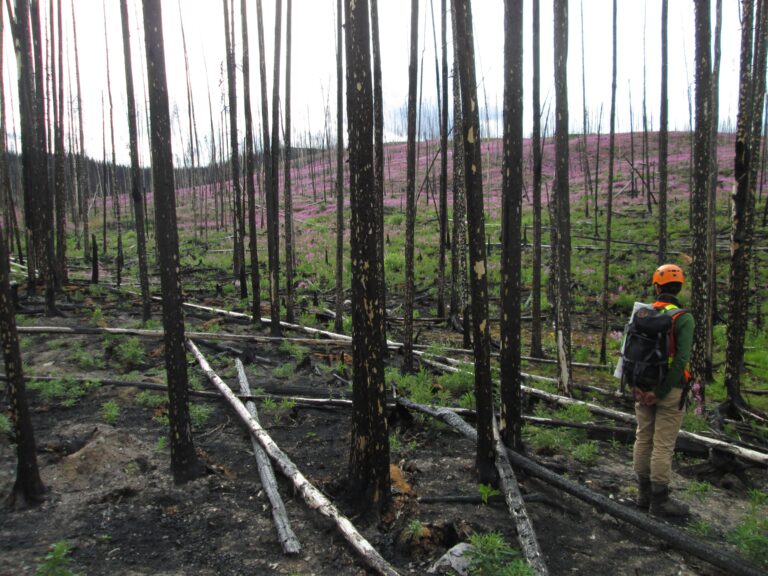
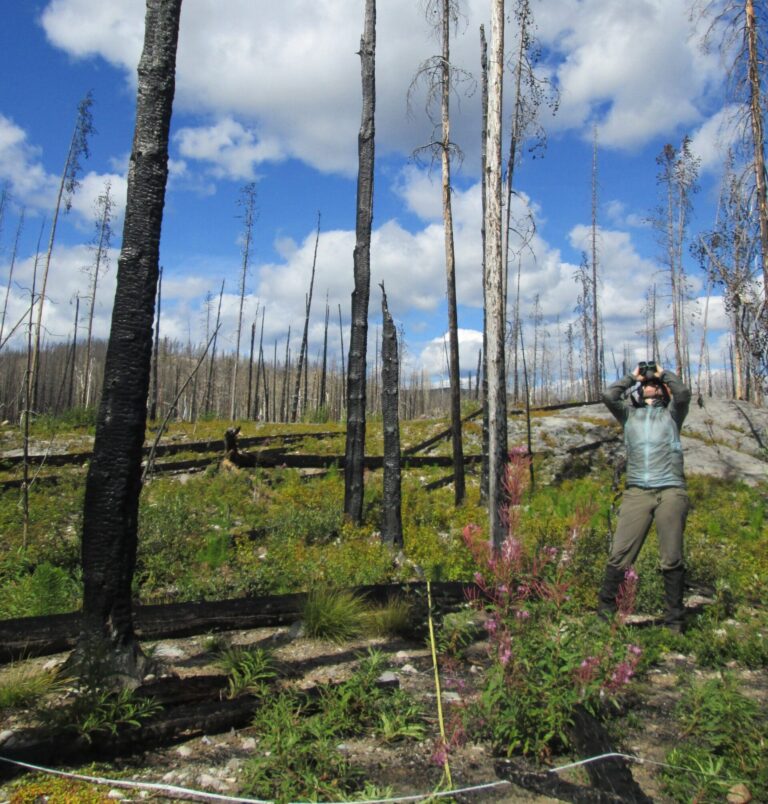
woman surveys burned forest
woman surveys burned lanscape

Dr. Talucci surveys fireweed blooms after fire just in British Colombia, CA.

photo courtesy of Anna Talucci

I have spent over 90 weeks in the field observing landscapes in transition—especially alpine and subalpine ecosystems. I have watched glaciers shrink, fire-scarred landscapes recover, and trees succumb to insect attacks. These firsthand observations of ecosystem transformation drive my commitment to understanding how climate change is reshaping northern landscapes.

Beyond research, I am passionate about expanding opportunities for the next generation of scientists and am an enthusiastic outdoor educator. I have worked as an instructor with Inspiring Girls Expeditions, a tuition-free program that teaches high school girls fire ecology in interior Alaska. In my free time, you can find me outside gardening, hiking, and swimming—often with my dog, Teddy.
Selected Publications

Increased deciduous tree dominance reduces wildfire carbon losses in boreal forests

Black, B., X.J. Walker, L.T. Berner, J. Dean, S.J. Goetz, W.D. Hansen, B.M. Rogers, A.C. Talucci, & M.C. Mack (2026). Nature Climate Change.

Read

Siberian taiga and tundra fire regimes from 2001–2020

Talucci, A.C., M.M. Loranty, & H.D. Alexander (2022). Environmental research letters.

Read