

The economic impact of shifting to climate-smart agricultural and conservation practices in the Bwindi Ecosystem: A Targeted Scenario Analysis.


Executive summary
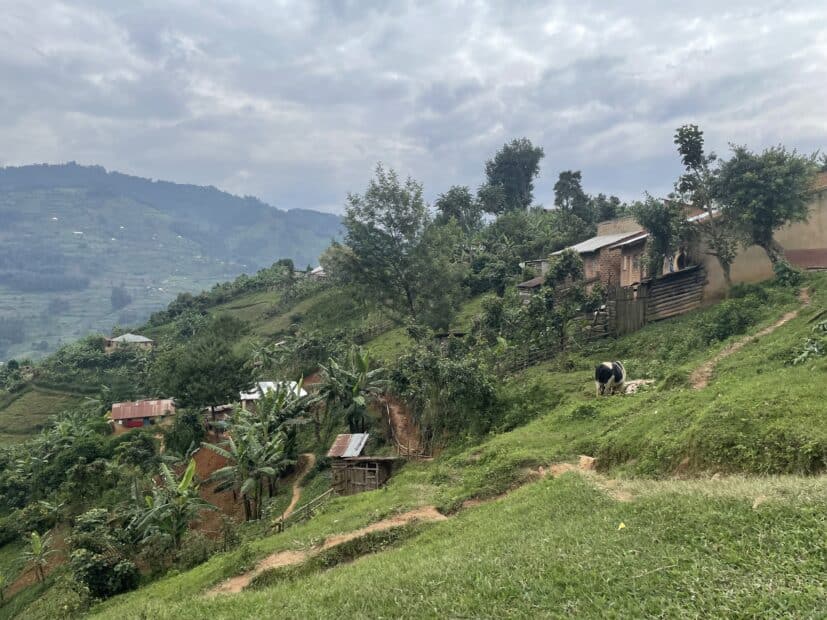
Since the 1950s, southwestern Uganda has faced significant environmental challenges due to population growth, particularly in Kabale, Kisoro, and Rukungiri districts. Over 75% of Kisoro’s population relies on natural resources, leading to issues like wetland and soil degradation, deforestation, overgrazing, water pollution, and poor sanitation. These problems contribute to low productivity, income, and living standards. Climate change exacerbates these challenges, increasing dependency on national parks and environmental resources.
To address these issues, nature-based tourism and climate-smart agriculture (CSA) aim to diversify livelihoods and reduce food insecurity, thereby decreasing the environmental impact. Through sustainable farming techniques, CSA practices enhance productivity, resilience, and emission reduction. Sustainable Ecosystem Management (SEM) alternatives, including CSA, significantly improve productivity and potential revenues compared to Business-As-Usual (BAU) strategies under a changed future climate scenario. SEM can lead to an average revenue increase of 117%, particularly benefiting key agricultural crops for food security and income generation. However, technical and institutional barriers like limited knowledge, asset access, and insecure land rights hinder the design of effective policy and action, limit access to potential sources of capital, and weaken the potential of CSA to deliver resilient economic growth and poverty alleviation.
Effective policy implementation requires improved agricultural extension services, better management of revenue-sharing schemes, and enhanced inter-sector coordination. Public investment in agricultural extension, climate finance mechanisms, and participatory policy approaches are essential. Strengthening policy also includes improving tourism-related revenue- sharing transparency and accountability, which can accelerate sustainable development and conservation efforts in the region.