

A week in the life of Woodwell Climate


A message from President & CEO Dr. Max Holmes
Even after being at Woodwell Climate Research Center for 21 years, I still sometimes marvel at the breadth and depth of this organization. Take any seven-day stretch at Woodwell, and you’ll find our staff scattered across nearly every continent, doing the essential work of turning climate science into action. This past week is a case in point.
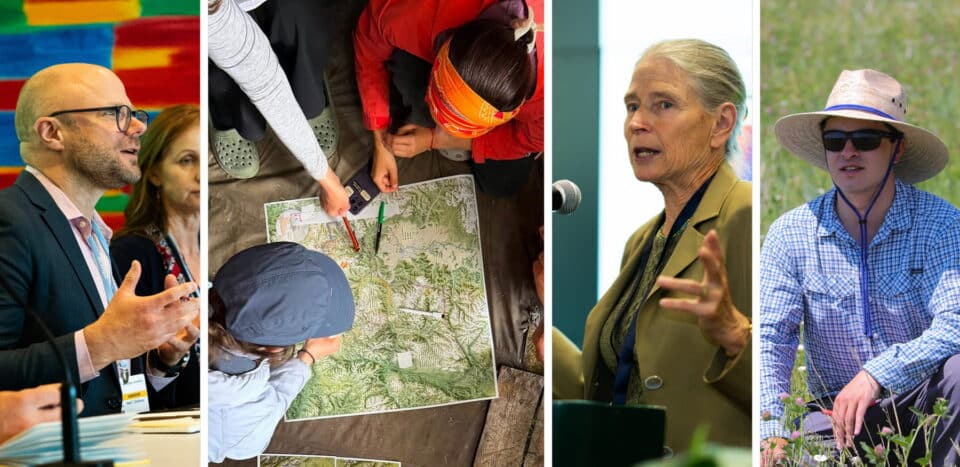
In London, I joined Frances Seymour, Glenn Bush, and other staff at London Climate Action Week, where Woodwell co-sponsored a marquee event with Barclays Capital and the Rockefeller Brothers Fund about the Tropical Forest Forever Facility (TFFF). Seymour and Bush co-keynoted the session, making the case for the TFFF, a developing financial mechanism designed to keep tropical forests standing.
Perhaps fittingly, London itself was gripped by an unusual heatwave sweeping the UK and Europe. And highlighting another strength of Woodwell’s, our leading expert on extreme weather, Jennifer Francis, explained the reasons for the heatwave to a national audience on NPR’s Morning Edition.
Meanwhile, in Bonn, Germany, Ludmila Rattis, Jamie Cummings, and Matti Goldberg spent two weeks immersed in the UNFCCC’s mid-year climate talks. They organized two side events and spoke at three others on conserving standing forests, accounting for warming-induced emissions, tropical agriculture, and local leadership on adaptation. Rattis provided multiple inputs to COP30 Presidency experts, including COP30 President André Corrêa do Lago, to integrate science-based insights into the Forest Roadmap. Through RINGO, the research community’s UNFCCC coordination body, Cummings addressed a closing plenary of 1,500 delegates, while Goldberg moderated the Research Dialogue and trained government experts on reporting on climate resilience.
Thousands of miles away, in northwest Mongolia, Greg Fiske, Sue Natali, Christina Shintani, and Jackie Dean were working with the Dukha, reindeer herders whose ancient balance with the region’s permafrost is now threatened by thaw and by national park boundaries that disrupt traditional migration routes. Through the Reindeer Herding and Resilience project and a grant from Woodwell’s Fund For Climate Solutions, the team is co-producing maps with the herders as a bottom-up tool for advocacy.
In the Alaskan Arctic, tens of researchers were fanning out across the tundra as part of EVOME (the Evolving Meta-Ecosystems Institute), led by Linda Deegan, studying how biological systems interact and if they are able to evolve quickly enough to keep pace with our rapidly changing climate. Alongside them, six distinguished journalists from around the world are spending the season immersed in that work to gain hands-on experience conducting research and exploring the questions being asked at the intersection of evolutionary biology and Arctic ecology.
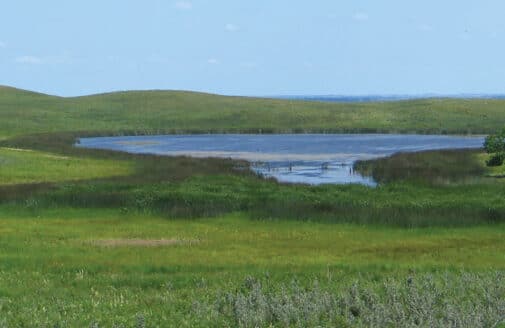
In the Colorado Rangelands, Jenny Watts, Mika Tosca, Andrew Mullen, Jamie Duan (Columbia University), and summer intern Iram Inamdar were conducting soil and biomass sampling and using drone technology to continue to refine Woodwell’s proprietary RangeSTAR system. Samples will be assessed against drone and satellite imagery to determine whether monitoring at a macro level can provide ranchers with the level of data they need to ensure healthy pastures for their grazing animals while actively locking more carbon into the soil.
In Tennessee, Andrew Condia, Dom Dusseau, and Carlos Dobler represented Woodwell at the Delta Revitalization through Innovation, Vision and Empowerment (DRIVE) conference at the University of Memphis, where they co-led a workshop titled “Understanding Local Climate Assessments to Address the Impacts of Extreme Heat on Health” and were invited to attend the Arkansas Black Mayors Association quarterly meeting.
This is, by design, only a partial list. Other Woodwell scientists were in the Amazon, the Congo Basin, speaking at Sun Valley Forum, in Maine’s Howland Forest and more, doing other versions of this same vital work.
From a stage in London to a closing plenary in Bonn, from Mongolia to a river in the Alaskan Arctic, from the Mississippi Delta to the Colorado Plains, Woodwell’s reach over the past week has spanned five continents and ranged from high finance to Indigenous land rights to breaking news. No single effort solves the climate crisis alone. But together, they represent an institution showing up, everywhere, every day, on behalf of a livable future.
Onward,