

Climate change significantly increasing the risk of breadbasket failures across Europe and India
This has major consequences for NATO security


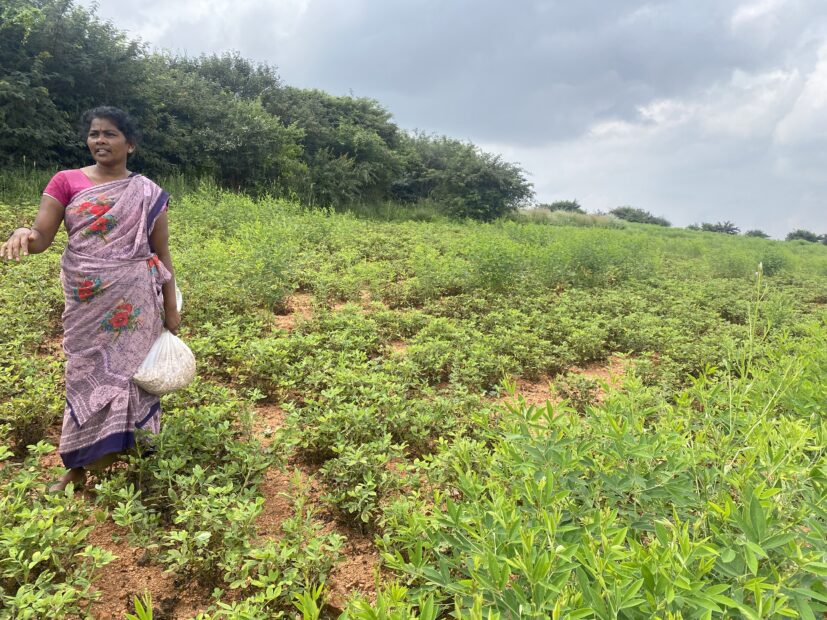
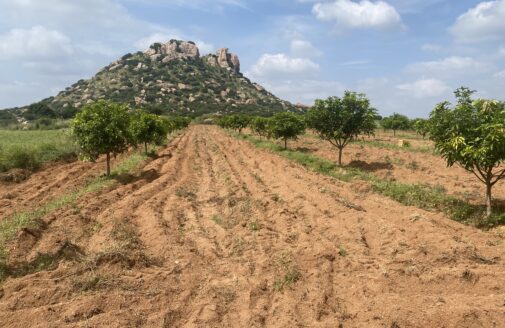
A farmer in soy fields in Andhar Pradesh, India
photo by Taniya RoyChowdhury
In a new joint “Feeding Resilience” report, the Center for Climate and Security, an institute of the Council on Strategic Risks, along with the Woodwell Climate Research Center, shows that climate change is sharply increasing the risk of crop failures in global breadbaskets, which would pose serious threats to Europe, the NATO alliance, and global stability, at a moment of multiple geopolitical shocks. In India and Europe, for example, climate change in the next decade and a half is set to increase the chance of key crops failing by between two- and six-fold. This rising risk comes as the world is already facing severe food shocks due to the wars in Iran and Ukraine, and is entering into a potentially unprecedented El Niño season. The report offers a range of policy recommendations to address this major risk.
The report, Global Breadbaskets: Food System Resilience as a Strategic Imperative, draws on a range of global crop models to assess the growing risk of climate-driven agricultural failures in ”key producers of wheat, maize, and rice” like Europe and India, and examines the cascading geopolitical consequences of a world in which multiple breadbaskets fail at once.
The lead author on the report, Tom Ellison, Deputy Director of the Center for Climate and Security, stated: “We have plenty of examples of how crop failures can contribute to political instability, from the French Revolution to the Arab Spring. In today’s environment, global breadbasket failures could strain NATO priorities, prompt unrest in key countries, and upend trade relationships. Amid climate change, geopolitical uncertainty, food shocks from the war in Iran, and Russian hybrid warfare, investing in a resilient food system isn’t in competition with security–it’s a key part of it.”
Co-author of the report, Noah Fritzhand, Research Fellow at the Center for Climate and Security, added: “With the implementation of NATO’s updated baseline resilience requirements come July and adoption of the EU’s new integrated framework for climate resilience later in 2026, member countries have an opportunity to prioritize investments in resilient food systems, at home and abroad, that can both limit exposure to climate risks and meet Europe’s strategic goals.”
Dr. Alexandra Naegele, co-author of the report and Research Scientist at Woodwell Climate Research Center, noted: “Climate change doesn’t just threaten crop yields and grain quality—it destabilizes entire food systems, from labor and livestock to food storage and transport. These impacts are colliding with a powerful El Niño taking shape, which is expected to weaken the monsoon, trigger heatwaves, and reduce rainfall across India. Quantifying these climate-driven risks is an essential step toward building resilient food systems and safeguarding global food security.”
Co-author of the report, Monica Caparas, Research Scientist at Woodwell Climate Research Center, concluded: “The consequences of a breadbasket failure extend far beyond the region where it occurs. As globally important food-producing regions face growing risks of climate-driven disruption, the effects can ripple through livelihoods, supply chains, food assistance systems, and geopolitical relationships. Understanding and preparing for breadbasket failures is both a national security priority and a humanitarian imperative—one that can help protect lives, reduce instability, and strengthen food resilience before a regional shock becomes a wider crisis.”