


photo by Dave Hollinger
Methane
Methane is a potent greenhouse gas. It traps over 80 times more heat than carbon dioxide over a 20-year period. Atmospheric methane levels are now more than 2.6 times higher than pre-industrial (pre 1800) levels—higher than they’ve been for at least 800,000 years.
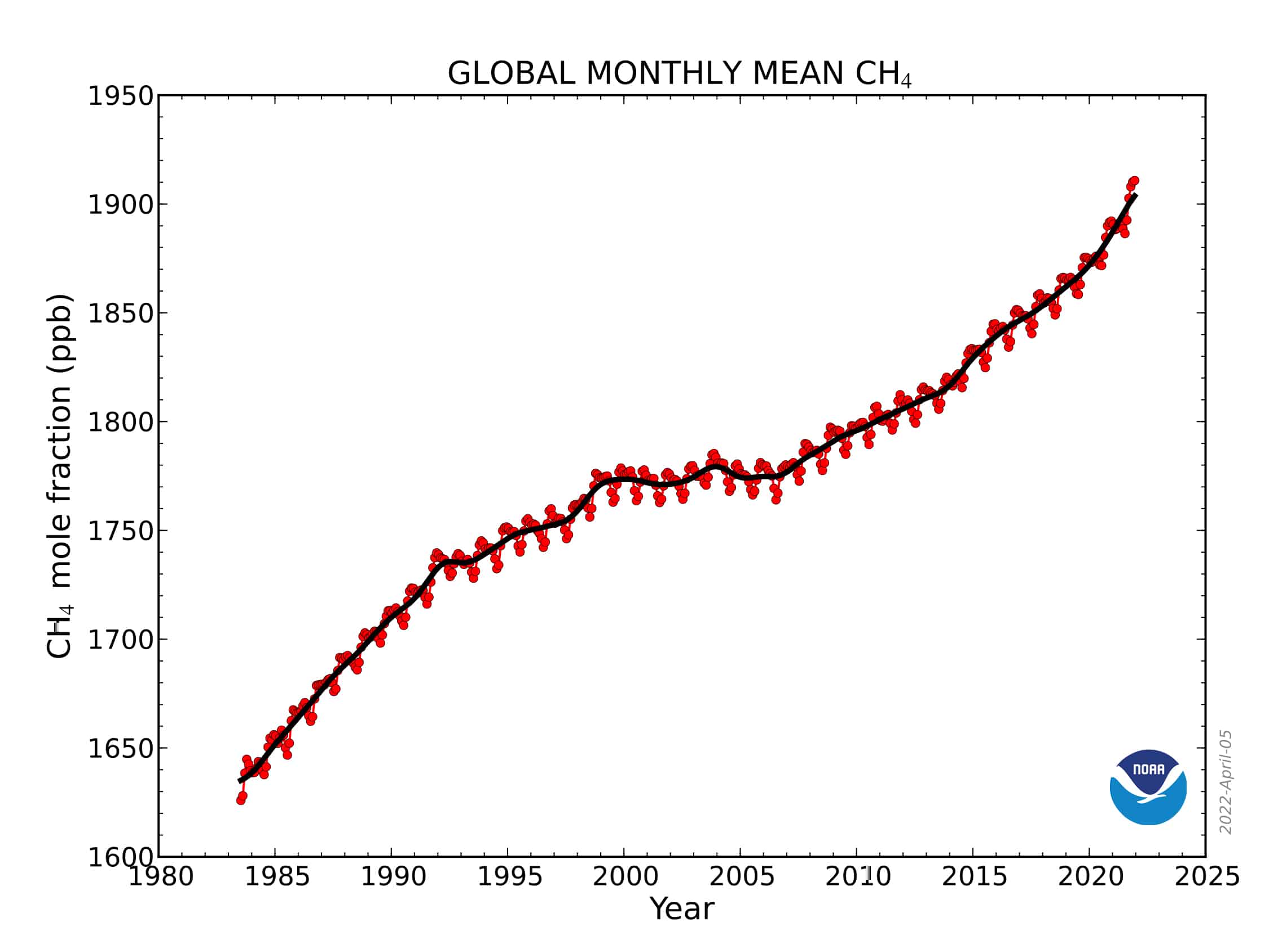
This graph shows globally-averaged, monthly mean atmospheric methane abundance determined from marine surface sites since 1983. Values for the last year are preliminary. (NOAA Global Monitoring Laboratory)
While human use of fossil fuels is a source of methane, climate warming caused by those fossil fuels is also increasing methane emissions from natural sources like wetlands. Currently, one third of global methane emissions are coming just from wetlands alone. We urgently need to mitigate greenhouse gases to reduce the acceleration of methane emissions from global wetlands.
Microbes
Microbes are tiny living organisms that are too small to see, like bacteria, viruses, and fungi. Some types of microbes, called methanotrophs, absorb methane to use as a source of energy. These microbes live on the surfaces of trees (bark and leaves). Exciting new research indicates that methanotrophs living on trees and mosses can transform ecosystems from net sources of methane to net sinks.
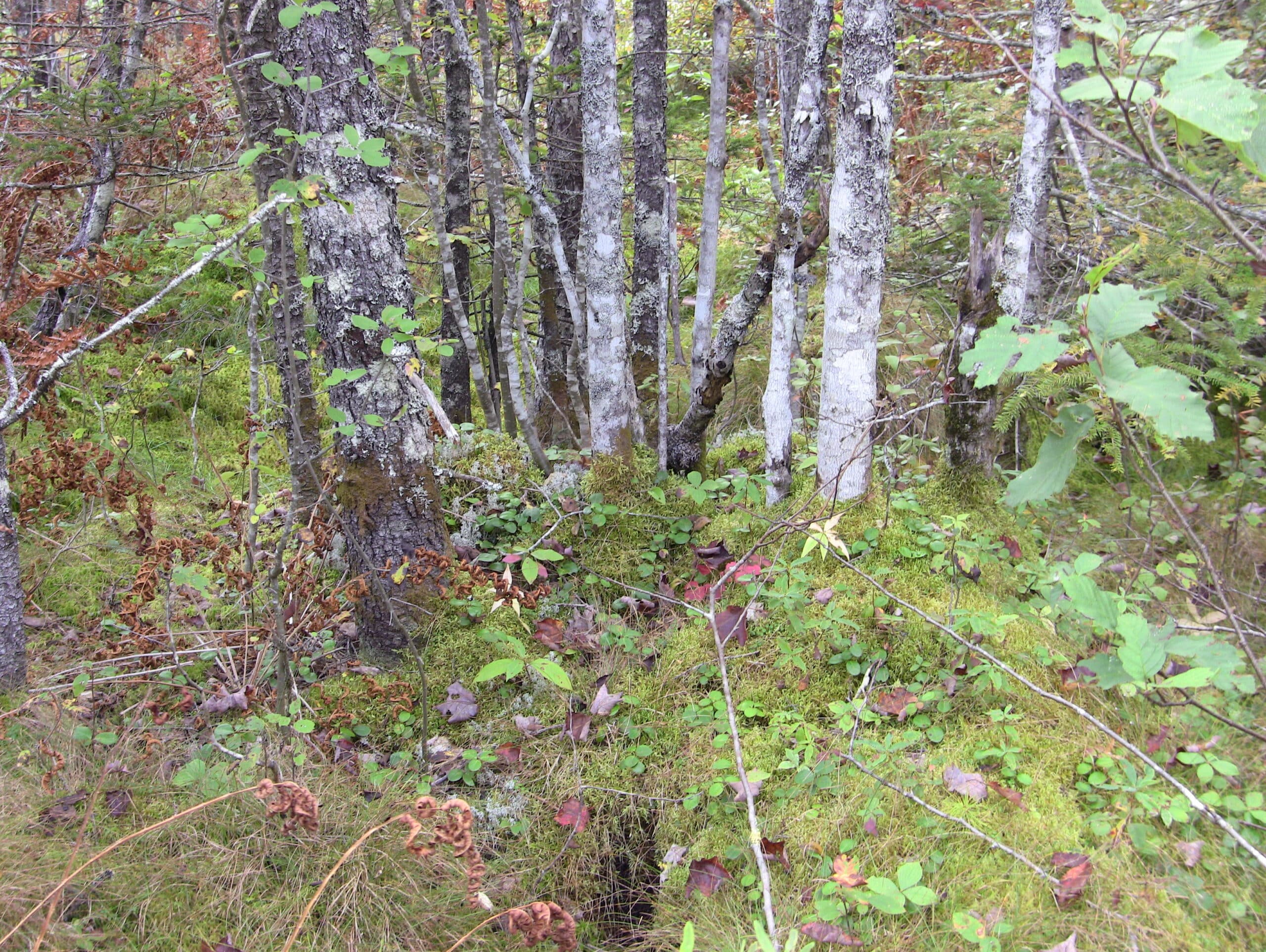
Howland Research Forest, the project’s study site, includes forested wetlands.
Northern forests
Boreal forests and northeast temperate forests are home to 20-35% of Earth’s wetlands (e.g. forested wetlands, swamps, peatlands, bogs and marshes), which means they play a key role in the natural emissions of methane to the atmosphere. With climate warming, wetland methane emissions are expected to increase—and maybe even double—in the near future. We have to act now.
Our project seeks to identify the tree species and environmental traits that are optimal for microbes’ methane consumption. This information will allow us to develop climate-smart management opportunities to “switch” wetlands from sources to sinks of methane, and enhance the existing sink of methane in upland trees.
Our research
Observation
The work starts by observing patterns in methane emissions from tree bark and leaves, and identifying the microbes living within these environments. We will take year-round measurements of soil and tree methane fluxes, as well as the environmental factors that might be driving methane emissions. Our Arizona State University partner, Dr. Hinsby Cadillo-Quiroz, will sequence the RNA and DNA of the microbe populations to identify which species are important for methane consumption.
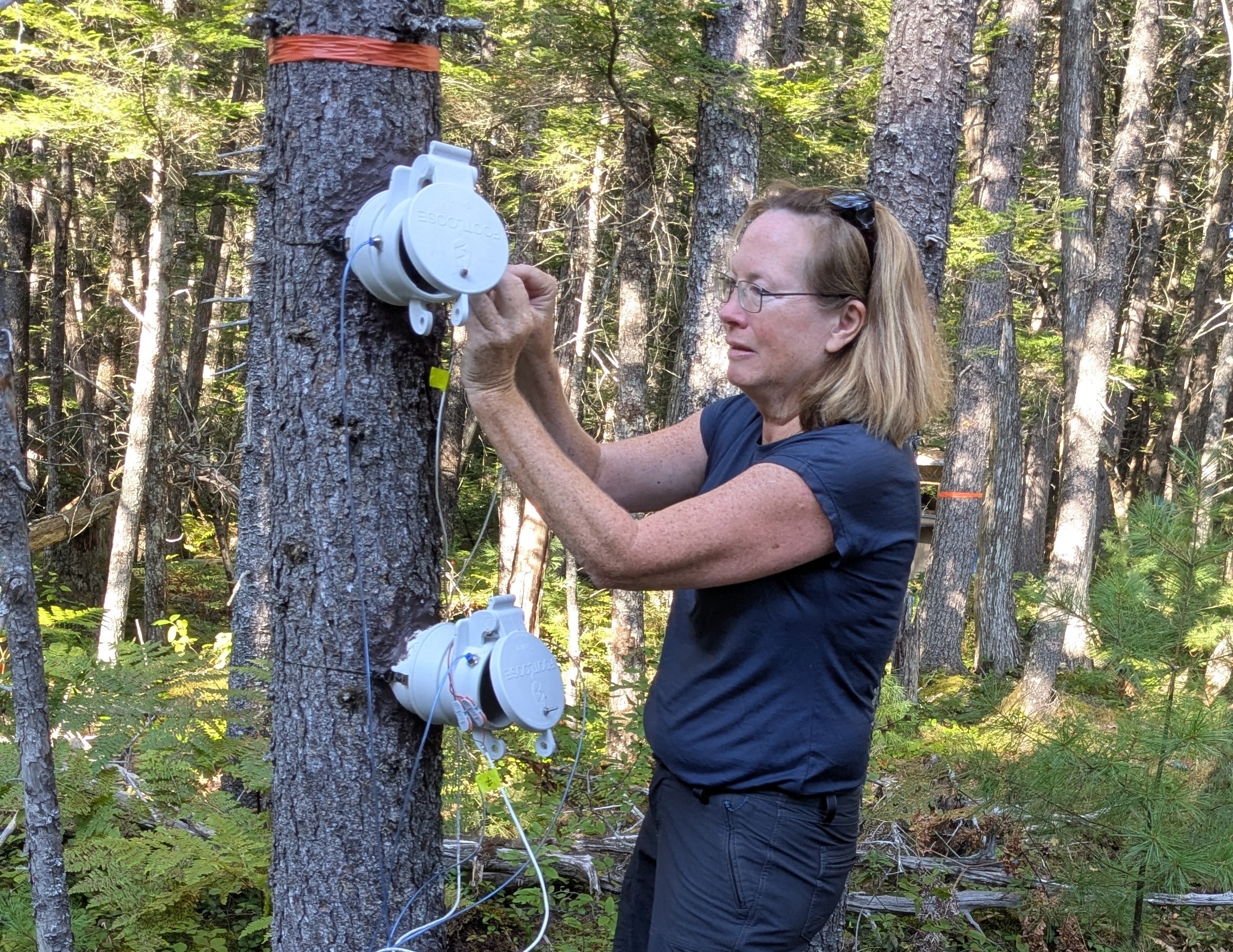
Kathleen Savage checking chambers that measure the flux of methane on tree trunks. Photo by Jennifer Watts
Using both whole-tree chambers and greenhouses, we will further investigate what controls methane sources and sinks for individual tree species and environmental conditions.
Experimentation
Next, we will conduct experiments that transplant trees into methane-emitting soils, both in the greenhouse and within a natural wetland. Our hypothesis is that planting the right tree species will switch wetlands to a net methane sink, while preserving wet soils important to the ecosystem.
Science-informed recommendations
We will summarize our learnings from this research in formal reports and public presentations. These resources will aim to guide forest and methane management, and empower governments, land trusts, foresters, and carbon markets to implement cost-effective natural climate solutions.
If you would like to learn more about this work, please connect with our lead scientists:
- Dr. Jennifer Watts, jwatts@woodwellclimate.org
- Kathleen Savage, savage@woodwellclimate.org