

What did 2025 have in common with 2012?


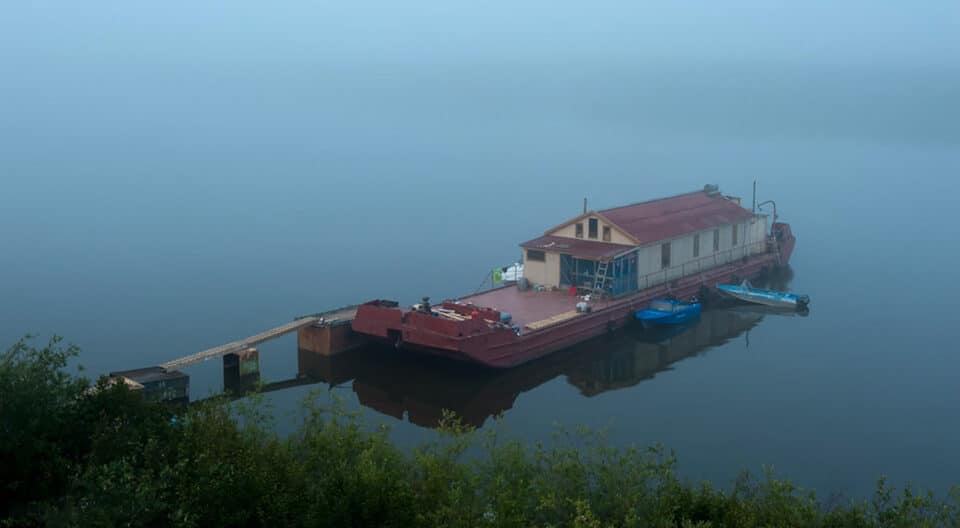
© Chris Linder
A message from President & CEO Dr. Max Holmes
As the calendar flips from one year to the next, I find myself reflecting not only on the many challenges faced in 2025, but also on lessons learned during difficult moments further in the past. One such time was more than a decade ago, deep in the Siberian Arctic, when weather threatened to delay the conclusion of a weeks-long research expedition. As I wrote on July 23, 2012:
“I’m sitting on the barge, drinking a cup of coffee, watching snow whip across the Panteleikha River. More than 24 hours of rain and snow have turned the dirt runway in Cherskiy to mud, threatening to delay our trip home (which is supposed to begin later today as we fly from Cherskiy to Yakutsk, and then to Moscow). A delayed flight out of Cherskiy would have many ripple effects (lots of rebooking of flights, hotels, buses, etc.; lots of disappointment as our reunions with family and friends are postponed; and lots of additional expenses).
There are many easier things to do in life than to lead a group of 33 people to the Siberian Arctic, so why do I do this? I’ve been asking myself that question this morning, intertwined with thoughts about missing my 6-year-old son and 3-year-old daughter, and facing the prospect of missing my wife’s 40th birthday.
Fortunately, there is an easy answer: This is the most important thing I can imagine doing. I’ll keep hoping that our flight departs as scheduled this afternoon, but if not, I–and the larger group–will rally and use our extra time here to pry a few more secrets from this remarkable, challenging, critical, and beautiful environment.”
As it turned out, our flight out of Cherskiy was canceled, we had to spend an additional $30,000 on plane tickets, and I missed my wife’s 40th birthday. Experiences like this are not unusual when working in challenging environments such as the Arctic, and Woodwell scientists have long been tested by such obstacles.
Fast forward to 2025 and all of the challenges it brought. And yes, as in 2012, there have been moments when I’ve asked myself that same question:
“Why do I do this?”
My answer remains exactly what it was then:
“This is the most important thing I can imagine doing.”
I know that most Woodwell staff feel the same way. This is hard work, and at times, there are more losses than wins. But it is essential work, and we will continue to forge ahead.
I’m certain that 2026 will bring new challenges, but I am confident that Woodwell Climate Research Center will continue to stand tall, doing our science, using our voice, and staying focused on charting a course toward a positive future, no matter the obstacles in our way.
In fact, we are doing much more than simply holding our own; we are forging ahead. In the coming months, you’ll hear about Woodwell’s new office in Washington, DC; our new scientific impact strategy; and how we are continuing to pursue our highest priorities without being beholden to federal government agendas.
Thank you to all our friends, supporters, collaborators, and partners. This is a true team effort. We wouldn’t be able to continue to stand tall without you.
Onward.