

Climate change is impacting America’s small towns
Woodwell is helping them prepare for their climate futures


An old Baptist church near Tunica, Mississippi.
photo by Tiago Fernandez
One overcast week in January, Government Relations Director Andrew Condia, Research Associate Dominick Dusseau, and I found ourselves driving along the banks of the Mississippi River. Our road trip took us through Tennessee, Mississippi, and Arkansas to speak with leaders in four small towns about their climate risk. Representing Woodwell’s Just Access program, we wanted to understand what information communities most need to help their towns envision a thriving future in the face of climate change.
The small towns of the Mississippi are interconnected in the challenges they’re facing, but also in their resolve. They are looking for solutions that will help them preserve their way of life, while readying their communities for a changed future. Like patchwork squares in a quilt, our conversations in each town formed a larger pattern: America’s small towns want to adapt. They just need the resources to do so.
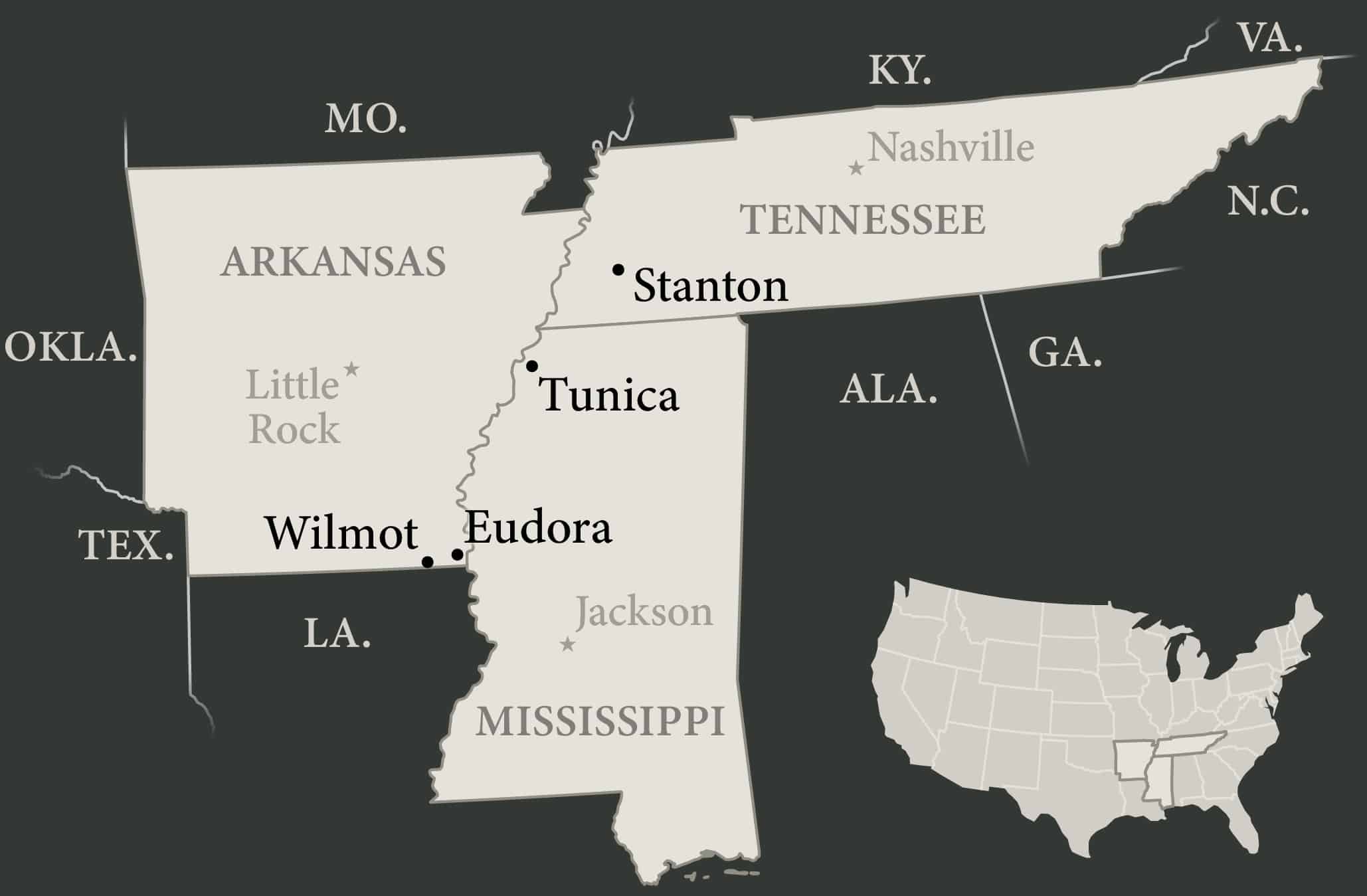
map by Christina Shintani
Wilmot, Arkansas: population 400
We arrived in Wilmot around midday and were welcomed by Mayor Carolyn Harris, her team, and a spread of baked chicken, green beans with ham, rolls, sweet tea, and her special-recipe salad.
“When I say, ‘let’s do lunch’, we do lunch,” says Harris.
Wilmot’s pink-fronted town hall sits on the old main street facing Lake Enterprise, next to faded or abandoned buildings. Main Street used to have two movie theaters, a drug store, and a grocery, all of which shuttered as the population declined. The town is surrounded by farms, and agriculture drives the economy, though not as much as it used to.
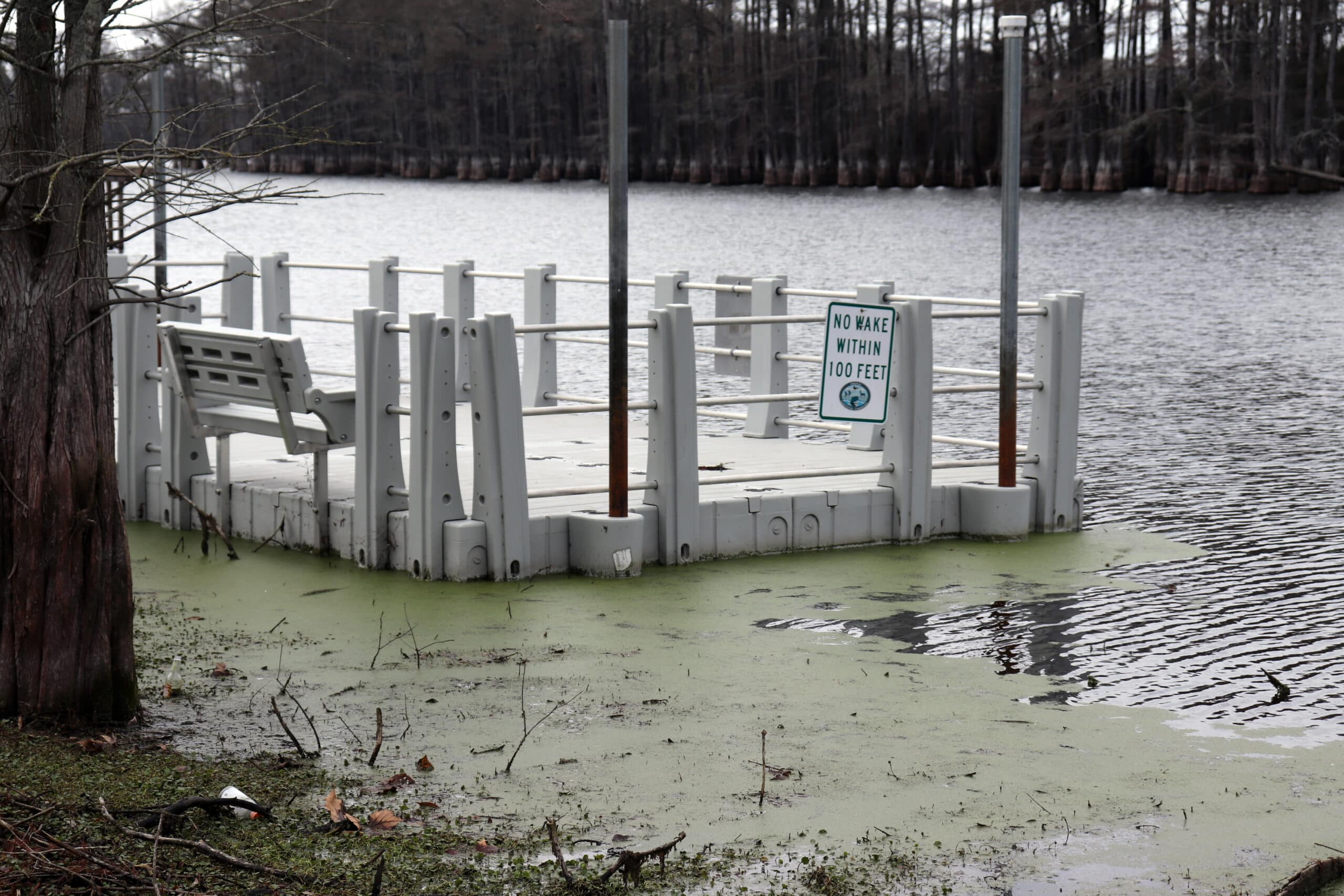
A boat dock on Lake Enterprise.
photo by Sarah Ruiz
This is a pattern across the Mississippi Delta regions. Rural towns have shrunk dramatically over the years as the small family farm became a much harder economic proposition. According to Water Operator Theodis Kitchen, a fourth-generation resident, Wilmot is at its lowest population in decades.
The four communities we visited that week are all members of the DRIVE program, an initiative at the University of Memphis that helps Delta region towns pursue economic revitalization on their own terms. Mayor Harris is envisioning a new economy for Wilmot that will attract newcomers to the town through its recreation opportunities; the natural lands around Lake Enterprise offer fishing, hunting, and camping. But the impacts of climate change could complicate that picture.
The challenge, Water Operator Apprentice Derrick Jackson points out, is pollution from surrounding farms. Industrial agriculture makes common use of pesticides and defoliant sprays, and when it rains or floods, those chemicals travel. While this is already a concern, climate change could make it worse as more extreme floods or wildfires carry harmful chemicals into new areas.
“We would like to know the risk,” says Harris.
Jackson says that kind of information will help more than just Wilmot. Climate change is a shared burden here in the Upper Delta.
“[Climate change] doesn’t just affect this town, you know,” says Jackson. “It goes all the way down [Highway] 165. Pretty much every town has the basics of what we have. So anything that we are able to find that could help us, could help the next towns over.”
Eudora, Arkansas: population 1,700
The next town over is Eudora, Arkansas, led by Mayor Tomeka Butler. Butler assumed office on March 11, 2020. The previous mayor’s assistant introduced her to the office, handed her the keys, and wished her luck.
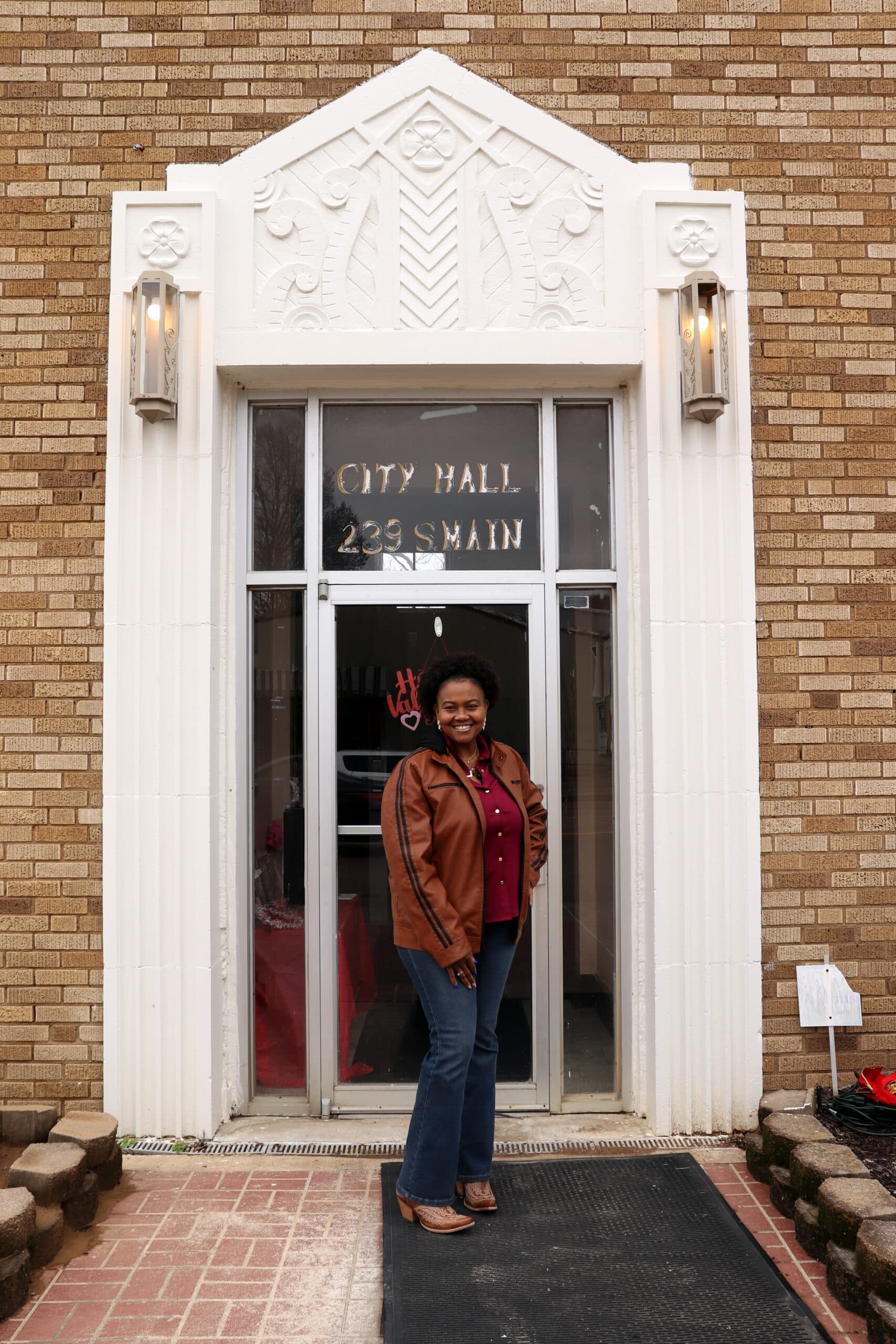
Mayor Tomeka Butler in front of Eudora City Hall.
photo by Sarah Ruiz
“I’m looking around like, that’s it? There’s no manual or anything?” says Butler.
Her first day on the job was the day COVID-19 was declared a pandemic. The year that followed, Butler learned quickly that the best way to keep her people safe was to share information and ask for help. Now, she approaches Eudora’s climate challenges in a similar way, joining networks like DRIVE and the Arkansas Black Mayors Association (ABMA) to broaden Eudora’s access to resources.
“I’m not an expert, but I love surrounding myself with the people who are,” says Butler.
Technical expertise on climate adaptation can be hard to come by in towns like Eudora, whose population is largely elderly or aging.
But small towns face the same climate risks as larger municipalities—regardless of whether or not they have the resources to address them. Eudora is the warmest populated area in Arkansas, and heat stroke is a major hazard for outdoor workers during the summer. Flooding also plagues the town.
“Most of the time it doesn’t matter if it’s a little rain or a big rain, particular areas are going to flood, and sadly, these areas are mainly where the elderly people live,” says Butler. “There’s been times where it has rained and I’ve literally had to put people on standby who have boats, because that will be the only way we’ll be able to get to them.”
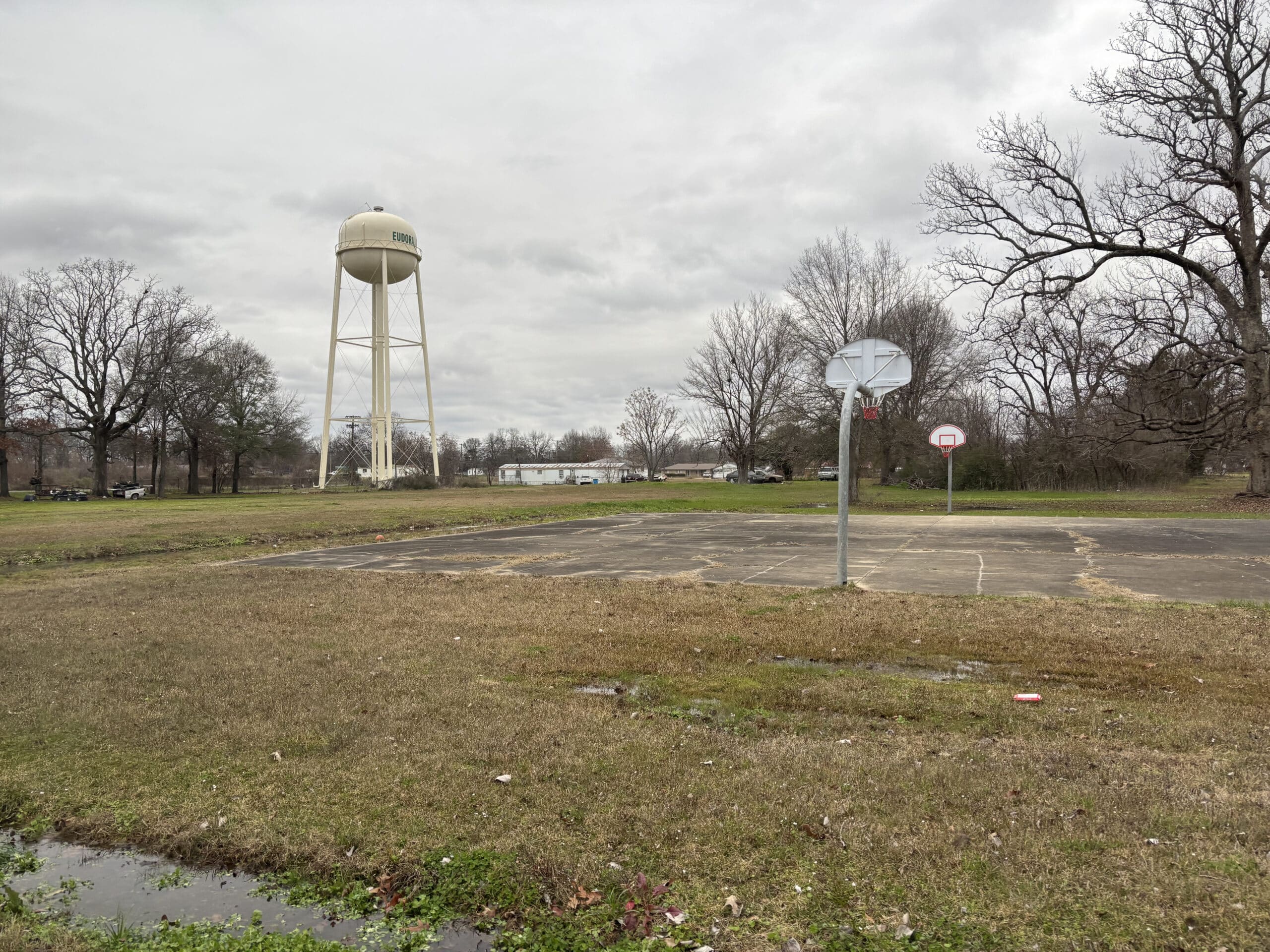
Public park in Eudora that frequently floods.
photo by Sarah Ruiz
But Butler tends to focus more on what assets Eudora does have, rather than what they’re lacking. As she drove us through town, pointing out neighbors’ houses that were built over creeks and streets that become impassable during light rain, she told us how the town is making progress because of the networks they’re a part of. Through ABMA, Eudora is participating in a watershed revitalization project, which will help the town abate flooding with green infrastructure. Mutual aid agreements with nearby towns’ fire departments have helped with emergency response. And, with help from a local researcher, the town will be piloting a vertical agriculture system in its old school building.
Woodwell is now also part of Butler’s ever-growing expert network. She hopes information from a risk assessment will inform her plans for a growing Eudora, giving her the information she needs to not only keep her people safe but help them thrive.
“I just be concerned about the people,” says Mayor Butler.
Tunica, Mississippi: population 1,000
With a close-knit community, yearly festivals, and a cheery mural across from town hall welcoming visitors, Tunica, Mississippi resembles what Main Street Program Director Laura Withers calls a “Hallmark movie town.” A few blocks from town hall, there is a central playground with slides and monkey bars. Right now, in the middle of a winter day, it’s pleasantly sunny. In the summer though, the combined heat and humidity make it a dangerous place to play.
“If you want to take your kids to play on the equipment, you can’t. It’s too hot to the touch. Mom cannot stand out there in the dead of summer. It’s too hot,” says Withers. “The bummer is that it’s hottest in the summertime when kids aren’t in school.”
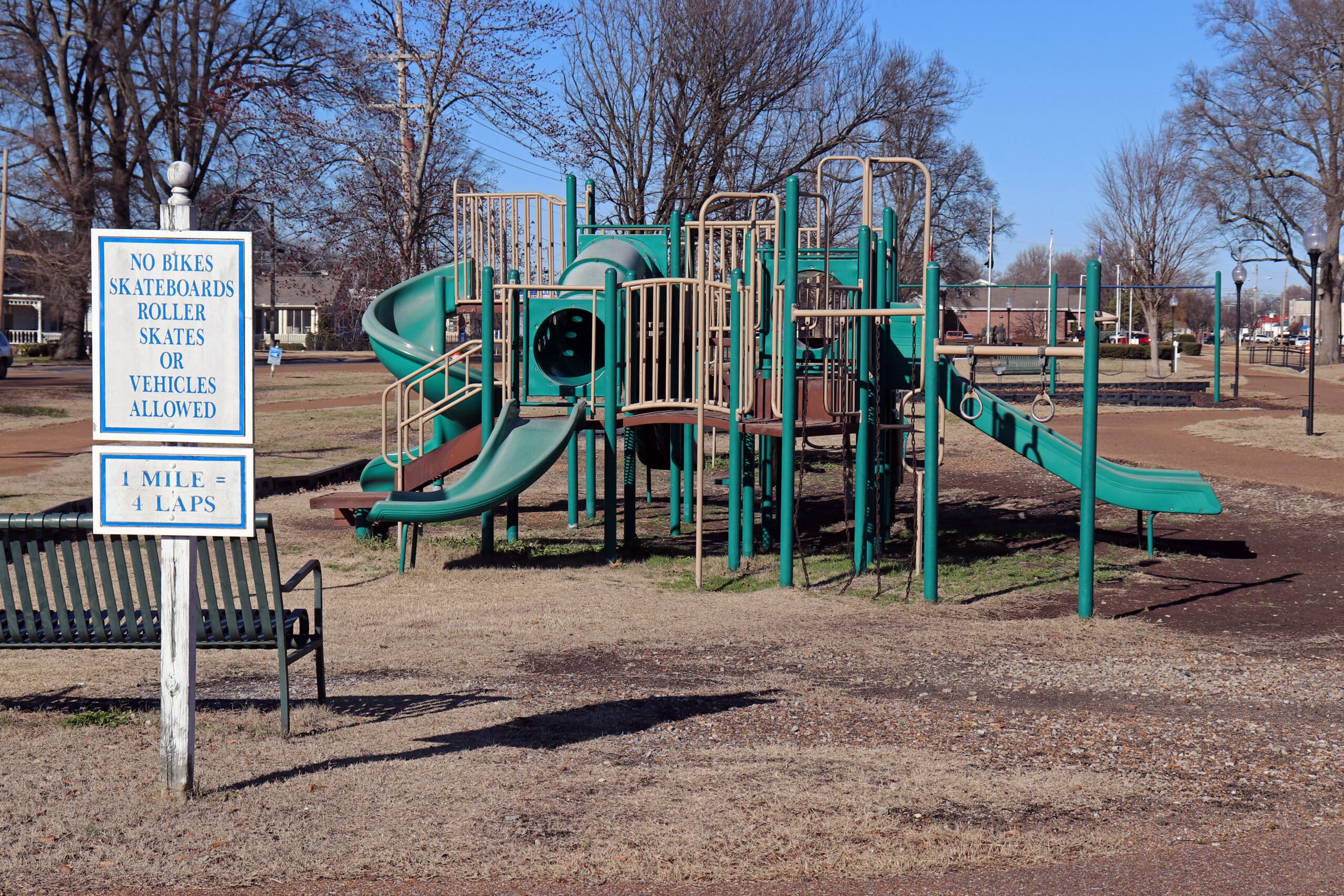
A playground in Tunica that frequently gets too hot for children to play in the middle of the day.
photo by Sarah Ruiz
Like much of the region, Tunica struggles with extreme heat. For Withers, whose job involves programming Tunica’s social amenities like the annual Rivergate Festival, extreme heat poses a risk to the features that make the town an inviting place to live.
“When people think about where they want to move or where they want to raise their family, at the end of the day, people want good education, nice parks, you know, quality-of-life type things,” says Withers.
Withers also handles grant-writing for Tunica. She says she’s noticed many applications now place an emphasis on infrastructural sustainability to make sure the money granted represents a long-term investment in the town’s success. Without concrete data on climate risks like flooding or extreme heat, Withers says her applications are not as competitive. For a town of Tunica’s size, grants are an important funding source for municipal projects.
“Anytime you can get the tiniest bit of a crystal ball into what you’re dealing with moving forward, whether it be climate or jobs or the school system or healthcare, whether it be good or bad, you can benefit from it,” says Withers.
A mural in Tunica, MS.
photo by Sarah Ruiz
Stanton, Tennessee: population 400 and growing
The longer we spent in the region, the more we saw the traditionally agricultural fabric of the Upper Delta interweaving with budding pockets of renewable energy infrastructure.
The uniformity of fallow fields was broken here and there by a towering range of wind turbines or bright rows of solar panels. As we pulled into the town of Stanton, Tennessee, about 50 miles northeast of Memphis, we passed BlueOval City—a 4,000-acre Ford manufacturing facility. The plant was originally established to be a center for electric vehicle manufacturing, but the company has since pulled back those promises, opting instead for “higher-return opportunities” in response to regulatory changes. Ford now plans to manufacture gas-powered trucks there as well as batteries.
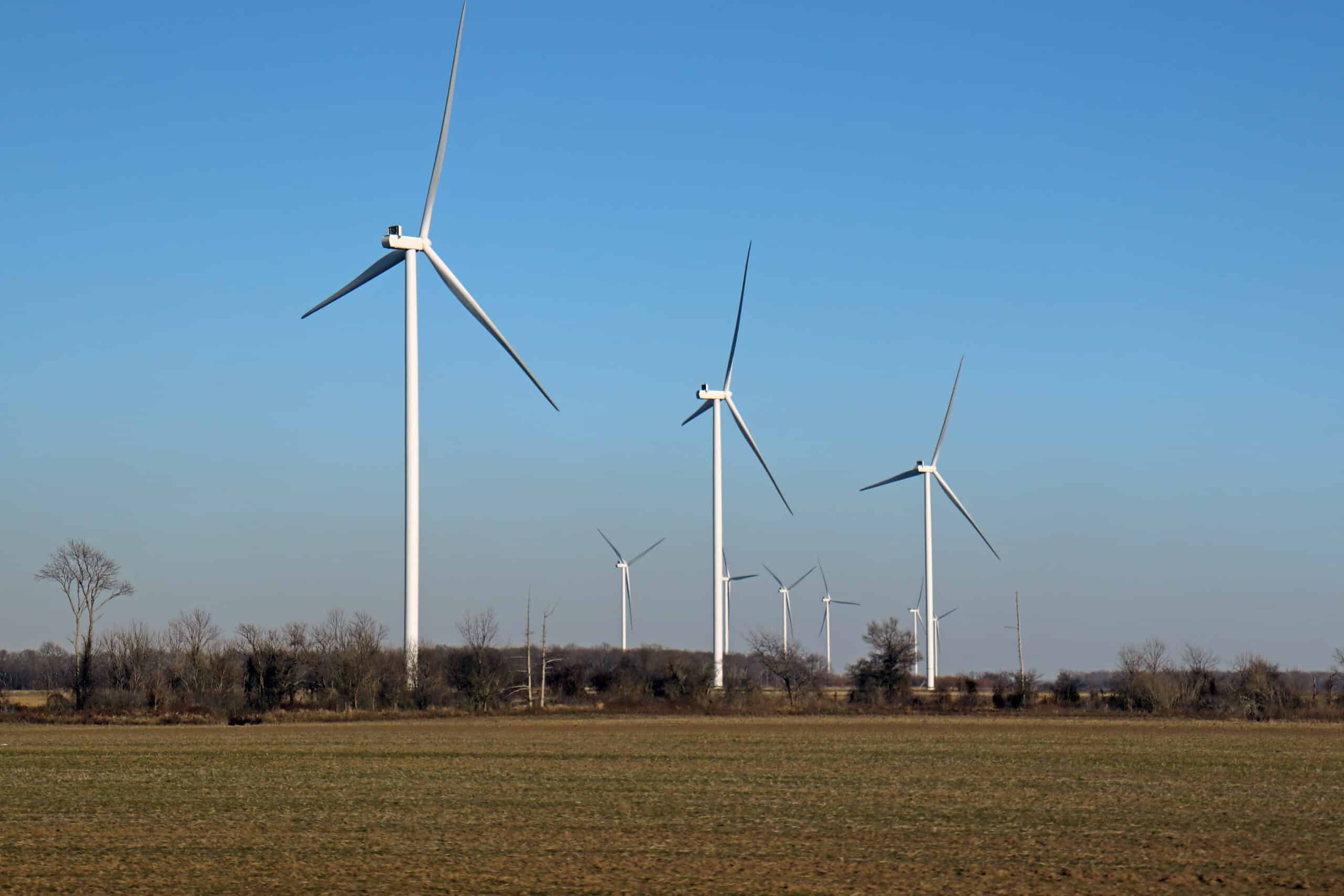
Wind turbines in the Mississippi Delta region.
photo by Sarah Ruiz
Despite the pullback, the plant will still generate a massive influx of people—with some estimates up to 10,000—and accompanying development. Mayor Norman Bauer is trying to navigate the new future it represents.
“That is going to be the economic driver if we let it be, but my intent is for Stanton to grow on its own merit,” says Bauer.
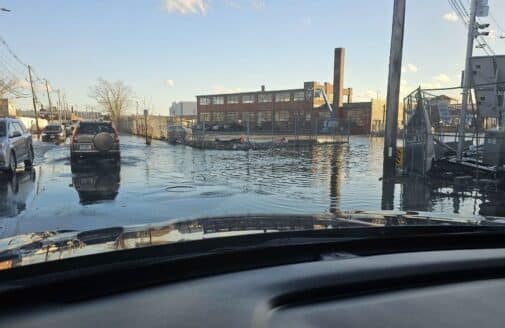
DRIVE cohort members are encouraged to develop tailored solutions to the unique challenges facing their communities. For Stanton, that means getting the town “shovel ready,” as Bauer calls it, with the infrastructure to support a growing population. Stormwater management is top of that list. Flooding is already a concern where a drainage ditch cuts through town and frequently overflows.
“The first of the past dozen 100-year floods was in 1996 and they just kept coming,” says Bauer.
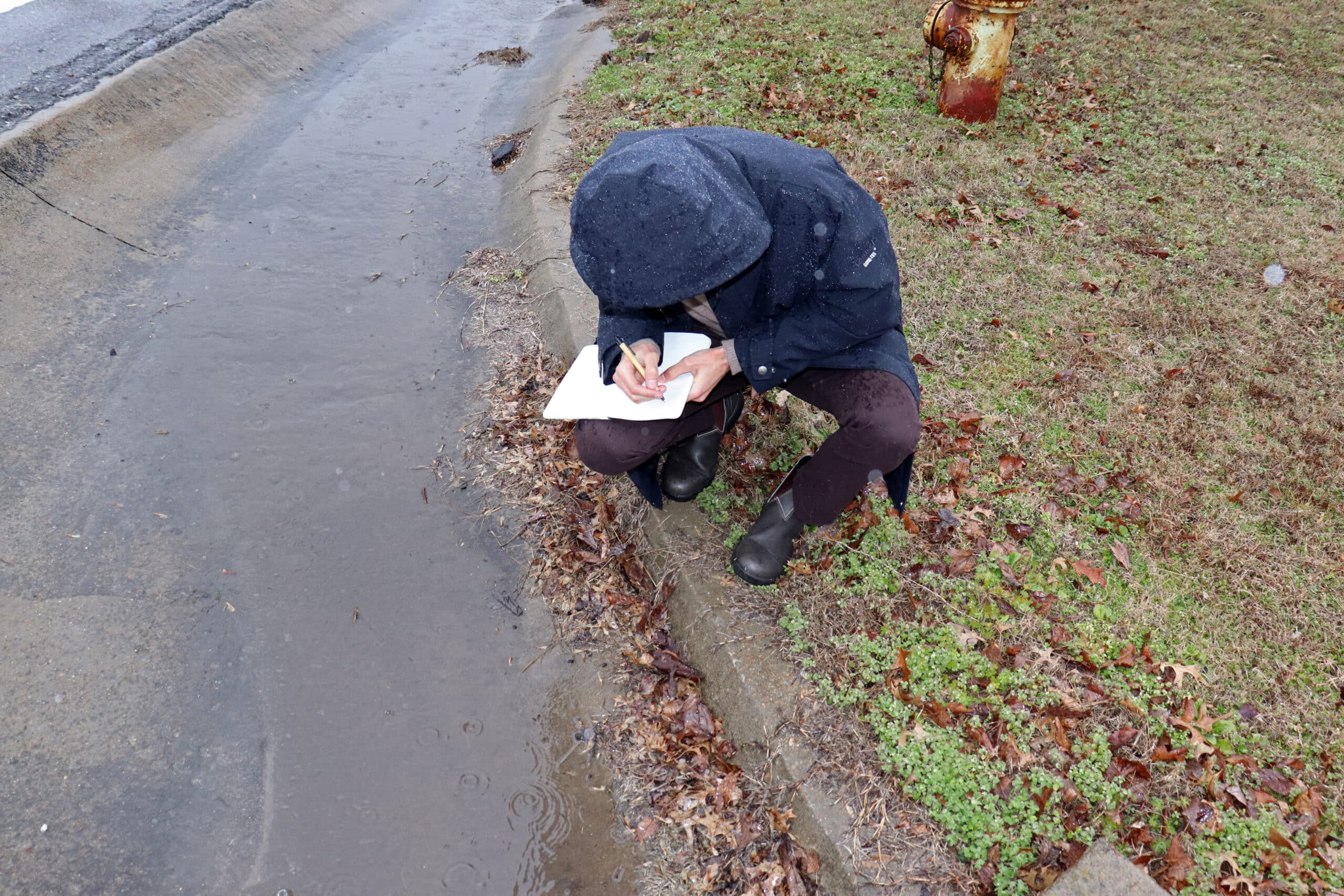
Dominick Dusseau examines flooding patterns in Stanton, TN.
photos by Sarah Ruiz
Without an updated land-use plan in place, development could worsen that. And without data on flooding and extreme rainfall risk, it will be much harder for Stanton to develop a plan that carries the town through what the future holds.
“We don’t know how it’s going to change, but we do have to look at the common fact that it is going to change. We do have to have a plan in place. This is one of those things where you can’t be reactionary,” says Bauer.


Latest in Risk


- In The News