

Does regenerative grazing help sequester carbon? We don’t know yet.
The practice holds potential, but the underlying science is sparse


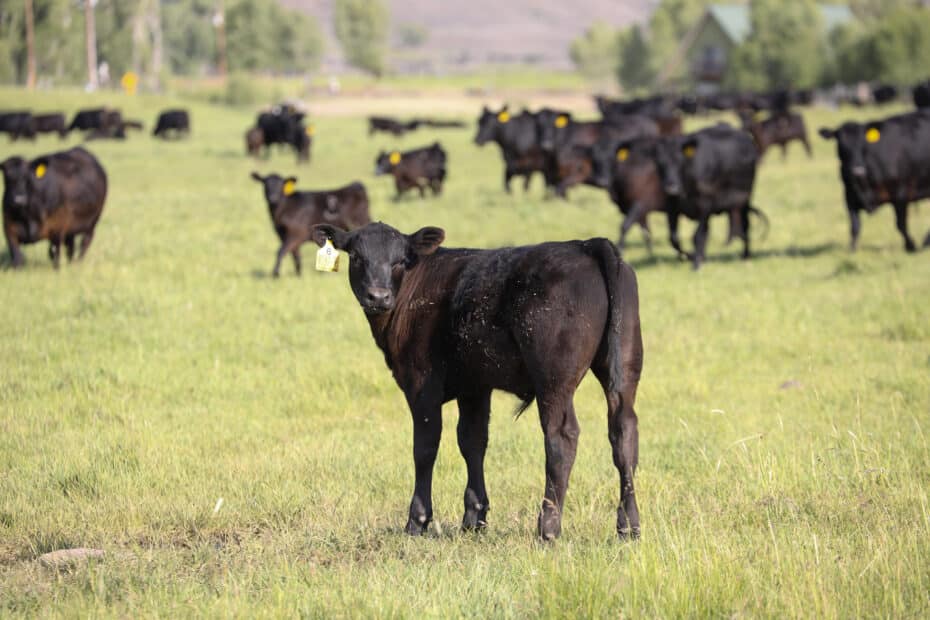
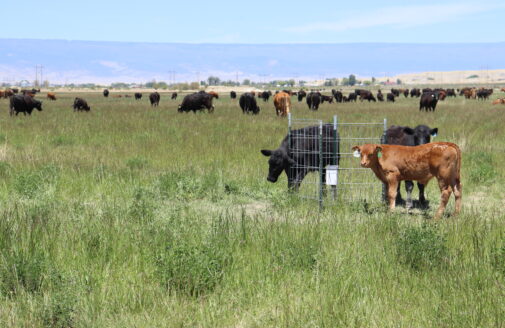
Grazing cattle on Colorado rangelands.
photo by Dave Nagel
Grazing lands are everywhere. These lands, used to raise domesticated animals like cows and sheep, span over 12 billion acres, comprising nearly 40% of ice-free land on Earth, and represent the largest category of human land use.
Grazing lands are not just working lands, they are also critical grassland, shrubland, and woodland ecosystems that provide important ecological benefits like carbon storage. Poor management practices like overgrazing have resulted in the degradation of these ecosystems. In the United States, over half of rangelands are considered degraded, resulting in the loss of 50 billion tons of carbon that would otherwise be stored in soils. Grassland species are in decline, and the productivity of these lands has dropped, with economic consequences for ranchers.

A bee rests on a clover flower growing on grazing lands in Colorado.
photo by Dave Nagel
What is regenerative grazing?
Regenerative grazing is the practice of moving livestock between pastures to allow more time for vegetation to rest and re-grow, and it is often touted as an antidote to degradation. The technique is intended to emulate the movements of wild grazers like bison and elk and can maximize grass growth and help incorporate more plant biomass into the soil, two factors that are key to increasing soil carbon. Regenerative practices can also improve the quality and diversity of food for grazing animals.
Because of its potential, regenerative grazing practices have generated much buzz, particularly in the world of carbon credits. Current proposed grassland management projects on the Verra Registry—the world’s largest public database on carbon credits—estimate that in total they will remove as much as 40 million tons of CO2 per year. Despite these claims, there have been few conclusive scientific studies to verify. Accurate soil carbon estimates are crucial to right-size expectations for producers, policymakers, and financial markets supporting regenerative grazing practices as a potential climate solution, yet this lack of conclusive evidence leads to the need for more rigorous analysis.
Why is it so hard to study rangeland carbon?
An ideal study of the carbon storage potential of regenerative practices requires before and after measurements on comparable fields using both conventional and regenerative techniques. This is hard to do for a couple of reasons.
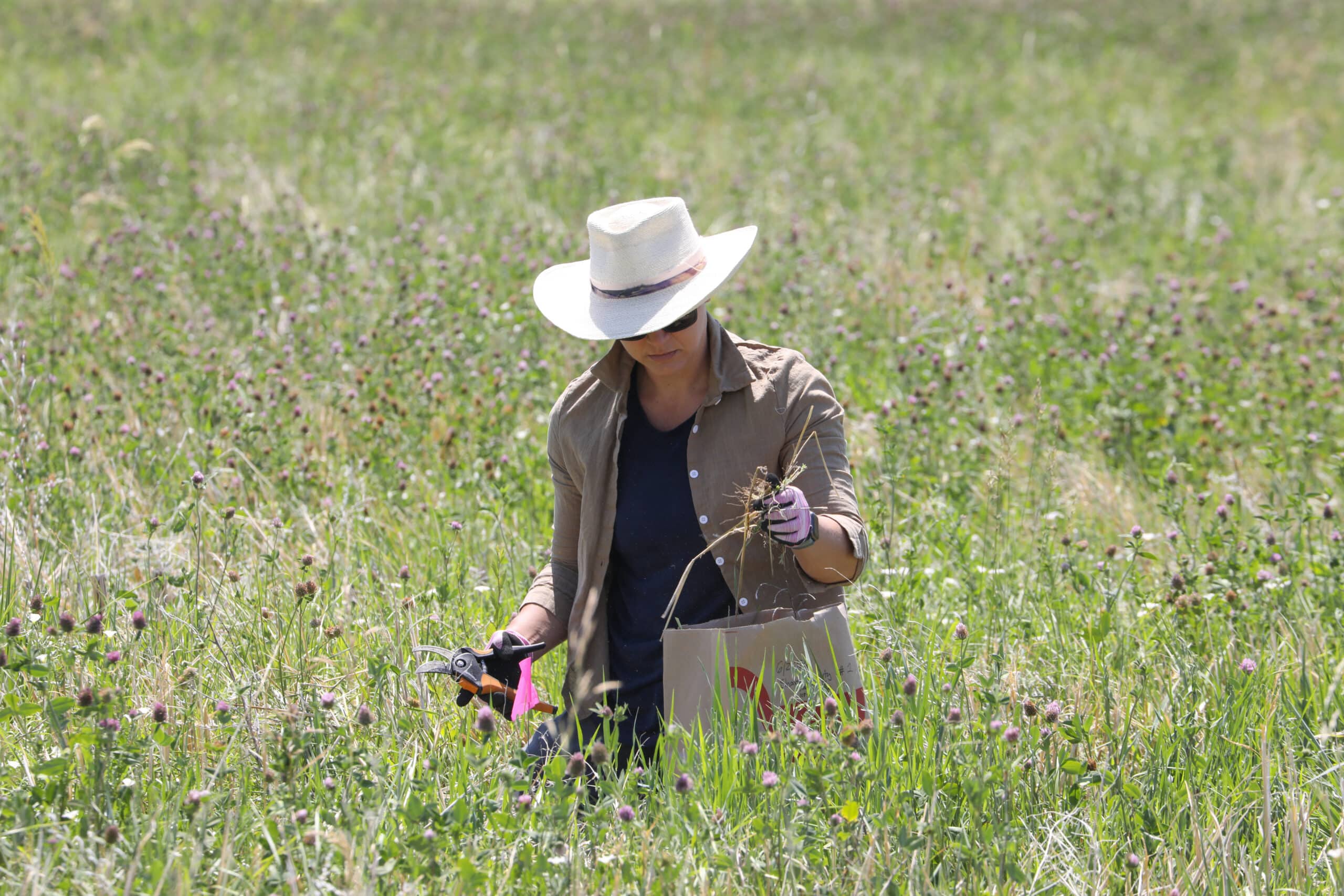
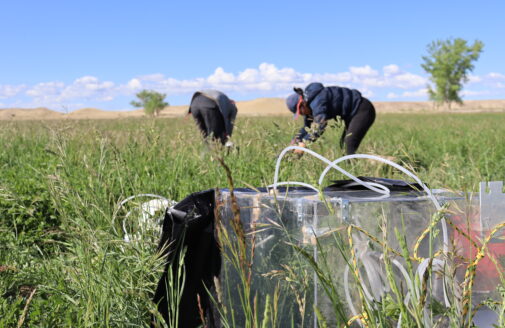
Associate Scientist Dr. Jennifer Watts samples plants growing on grazing fields in Colorado.
photo by Dave Nagel
First, rangelands are complex systems with many different factors, including soil type, vegetation and land use history, playing into how much carbon gets locked away in soils. Second, the grazing practice changes are individually tailored to work with each rancher’s operation, adding complexity. Third, expected changes in soil carbon are small relative to the large and variable background carbon stocks in rangelands, often leaving scientists looking for a needle in a haystack.
A review assessing the quality of existing evidence, led by Woodwell Climate researchers, found 70 papers that attempted to answer this question. Of those 70 papers, only 10 were found to make scientifically robust comparisons of soil carbon between conventionally and regeneratively managed sites. These 10 studies showed an average result of no change in carbon. Most of these 10 studies used small experimental plots that allow researchers to control for confounding effects, but can simplify the system past the point of recognition for a rancher. Two studies even used lawn mowers instead of grazing animals, raising questions about the applicability of these findings to real, working ranches.
A large subset of the 70 studies compared soil carbon levels at ranches already under regenerative management with nearby conventionally grazed ranches. These studies suggest that, on average, regenerative grazing can sequester 0.7 tons of CO2 per acre per year more than conventional grazing. However, this approach makes the assumption that the present-day soil carbon level on a conventionally grazed site is equivalent to the baseline level of the regenerative site prior to change. This assumption requires careful pairing of vegetation, soil type, climate, and land-use history that was not documented in most of the studies.
The variable quality of existing studies leaves us no closer to understanding the benefits of regenerative grazing, and scientific study is still needed.
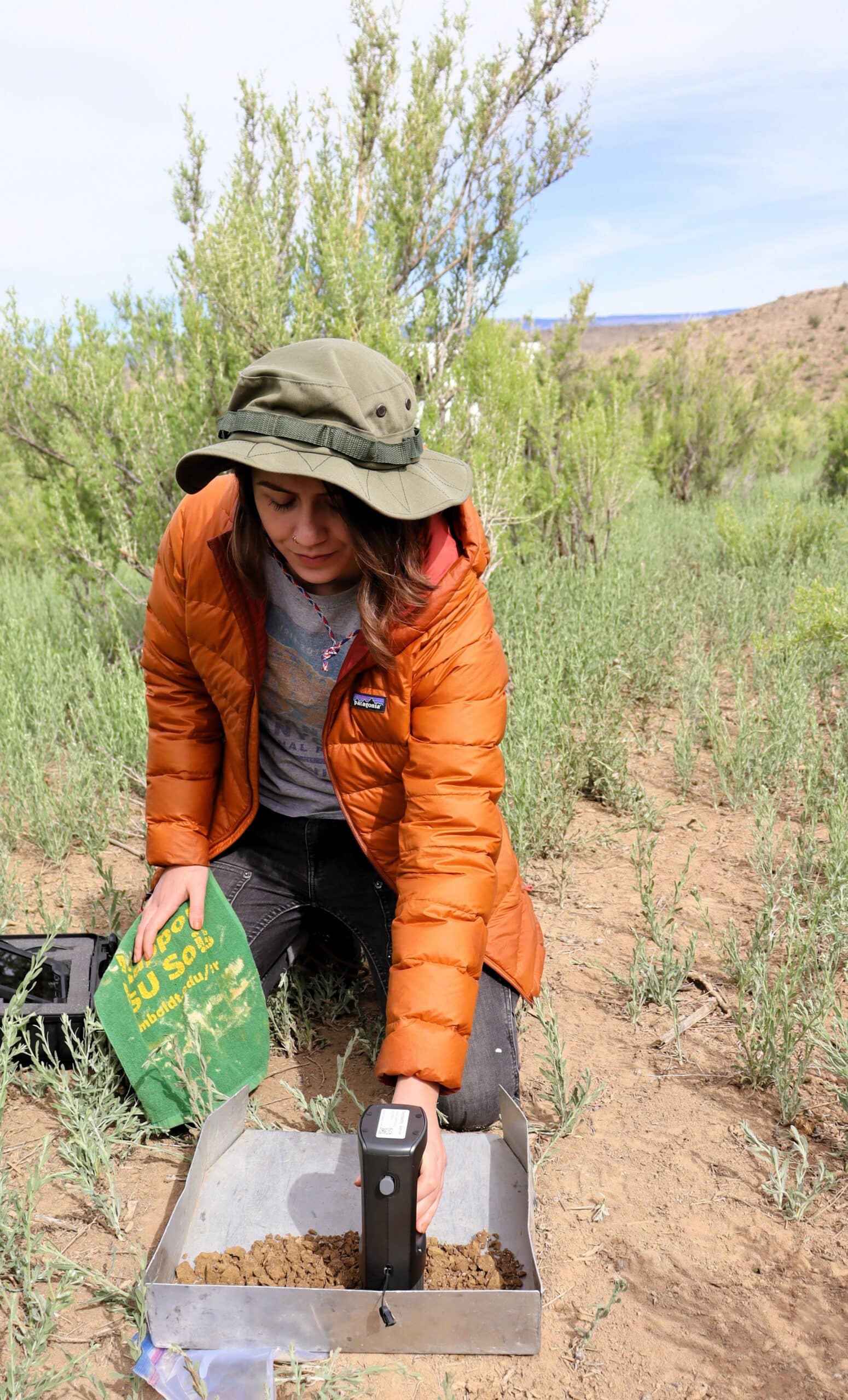
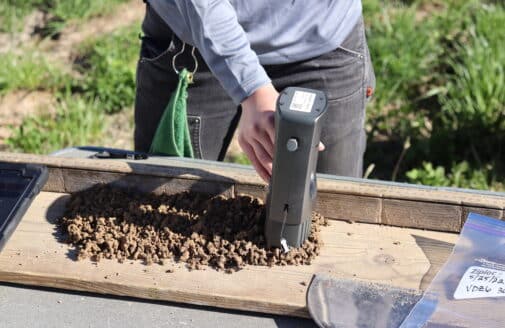
Research Assistant Colleen Partida analyzes soil samples using spectroscopy.
photo by Sarah Ruiz
Woodwell’s rangeland carbon projects are working to fill the data gap
The flurry of attention on regenerative management practices means funding and executing long-term studies that can generate high-quality data is an urgent priority. Projects on the Verra Registry are claiming to sequester more than twice as much carbon as the Woodwell analysis was able to estimate based on existing data. Left unverified, this could result in greenwashing ranching operations and carbon credit programs.
Woodwell researchers are actively exploring ways to fill this knowledge gap. Soil spectroscopy, a method that measures the interaction between light beams and soil particles to determine their chemical composition, offers a lower-cost option for analyzing a large number of soil samples to determine carbon content. Easier and cheaper soil analysis options will facilitate future research into the benefits of various land management practices, with applications for farms, ranches, and other landscapes.
Woodwell scientists have also developed RangeSTAR, a system for tracking changes in plant productivity and soil carbon at a land management scale with a high level of detail. RangeSTAR combines computer simulations with remote-sensing data and field measurements of rangeland-health indicators. As the project progresses, researchers hope to get a clearer picture of the role rangelands can play in combating the climate crisis.