

3 projects that grew out of the Fund for Climate Solutions
These projects started with a small FCS grant and are now integral to Woodwell’s climate solutions work


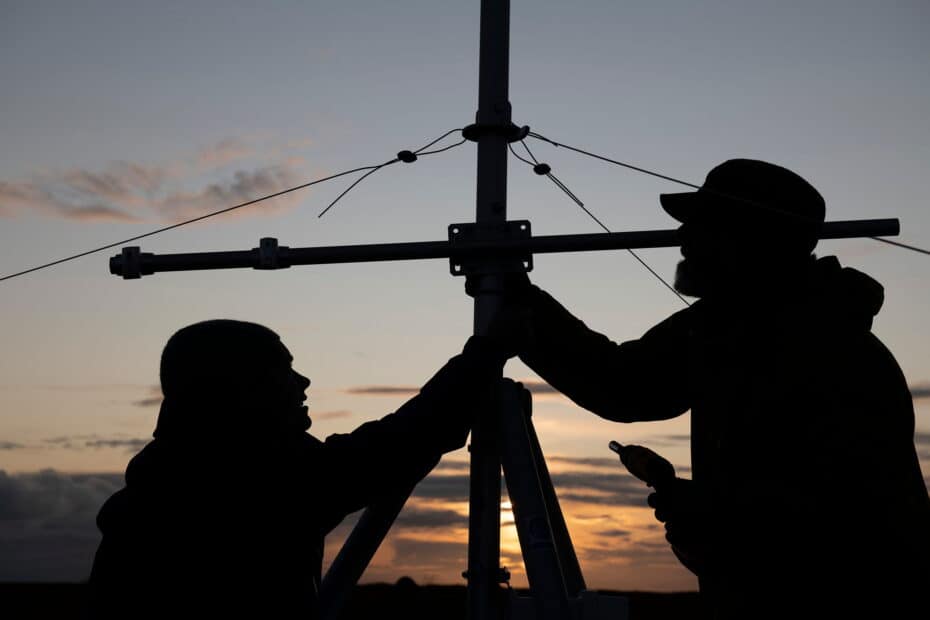
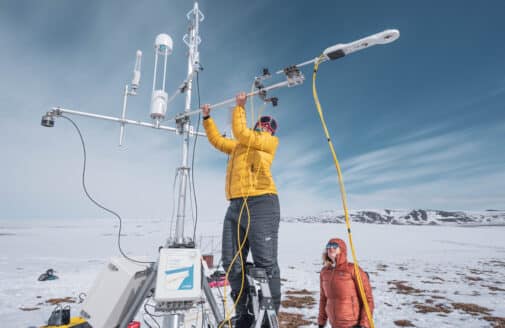
Researchers install equipment on a carbon flux tower in the Yukon-Kuskokwim Delta.
photo by Chris Linder
Sometimes it only takes a small push to start gathering momentum. That’s the idea behind the Fund for Climate Solutions (FCS) at Woodwell Climate. Launched in 2018, FCS is a competitive internal grant program that funds Woodwell Climate scientists to explore research projects that test out innovative ideas for climate solutions. Though each individual project starts small, nearly all FCS projects lead to new lines of inquiry, and a few have grown from their initial seed funding into some of our biggest research projects. From carbon monitoring to wildfire management to thawing permafrost, these three projects exemplify the surprising power of starting small.
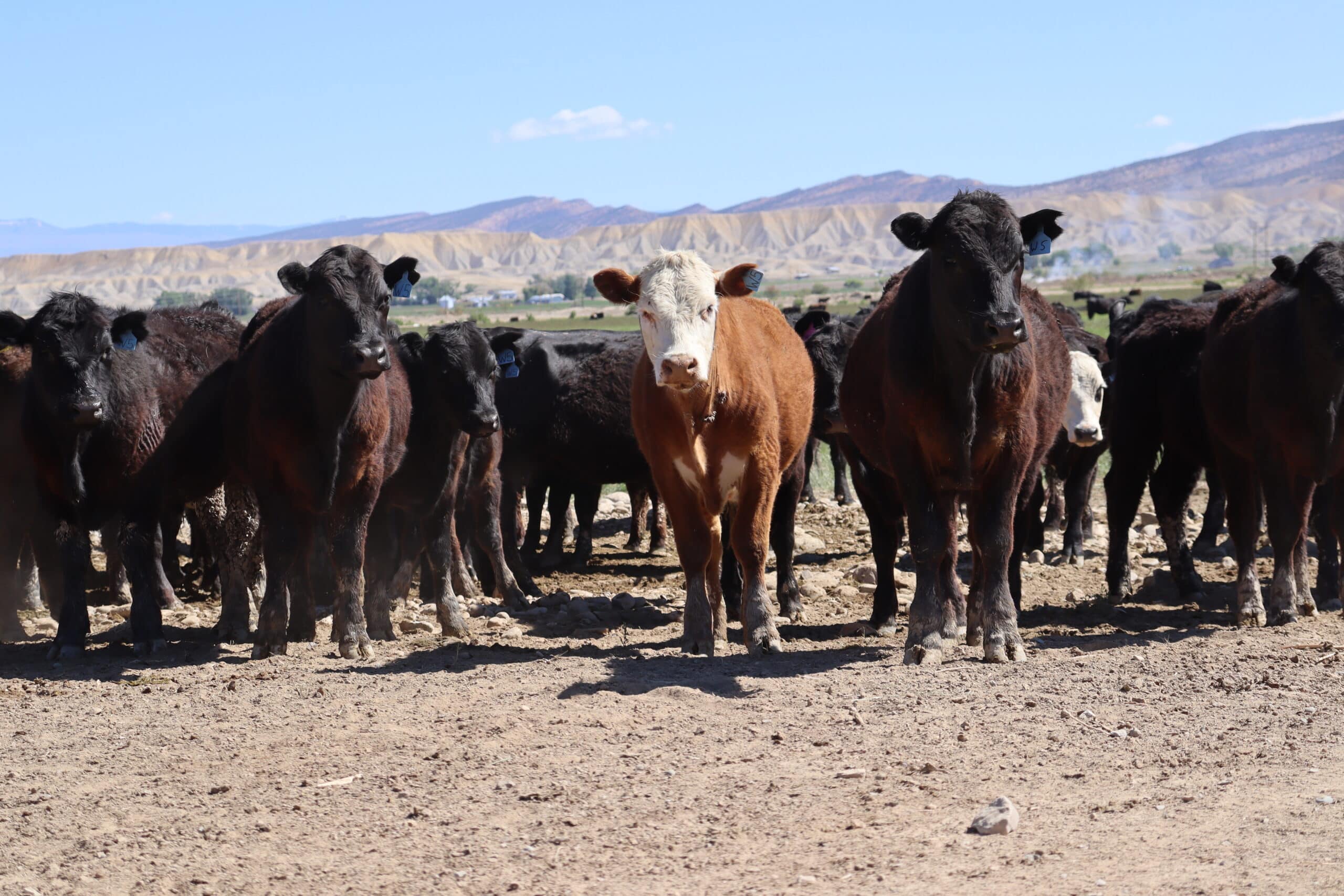
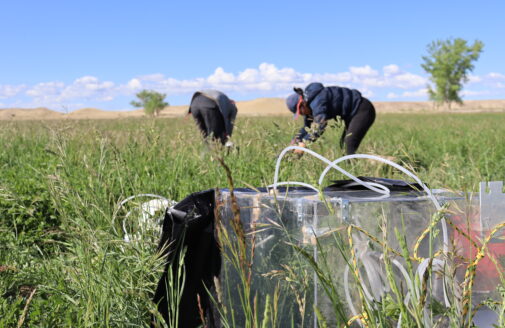
Cattle on ranch in Delta County, Colorado.
photo by Sarah Ruiz
1. Monitoring Rangeland Carbon
Rangelands represent a massive untapped natural climate solution, making up more than 30% of the land in the United States and holding 30% of the global soil carbon stock. Conservation practices, including adaptive livestock management, have the potential to enhance that carbon storage— but data was limited on just how grazing systems would respond to different techniques. Senior scientist Dr. Jon Sanderman and Associate Scientist Dr. Jennifer Watts applied for an FCS grant in 2019 to expand scientific understanding in a way that would prove useful for making management decisions.
That first project was successful, and today, Woodwell’s studies of rangeland carbon and other ecological co-benefits have expanded into a multifaceted research project that has received several subsequent grants. Watts and Sanderman are building tools that map and model carbon storage and the overall ecological health of rangelands across the U.S. and show how that storage could change under different management practices. Those tools have been adopted by both conservation groups and corporate partners to better understand the climate benefits of improved range management. They have continued engagement with ranchers and conservation communities across the American West, hosting workshops that bring land managers together to discuss the benefits—both environmental and economic—of improving carbon storage on rangelands.
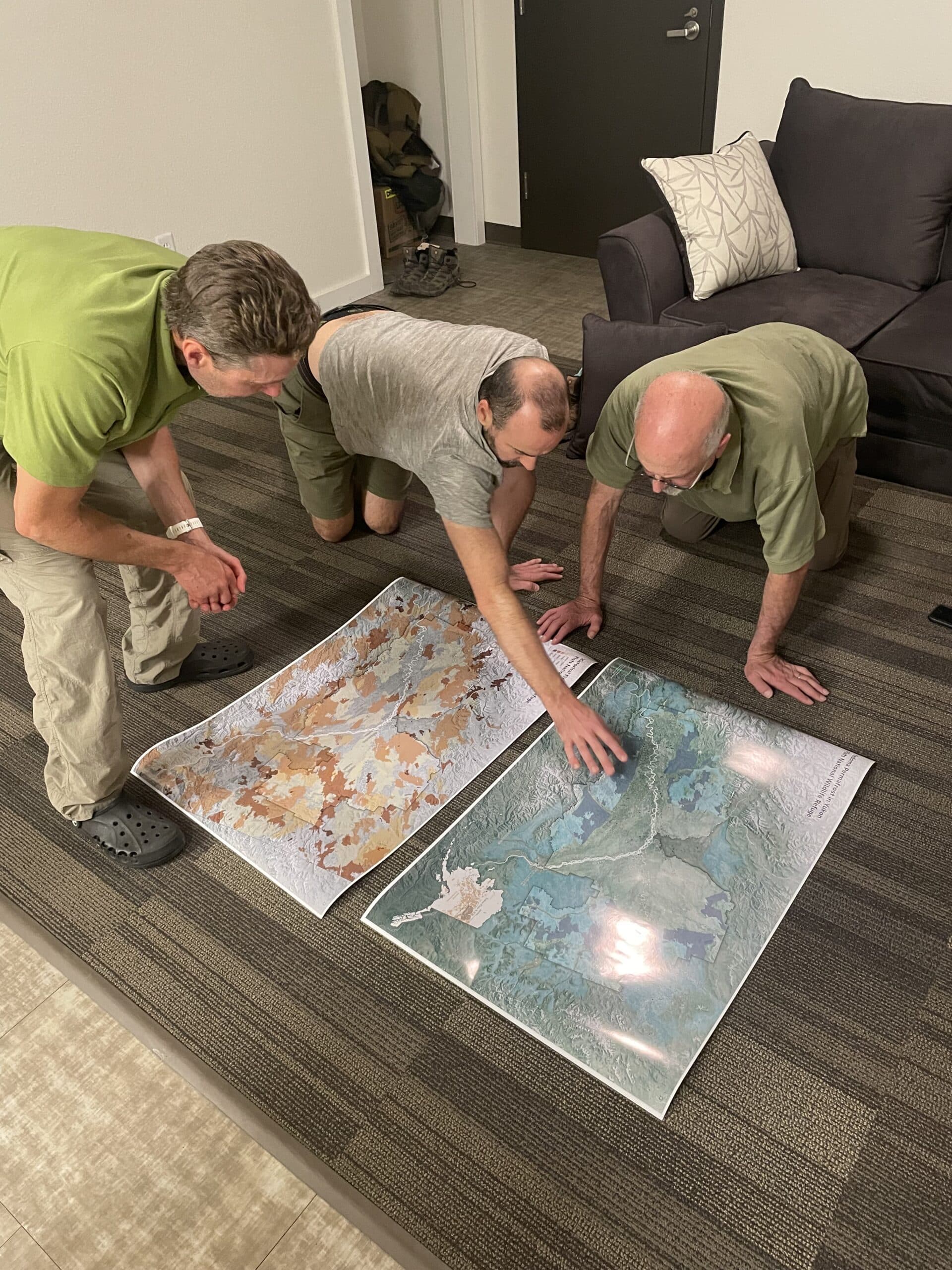
Brendan Rogers (center) and Peter Frumhoff (right) share maps with collaborators during a trip to the Yukon Flats National Wildlife Refuge.
photo by Kayla Mathes
2. Planning for Intensifying Wildfires
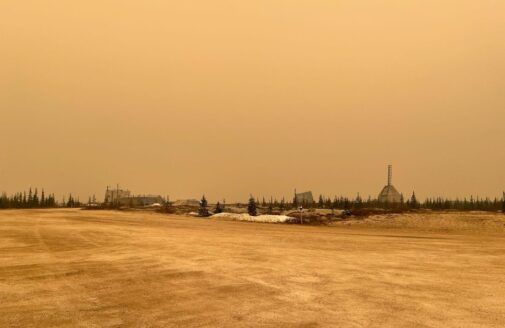
In Summer of 2018, Senior Scientist Dr. Brendan Rogers received an FCS grant to explore the possibility of fire management to mitigate carbon emissions from boreal wildfire. Though fires are a natural part of the northern landscape, wildfires in Alaska and Canada have been growing more frequent and intense as the Arctic rapidly warms. Left unchecked, these northern fires represent a large and broadly unaccounted for threat to emissions reduction goals.
Bringing fires under control as a climate mitigation tactic is now one of the Center’s core scientific goals. Collaborations with the US Fish and Wildlife Service and the Alaska Fire Service are underway to pilot fire suppression as a cost-effective method to keep carbon from entering the atmosphere. Senior Arctic Lead, Edward Alexander, has joined the Center to elevate Indigenous mitigation practices as practical policy solutions to address accelerating northern fires, and strategies are being shared across geographies to inform fire management in temperate and tropical forests as well. Woodwell Climate has also now joined Google’s AI Collaborative on Wildfires and has become an early adopter for the FireSat program led by EarthFire Alliance.
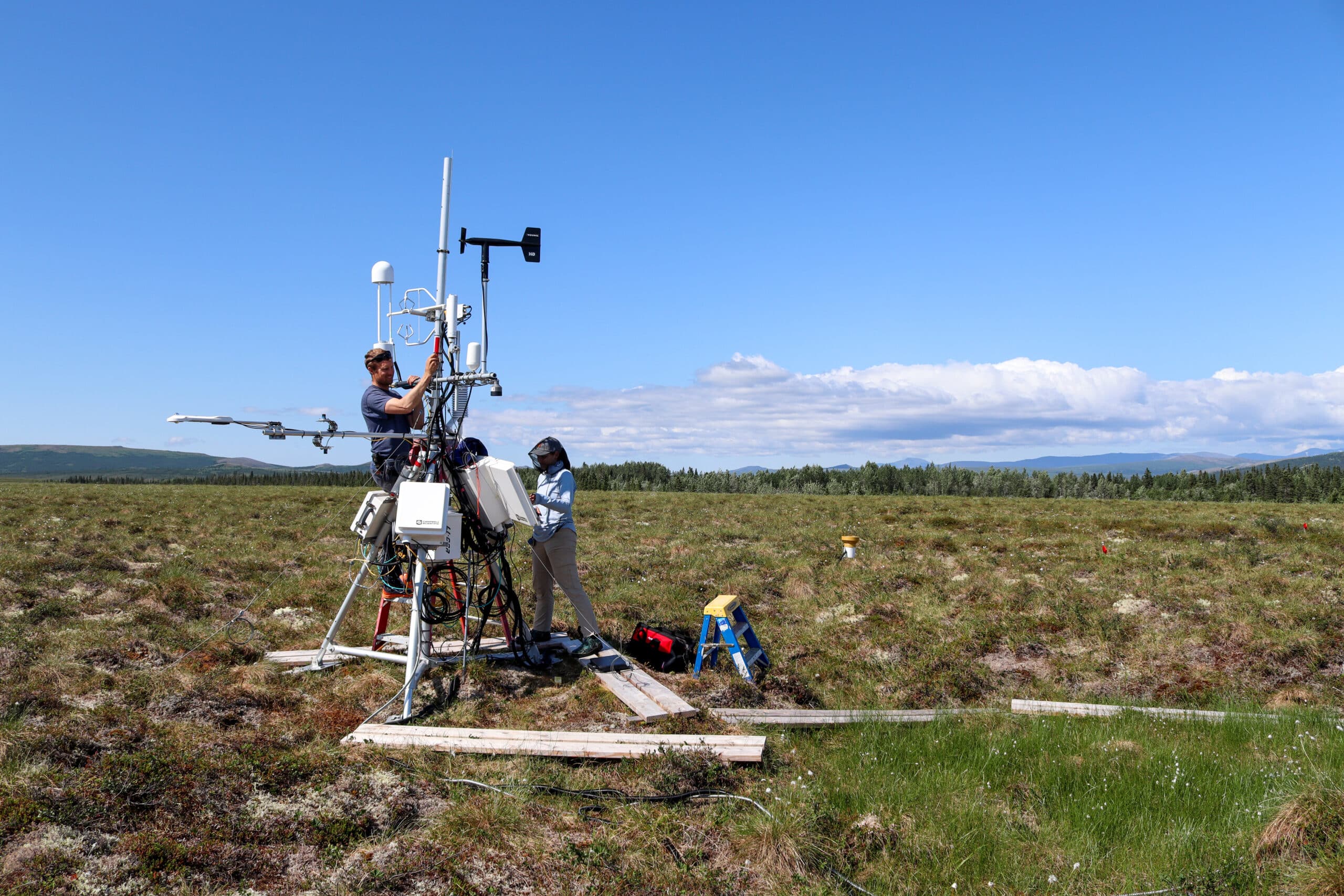
Permafrost Pathways researchers tend to a carbon monitoring tower.
photo by Kelcy Kent
3. Permafrost Pathways
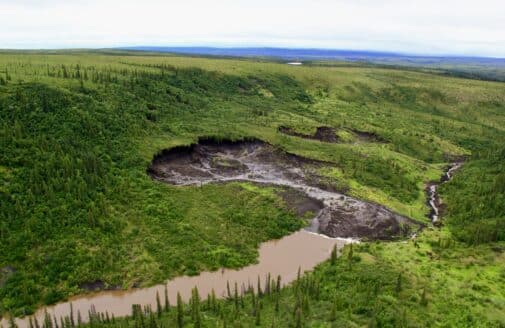
In the summer of 2018, senior scientists, Drs. Sue Natali, Rogers, Linda Deegan, and Sanderman received an FCS grant to start work on an Arctic change and carbon observatory. Natali observed that while the Arctic was warming at a rapid pace, causing typically-frozen permafrost soils to thaw and erode, actual measurements of carbon emissions from thawing permafrost were sparse. She proposed constructing new carbon-monitoring towers to fill data gaps, starting with a field site in the Yukon-Kuskokwim Delta.
From there, the project gained momentum, and in 2022, Natali was awarded a $41 million grant from the TED Audacious Project to launch Permafrost Pathways. The expanded project not only continued and enhanced carbon monitoring across the Arctic, but also partnered with 10 Alaska Native Tribes and policy experts to advocate for change. Permafrost Pathways supports community-led environmental monitoring of permafrost thaw to help tribes develop a long-term adaptation plan, including relocation. In addition, project experts have been working to influence international policy and get permafrost emissions factored into global emissions models.