- Policy Brief


Escalating fires and widespread dry conditions raise concerns about forest degradation.
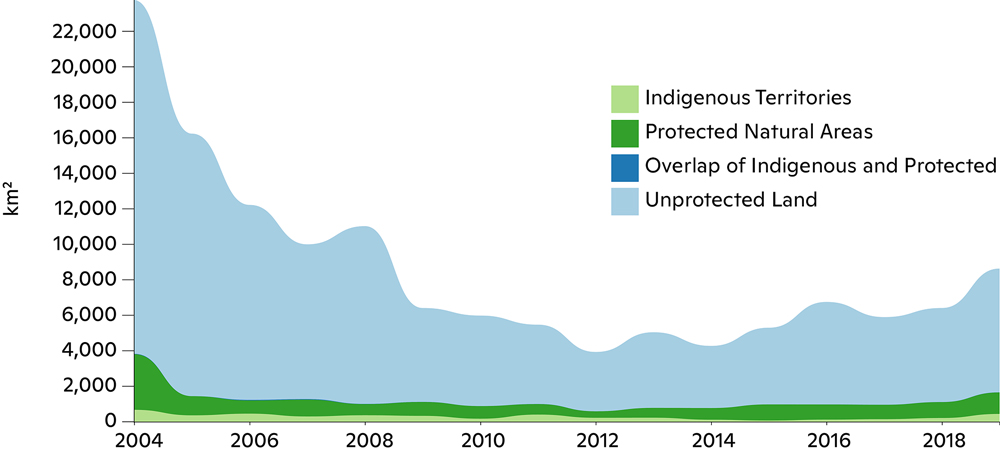
Amazon forests absorb and store roughly a tenth of human carbon dioxide emissions each year, but this critical carbon sink is threatened by deforestation and degradation of forest health. Deforestation in the Brazilian Amazon declined by 70% between 2004 and 2014. In recent years, however, deforestation has increased and fires have followed as people burn the trees they’ve recently cut down.
In 2019, deforestation jumped to the greatest rates in over a decade and fires did also, despite it being a relatively wet year. In 2020, deforestation has dropped to somewhat less than last year’s extent, but is still above average, and fires are up over this time last year. In addition, it is an extraordinarily dry year for much of the eastern Amazon, which could cause large and long-lasting fires if they escape into standing forests.
Building on the deforestation and fire data released regularly by Brazilian government scientists, we present an analysis of the carbon footprint of this year’s deforestation as well as where deforestation is happening and an analysis of the current climate conditions—key information for identifying fire risk hotspots and shaping solutions.
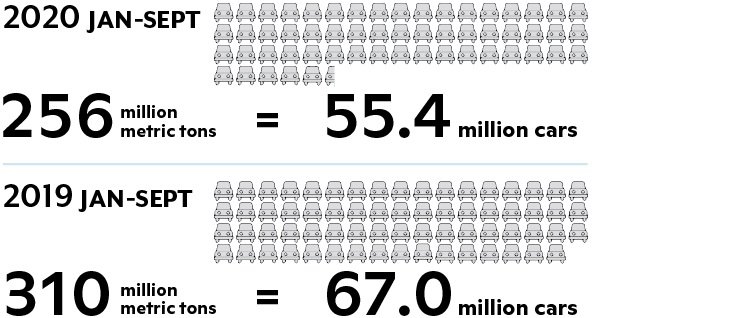
The burning of felled trees following deforestation results in the conversion of carbon previously stored in plant biomass (i.e., in leaves, branches, and stems) to carbon dioxide (CO2), contributing further to the rise in atmospheric CO2 that is the primary driver of planetary warming. In January-September 2020, CO2 emissions committed to the atmosphere as a result of forest clearing are expected to be roughly 256.4 million metric tons (MMT). That’s equivalent to roughly 57.7 million cars and is about 1/2 of Brazil’s annual total CO2 emissions.
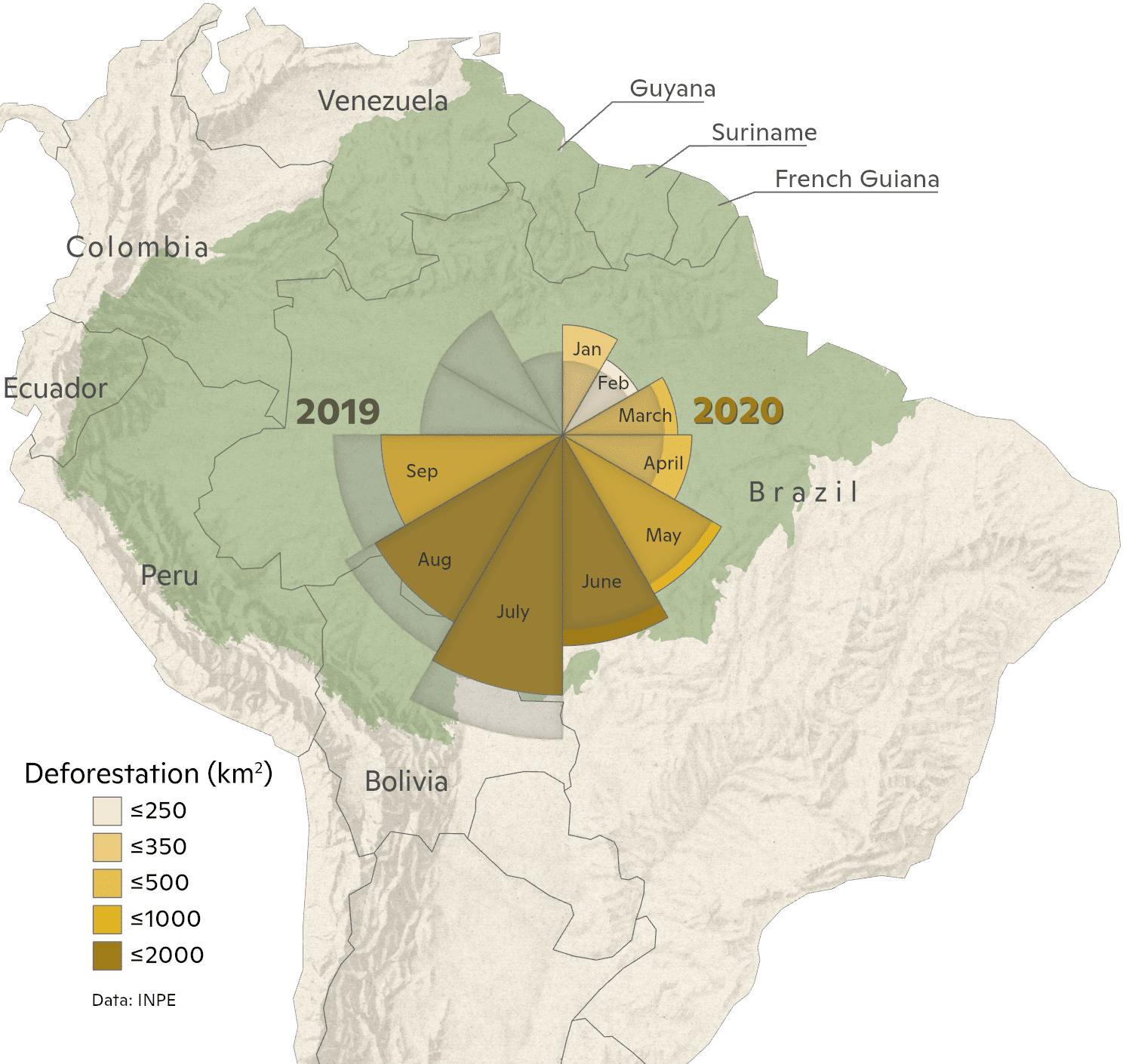
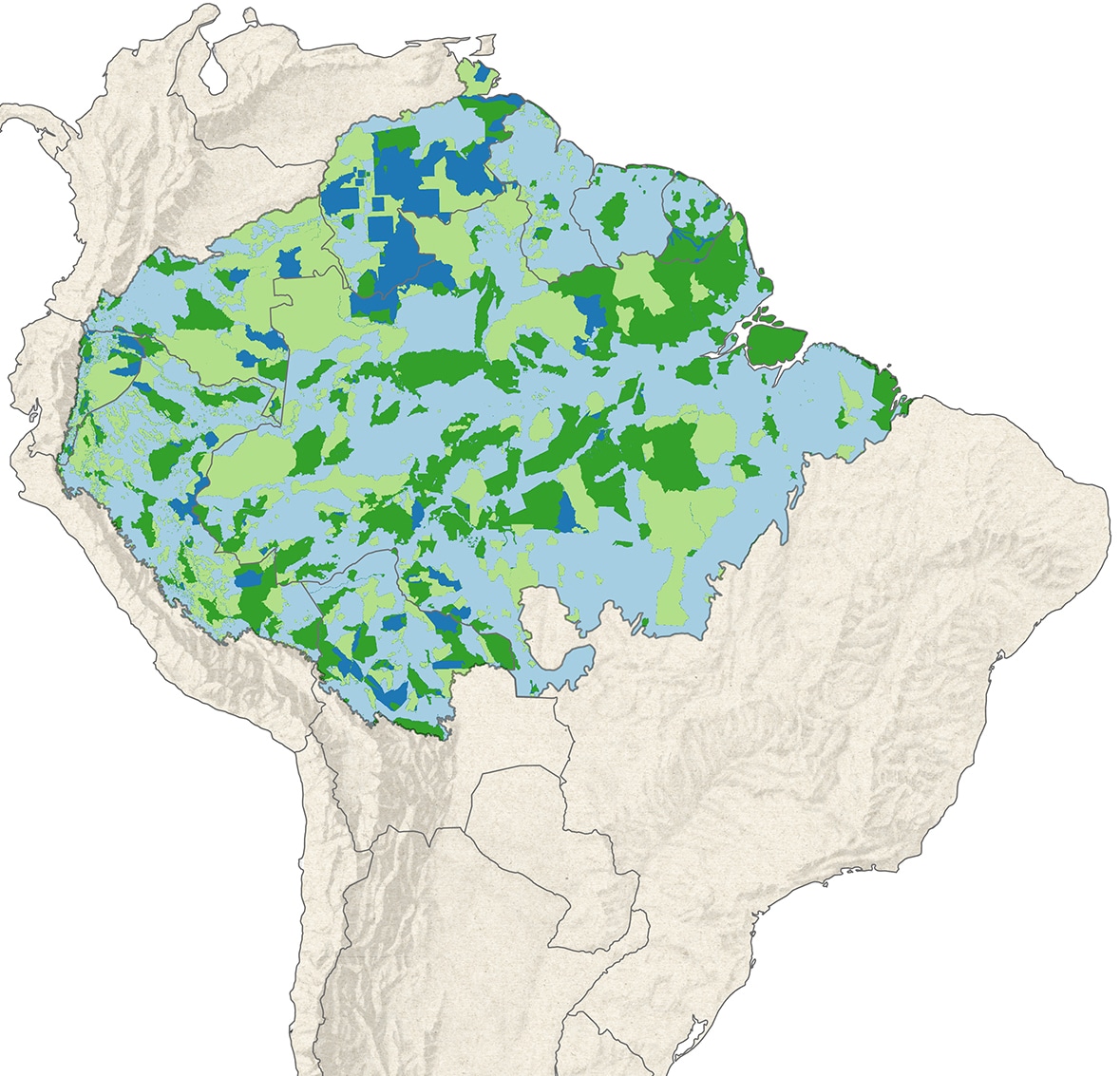
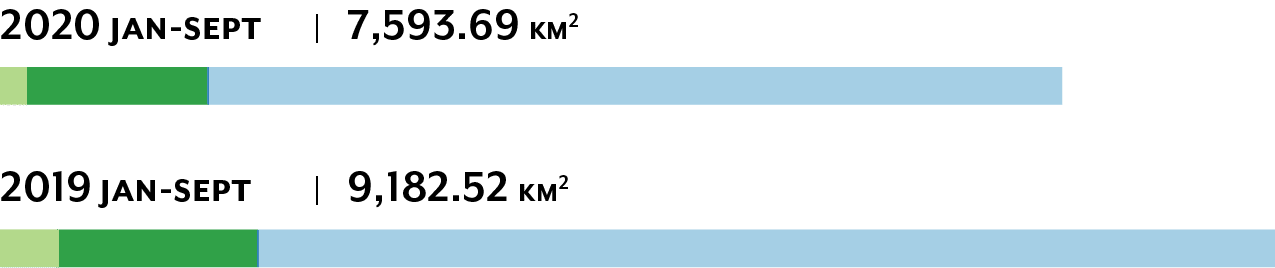
Nearly 7,600 km2 of forest has been destroyed so far in 2020. This year, as in previous years, most deforestation has taken place on unprotected lands, including private properties and federal lands without a protected status. However, deforestation in protected natural areas has been rising and accounts for 17% of deforestation to date this year, suggesting a need for greater enforcement of existing designations.
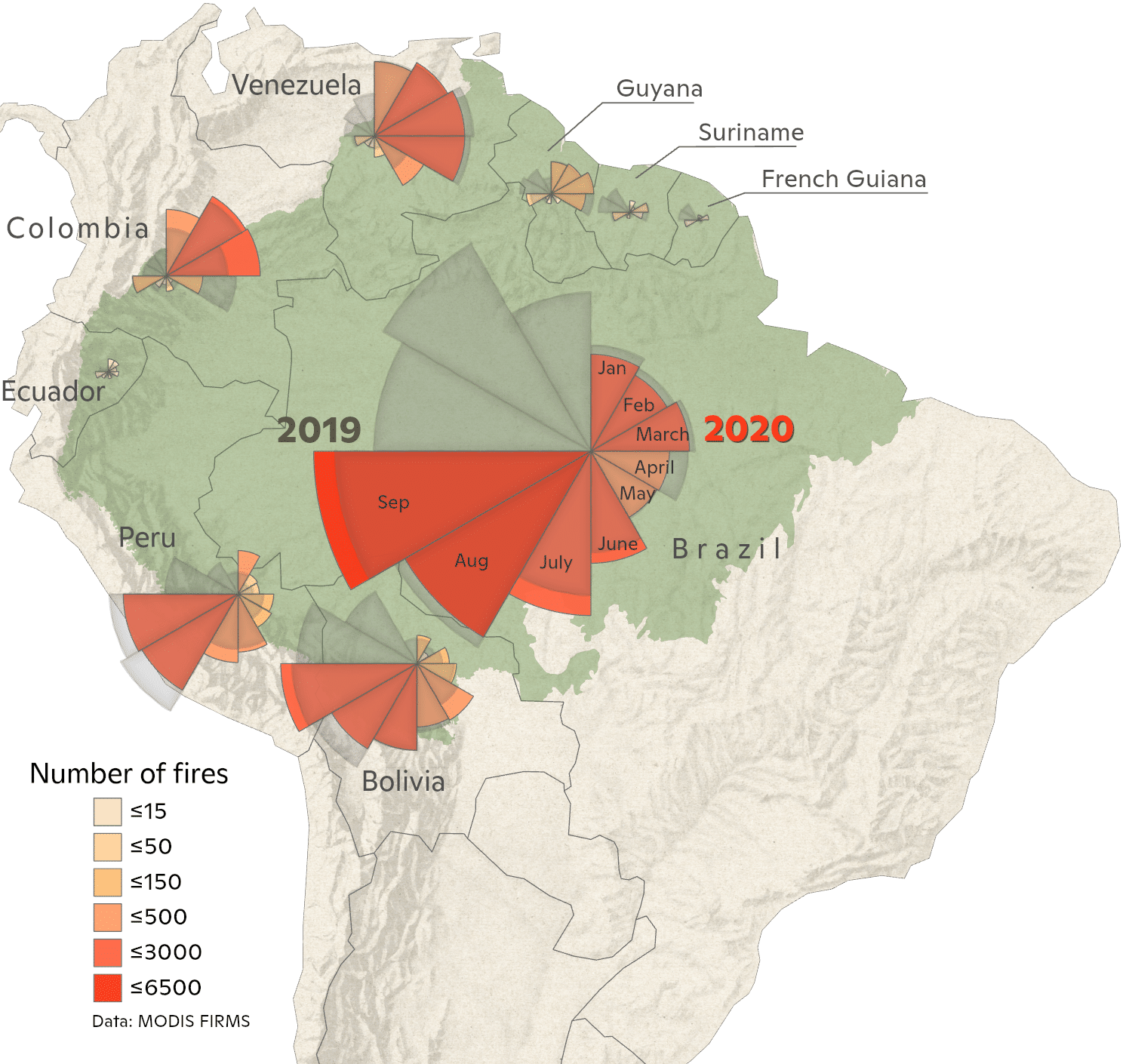
Almost all Brazilian Amazon states had more fires during the first six months of 2020 than the same period in 2019. Despite significantly lower deforestation in September this year compared to last and a ban announced by the Bolsanaro administration in July, fires have continued to escalate and exceeded 2019 levels in the month of September.
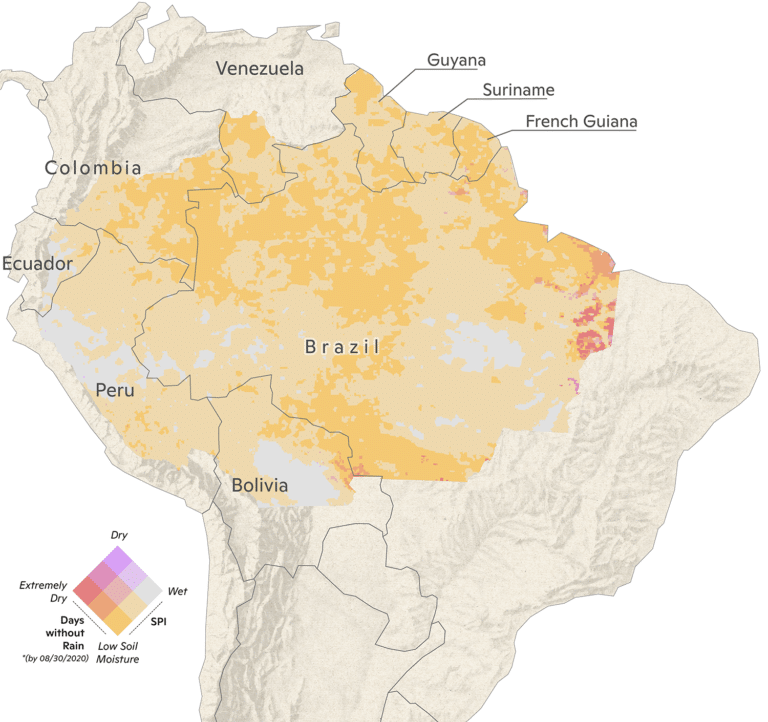

Forest fires are not a naturally occurring phenomenon in the Amazon—they are almost always a result of human activities. When deforestation coincides with dry conditions, fires lit to burn felled trees can escape into neighboring forests, destroying or degrading them. Large swaths of the Amazon region are anomalously dry this year (yellow). In particular, August and September 2020 appear to be the driest in more than 20 years, creating a high risk for escaped fire to do severe damage.
The red dots represent locations where deforestation has occurred since October 2019. We chose October as the cutoff because most areas that were deforested in this period will be burned this year.
Miles Grant, Director of Publications & Media Relations
Woodwell Climate Research Center
mgrant@woodwellclimate.org, 703-864-9599
Cristina Amorim, Head of Communications
IPAM Amazônia
cristina.amorim@ipam.org.br, +55 (61) 9 9127-6994