
- Presidential Message


Woodwell Climate Research Center (Woodwell) appreciates the opportunity to comment on the U.S. Environmental Protection Agency’s (EPA) proposed rule to repeal all greenhouse gas emission standards for fossil fuel-fired electric generating units. As a scientific research organization dedicated to understanding climate risk and promoting resilience, Woodwell consistently advocates for robust, science-informed, and publicly accessible data for long-lasting sustainability and the benefit of local communities.
Originally established in 2009, the Endangerment Finding holds that six greenhouse gases (carbon dioxide, methane, nitrous oxide, hydrofluorocarbons, perfluorocarbons, and sulfur hexafluoride) should be defined as “air pollution” under the Clean Air Act and that the gases pose a danger to public health and welfare. As a result, the EPA finalized its first standards for greenhouse gas emissions from new fossil fuel-fired utility boilers and stationary combustion turbines in 2015. In 2024, the EPA published updated carbon pollution standards for new gas-fired turbines and existing coal, oil, and gas-fired steam generating units. These regulations are important victories for the mitigation of climate change and the protection of public health and welfare. Now, in 2026, the EPA is proposing to rescind all greenhouse gas emissions standards for fossil-fuel fired electric generating units.
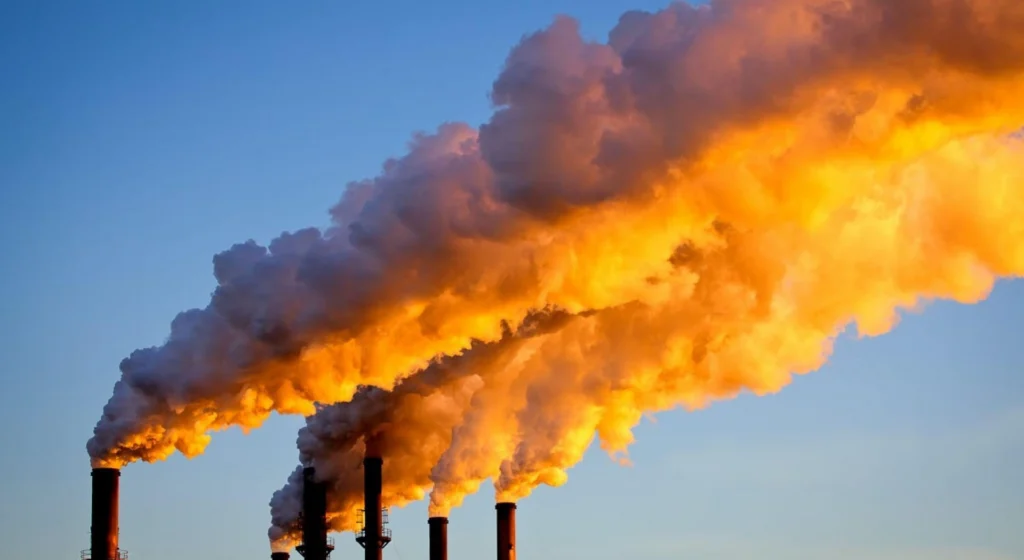
Greenhouse gas emission standards for fossil fuel-fired electric generating units are critical. Woodwell has conducted research on the dangers that greenhouse gases pose to human life, property, and the environment since our founding in 1985. In 1986, Dr. George Woodwell testified in the first congressional hearing on climate change. In his testimony, he warned his audience of future dangers of increasing emissions, including biological amplification, or the ways in which increased carbon dioxide in the atmosphere creates a positive feedback system leading to further increases in emissions.
Failure to regulate emissions will be detrimental to communities across the United States. Woodwell urges the EPA to withdraw the proposed rescission of these vital greenhouse gas emission standards for fossil fuel-fired electric generating units.
The EPA rescinded the 2009 Endangerment Finding, and subsequently proposes this rescission of the greenhouse gas emissions standards for fossil fuel-fired electric generating units, based on arguments regarding EPA’s legal authority. These arguments included the narrow interpretation of the word “pollutants” under the Clean Air Act to exclude the category of greenhouse gas emissions, claiming that the economic impacts of the Endangerment Finding and related regulations exceed the congressionally granted authority of the EPA, and contending that the emissions outlined in the Endangerment Finding contribute so minimally to global climate change that the burden of their regulation on the EPA is unjustified.
It is notable that when the repeal of the Endangerment Finding was first proposed, there was a second scientific rationale based on the EPA’s interpretation of climate science, which relied heavily on the 2025 Department of Energy (DOE) Climate Working Group (CWG) report. As extensively documented in scientific peer review, the CWG report exhibits a deeply flawed representation of climate science, one that is fundamentally at odds with overwhelming scientific consensus; ignores substantial and mounting evidence of climate change affecting the health and welfare of American communities; and fails to meet basic standards of quality, objectivity, and scientific integrity needed for informing public policy. This rationale was excluded from the final repeal of the Endangerment Finding, alluding to a lack of scientific support in this decision.
The 2009 Endangerment Finding was based upon a strong scientific foundation. It relied on four multi-volume Assessment Reports published by the Intergovernmental Panel on Climate Change (IPCC), Synthesis and Assessment Products published by the U.S. Global Change Research Program (USGCRP), and consensus reports published by the National Research Council (NRC) of the National Academy of Sciences. It examined the robust evidence attributing climate change to greenhouse gas emissions and the impacts of greenhouse gas-induced climate change on public health and public welfare in the U.S., with a focus on air quality, food production and agriculture, forestry, water resources, sea level rise and coastal areas, energy, infrastructure and settlements, and ecosystems and wildlife.
Since the establishment of the Endangerment Finding in 2009, the science supporting the effects of emissions on public health and welfare has grown stronger. A 2018 review of the scientific underpinnings of the Finding published in Science and authored by former Woodwell President and CEO Dr. Philip Duffy, found that “for each of the areas addressed in the EF, the amount, diversity, and sophistication of the evidence has increased markedly, clearly strengthening the case for endangerment. New evidence about the extent, severity, and interconnectedness of impacts detected to date and projected for the future reinforces the case that climate change endangers the health and welfare of current and future generations.” The work shows that as emissions increase, the probability of extreme heat days, vector-borne illness, and other health threats such as malnutrition or nutrient deficiencies will increase. These outcomes will result in increased mortality rates and impose significant costs to the government.
In 2023, the Fifth National Climate Assessment comprehensively assessed the current and future risks to the United States of greenhouse gas-induced climate change, including extensive evidence for public health impacts. The authors report existing harm to human health across the U.S. that is only expected to worsen with continued warming. The following compounding health hazards are listed among others: “More severe and frequent extreme events; Wider distribution of infections and vector-borne pathogens; Air quality worsened by smog, wildfire smoke, dust, and increased pollen; and threats to food and water security.”
Threats to public health and welfare are further documented by international scientific assessments. The IPCC, established in 1988 by the United Nations Environment Program (UNEP) and the World Meteorological Organization (WMO), reviews existing scientific research on climate change and produces Assessment Reports that synthesize that knowledge. The latest, Sixth Assessment Report of the IPCC, draws upon the peer-reviewed scientific literature to conclude with high confidence that “individual livelihoods have been affected through, for example, destruction of homes and infrastructure, and loss of property and income, human health and food security.” The authors, composed of leading international scientists, cite infectious diseases; displacement; mental health; and heat, malnutrition and harm from wildfire as observed widespread and substantial impacts of climate change around the world.
The IPCC’s Sixth Assessment Report also specifically examines North America, documenting multiple health and wellbeing impacts with robust evidence. The report details how rising temperatures are projected to increase heat-related mortality across emission scenarios this century in North America with very high confidence. Particularly concerning is the evidence that widespread smoke from intensified wildfire activity in North America is associated with respiratory distress with very high confidence, with impacts that persist long distances from the wildfire and beyond the initial high-exposure time. These findings underscore that climate change poses direct and measurable threats to American communities that will only intensify without decisive action to monitor and mitigate greenhouse gas emissions.
In September 2025, the U.S. National Academies of Sciences, Engineering, and Medicine (NASEM) published an independent assessment of the science underpinning the 2009 Endangerment Finding in response to EPA’s proposed rescission. Given that EPA’s Clean Air Science Advisory Committee (CASAC) was disbanded in January 2025 and unavailable to provide advice during the rulemaking window, and recognizing that the Clean Air Act specifically instructs EPA to draw on findings and recommendations from the National Academy of Sciences, the NASEM undertook this study to support evidence-informed decision-making by the EPA. The assessment followed standard National Academies processes for managing conflicts of interest, inviting public input, and conducting thorough peer review.
The National Academies’ report reinforces the extensive evidence of health and welfare impacts in the United States from greenhouse gas emissions. The 123-page assessment documents that severe heat waves are projected to intensify in magnitude and duration, with increased mortality and morbidity. Beyond heat impacts, climate change is expected to increase regional ozone pollution, leading to respiratory illnesses and premature death, while higher water temperatures and increased precipitation intensity will exacerbate water pollution challenges. The report identifies substantial impacts on food security, noting that grain and oilseed crops will experience failure as temperatures rise, and that horticultural crops like tomatoes, onions, and fruits will be most sensitive to climate impacts. These health and welfare consequences will disproportionately burden vulnerable populations such as poor, elderly, disabled, uninsured, and indigenous communities, raising significant concerns that existing disparities in the American healthcare system will compound. The report finds that the scientific evidence of climate change is “beyond scientific dispute” and its impacts in the United States are worsening. Ultimately, the National Academies report provides robust scientific evidence that the 2009 Endangerment Finding was correct and that the scientific support for it today is far stronger.
Most recently, the National Academies published a report titled “Attribution of Extreme Weather and Climate Events and Their Impacts,” which states that “earth system changes driven by rising greenhouse gas concentrations from human activities are affecting characteristics of extreme weather and climate events, such as frequency and intensity.” This research report represented the most significant scientific correlation between greenhouse gas emissions and the severity of extreme weather to date. Despite claims that this report is “fraudulent, biased, and misleading,” the science is sound.
The mission of the EPA is to “protect human health and the environment.” With this amalgamation of years of quality data, it is clear that greenhouse gas emissions have an adverse effect on human health, and thus must be regulated by the EPA for the safety of the American people. The claim that the regulation of greenhouse gas emissions is outside of the purview of EPA’s congressional mandate stands in direct contradiction to this mission.
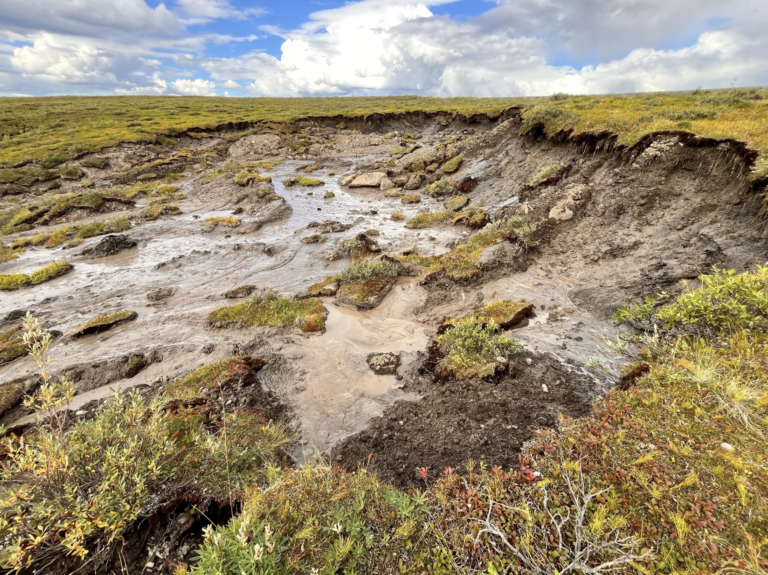
Woodwell’s research in Alaska demonstrates the tangible, immediate impacts of climate change on American communities and infrastructure. Permafrost thaw—a direct consequence of greenhouse gas-induced warming—exemplifies the concrete dangers that the Endangerment Finding was designed to address. Our scientists have documented how rapidly rising Arctic temperatures are destabilizing permafrost across Alaska, leading to cascading impacts on public health, welfare, and economic security. Permafrost thaw is projected to impose more than $5.5 billion in damage to runways, buildings, and public utilities by mid-century. This infrastructure damage is already occurring, threatening critical military installations essential to national security. Communities built on permafrost face forced relocation as the ground beneath homes, schools, and hospitals becomes unstable. These impacts disproportionately affect Alaska Native communities, many of which lack the resources for costly infrastructure adaptations or relocation.
These impacts in Alaska are not isolated phenomena but part of a broader pattern of climate-induced harm occurring across the United States, from sea-level rise threatening coastal communities to extreme heat events overwhelming urban and rural healthcare systems. The permafrost example demonstrates how greenhouse gas emissions from the power sector contribute to a global problem with immediate, tangible consequences for American communities.
The overwhelming scientific evidence is clear: greenhouse gas emissions pose a serious threat to public health and welfare through local and regional exposure to global climate change and related extreme events. This demands action. Rescinding all greenhouse gas emission standards for fossil fuel-fired electric generating units would be deeply contrary to the robust scientific evidence for the current and future harms to public health and welfare resulting from unfettered greenhouse gas emissions. Doing so would abandon America’s responsibility to protect its citizens and abdicate our leadership in addressing the defining challenge of our time. We urge the EPA to withdraw this proposed rule and instead strengthen efforts to reduce greenhouse gas emissions from all sources, including the fossil fuel-fired electric generating units of the power sector.