
- Perspective


There is no solution for climate change without tropical forests. At Woodwell, our researchers focus on quantifying and communicating the ecological, climatic, and economic risks of deforestation—and how to reduce these risks by implementing innovative economic and policy incentives to conserve forests on public and private lands.
The vast majority of stored carbon lies in tropical forests, especially in the Amazon and Congo River basins. This stock of carbon is equivalent to about 2/3 of the carbon already in the atmosphere. Every hectare that is burned to make way for agriculture and development releases more CO2 into the atmosphere.
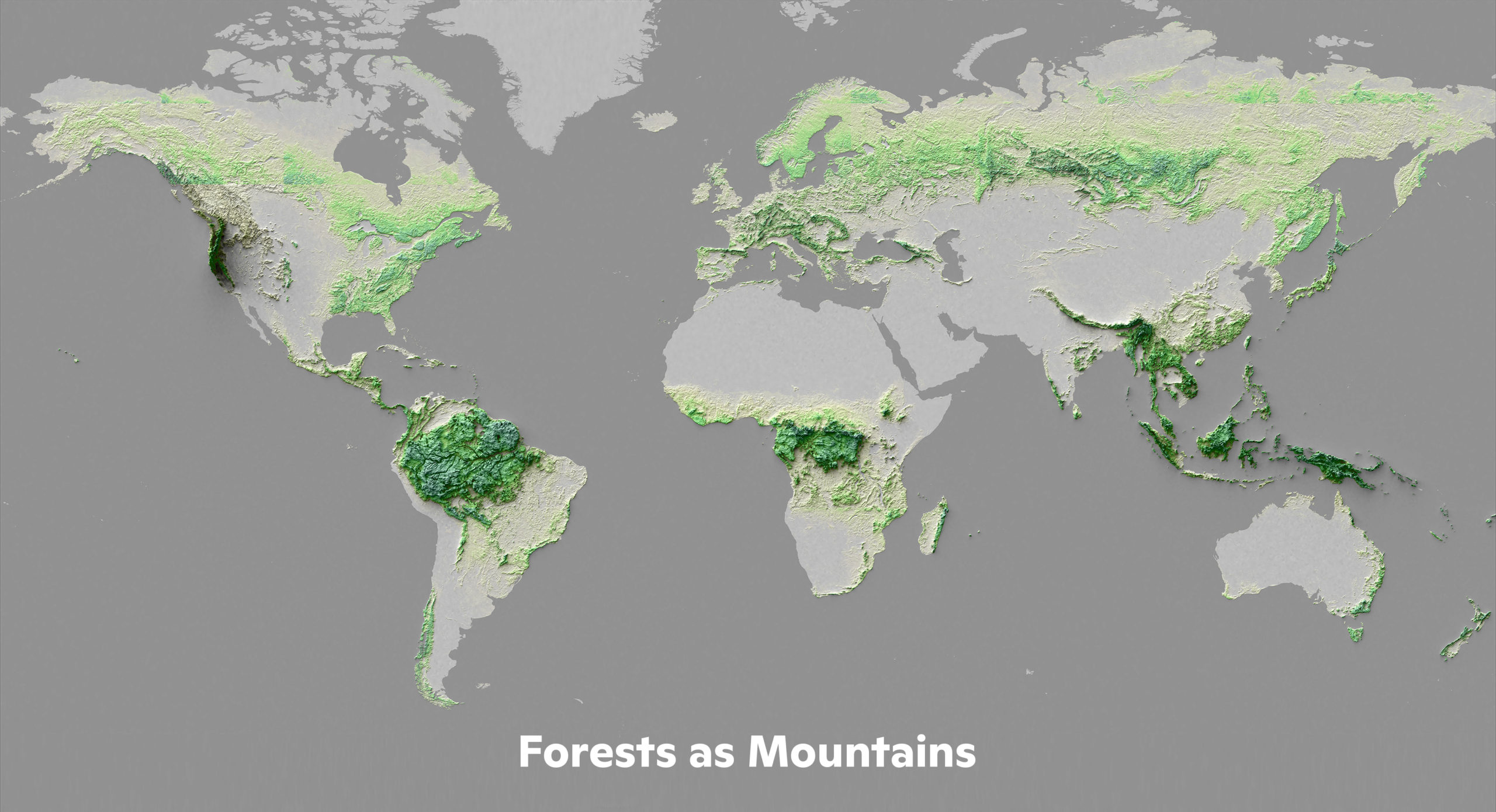
Forests, primarily tropical forests, also remove about 30% of the carbon emitted to the atmosphere by humans each year. At the same time, they act like giant air conditioners, returning more than two thirds of all incoming sunlight and rainfall to the atmosphere as water vapor. This cools the land surface and creates rainfall both locally and thousands of miles away.
Keeping tropical forests standing—and restoring them where we can—is the simplest and cheapest mechanism to avoid catastrophic climate change and mitigate the impacts of ongoing change.
Over the past 15 years, great effort has gone into combating deforestation, resulting in, for instance, a 70% reduction of annual deforestation rates in Brazil. However, expanding infrastructure, current agricultural practices, and loopholes in environmental legislation threaten these reductions and encourage deforestation. We have the tools to reverse the trend.
At Woodwell, we work to align science with strategic policy interventions to predict the potentially ruinous climate and economic impacts of continuing deforestation, to clearly illustrate these findings for key decision makers, and to help develop effective solutions to ensure the future of forests, sustainable food systems, and livelihoods.
“Tropical forests are wonders - some of the last remaining places that feel truly wild. They face immense risks but we still have an opportunity to save them, and doing so is critical to our collective future. ”
Dr. Michael Coe, Tropics Program Director