- In The News
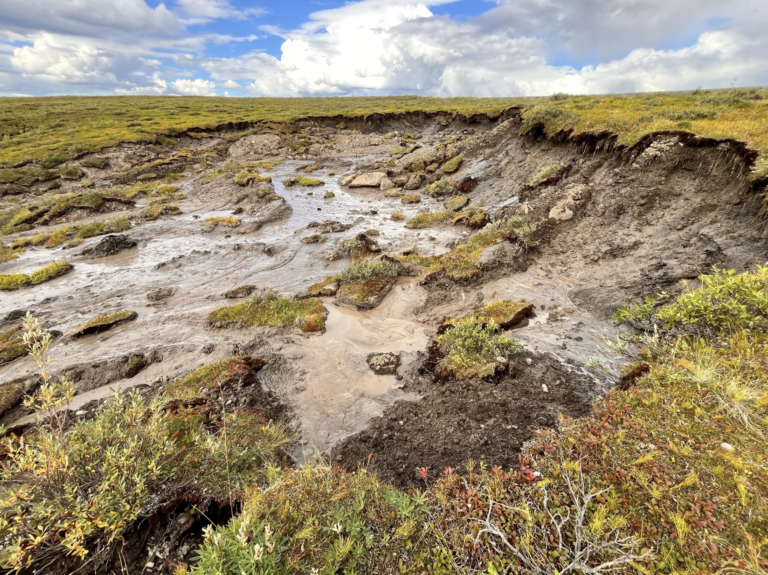
Unaccounted climate feedback loops may amplify warming by 20–30% this century, but cutting emissions will reduce risks
Read on Phys.org
Mentions
Christina Schädel


A message from President & CEO Dr. Max Holmes
For most of civilization’s history, the story of agriculture and climate has run in one direction. We plowed prairies, drained wetlands, and grazed grasslands harder than they could bear. Each change released carbon that had built up in soils over thousands of years. In 2017, Dr. Jon Sanderman, now Woodwell’s Vice President of Science, led the first global estimate of that loss. He and his colleagues found that agriculture has stripped about 133 billion tons of carbon from the world’s soils over the past 12,000 years, roughly 8 percent of the total. Grazing lands accounted for about as much of that loss as croplands.
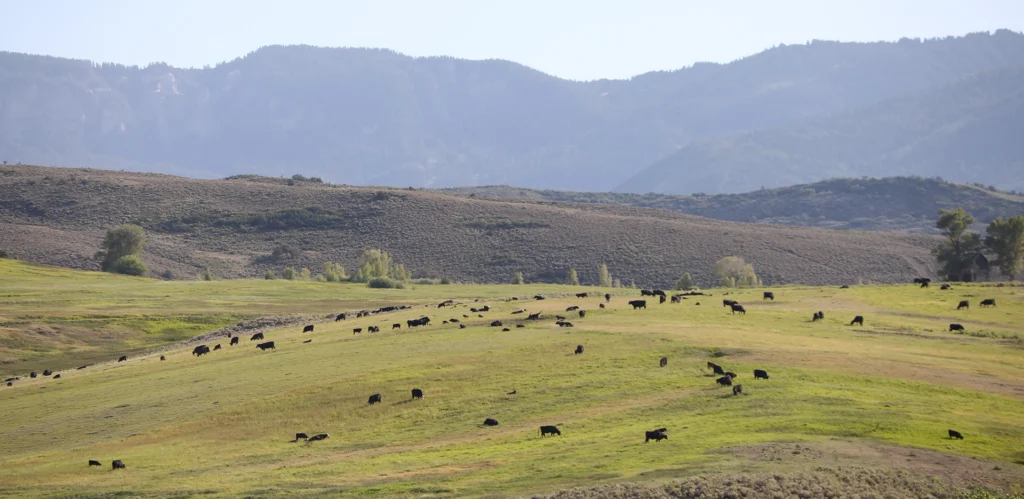
The history is sobering, but it also points to an enormous opportunity. Carbon that was lost from the soil can potentially go back. Rangelands cover more than half of Earth’s ice-free land—managed well, they could shift from a source of carbon in the atmosphere to a meaningful sink.
This is the promise of “regenerative agriculture,” an umbrella for practices like rotational grazing, cover crops, reduced tillage, and other land restoration efforts. The potential benefits are remarkable: more carbon in the soil, better water retention, higher crop yields, lower input costs, and greater profitability for farmers and ranchers.
What we need now is evidence that matches the promise. A new study led by Jon, published this year in Communications Earth & Environment with colleagues from Woodwell, Columbia, Environmental Defense Fund, and Yale, shows why. The team reviewed 70 studies of alternative grazing practices and their impact on soil carbon. Most fell short on basic study design. The ten most rigorous studies found no clear change in soil carbon. Gains appeared mainly in less robust studies, which are cited about three times as often. Encouragingly, there were promising signals in wetter regions that deserve a closer look. The lesson is not that regenerative grazing fails. It is that the case has not yet been made with the rigor it deserves.
Part of the challenge is simple arithmetic. A typical rangeland soil may hold 50 tons of carbon or more per hectare, while a change in practice might add a fraction of a ton per year. Across millions of acres, that adds up to a very significant climate solution, but detecting it against a large and variable background is hard.
That is where Woodwell comes in. Starting with a small internal Fund for Climate Solutions grant in 2019, Dr. Jennifer Watts, who now leads our rangeland program, and Jon have built a rangeland carbon program that now monitors more than two million acres. With partners including World Wildlife Fund, the National Audubon Society and the National Fish and Wildlife Foundation, they combine field sampling, carbon flux measurements, satellite remote sensing, and modeling. Their open-source model, RangeSTAR, estimates carbon flows and storage across U.S. rangelands, and they are mapping soil carbon ranch by ranch. These are exactly the kinds of studies that are needed to more accurately quantify the climate benefits of regenerative agriculture—and RangeSTAR has recently received support from NASA to expand its mapping and further development.
We are so excited about this work that I am delighted to share some news here for the first time: Woodwell has established the Regan Family Chair in Regenerative Agriculture, a new endowed position. We look forward to announcing who will hold the chair in the months ahead. We are deeply grateful to the Regan family for their vision and generosity.
As a science-first organization, our goal is to give farmers, ranchers, investors, and policymakers numbers they can trust. If the science confirms what many of us believe, wiser management of rangelands could help reverse the arrow that agriculture set in motion centuries ago.
Onward,