- In The News
Can an entire Arctic ecosystem evolve to adapt to the climate crisis?
Read on The Guardian
Mentions
Linda A. Deegan, Andrea Norton, Christopher Neill



Boreal forests comprise the largest terrestrial biome in the world, covering a wide swath of land across the northern hemisphere and bordering the treeless tundra to the north. Although the boreal region includes roughly 1/3 of all forests globally, boreal forests store approximately 2/3 of all global forest carbon. About 80–90% of this carbon is stored in the soil.
The tundra is a vast expanse located to the north of boreal forests, up to 75 degrees latitude, with low vegetation and large amounts of permafrost, or permanently frozen ground.
Tundra and boreal forests have historically acted as carbon sinks, which means they absorb or sequester carbon dioxide from the atmosphere.
Temperatures are rising worldwide due to climate change. However, the rise in temperature is disproportionately higher in the Arctic and northern latitudes, which are warming more than twice as fast than the rest of the planet. Although wildfires are naturally occurring events, global warming and longer dry periods have increased the number, extent and severity of fires in the boreal region.
Fires have been rare on the tundra since the early Holocene. However, warming temperatures are increasing the frequency and extent of these fires, perhaps even more rapidly than in the boreal zone.

The relationship between climate and fire in the North American boreal forests shows an increase in burned area historically. In North America, the area burned due to boreal wildfires has doubled since the 1970s. Wildfires influence the storage of carbon in boreal forests as well as tundra, both through immediate emissions and impact on soil carbon sequestration.
The soil organic layer is the top layer of partially decomposed dead mosses, lichens, leaf litter, and fine roots that accumulates in cold, moist conditions. During a wildfire, the severity of the fire is determined by the amount of soil organic layer burned during a fire, i.e., the depth of burn. The higher the depth of soil burnt, the more severe the fire.
According to recent projections, fires are expected to increase in size and severity, offsetting a large fraction if not all of the carbon gains due faster-growing vegetation from warming temperatures and CO2 fertilization. Boreal forests are becoming a net carbon source to the atmosphere for the 21st century. It should be noted that these projections do not include the interactions between fire and permafrost thaw.
Fires also raise the temperature of the soil. Increased soil temperatures may speed up decomposition rates, which releases greenhouse gases.
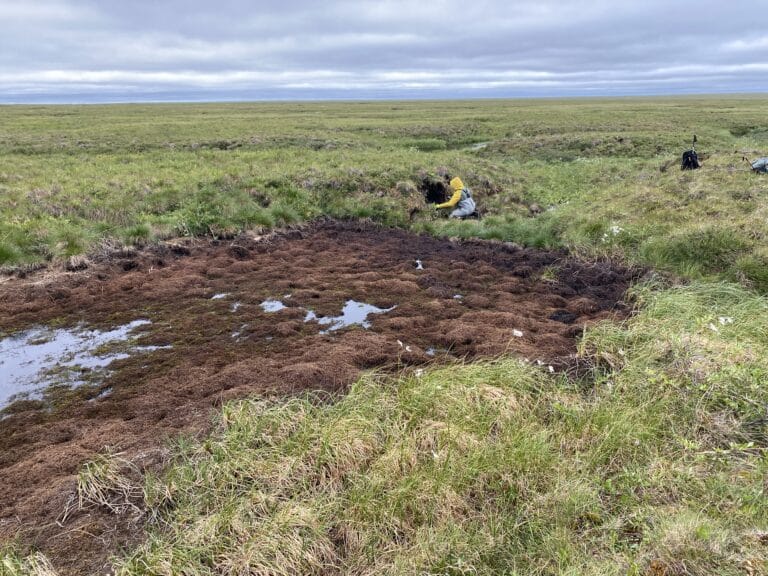
Arctic tundra landscapes store large pools of carbon in organic-rich surface soil horizons that have accumulated over millennia, which can be highly flammable when dry and may burn deeply. If tundra soils burn, increasing fire in this biome could rapidly transfer a substantive amount of carbon to the atmosphere, reducing landscape carbon storage, increasing atmospheric CO2 levels, and amplifying climate warming.
Higher temperatures in the tundra have increased productivity of arctic plants, increased shrub abundance, and created conditions that may be more favourable to lightning strikes. These changes may favour an increase in arctic wildfires, which have major impacts on landscape carbon budgets.


“Heat Wave Scorches Sweden as Wildfires Rage in the Arctic Circle” was the headline of a New York Times article in July 2018.
Wildfires are a rare phenomenon in Sweden, but the spring and summer of 2018 were unusually hot and dry. Water levels in lakes were low, rivers were close to running dry and water shortages were prevalent. Rainfall was the lowest since record keeping began in the late 19th century. Temperatures usually never crossed 30 degrees Celsius in Sweden. In the city of Uppsala, temperatures reached 33 degrees Celsius and topped 30 degrees in central and southern parts of the country.
The Lapland town of Jokkmokk which lies in the Arctic circle had to deal with 8 fires in 12 days, which burned a boreal forest the size of 900 football pitches. In July itself, Sweden was hit by more than 60 forest fires across the country. The acting chief of the fire station in Jokkmokk, Gunnar Lundström said they had never experienced so many big fires in such a short time. The fire chief of Jamtland in northern Sweden said the fire started with lightning storms. One fire consumed about 12,355 acres of forest and other terrain. Patrik Forsgren, who serves in Sweden’s home guard said that lighting started three forest fires near Ljusdal in central Sweden.
Swedish authorities required help from Norway, France and Italy to contain and combat the fires.