

Science or science fiction?


A message from President & CEO Dr. Max Holmes
I’m not usually a fan of science fiction, generally preferring stories that are reality-based. One notable exception is Kim Stanley Robinson’s The Ministry for the Future, which explores the impacts of climate change in the relatively near future, along with societal responses to those impacts. I liked the book in part because, while it is science fiction, the plot was one I could imagine playing out someday if we fail to get our act together. The book opens with a lethal heat wave that kills millions, a shocking scene set in a future I desperately hope never arrives.
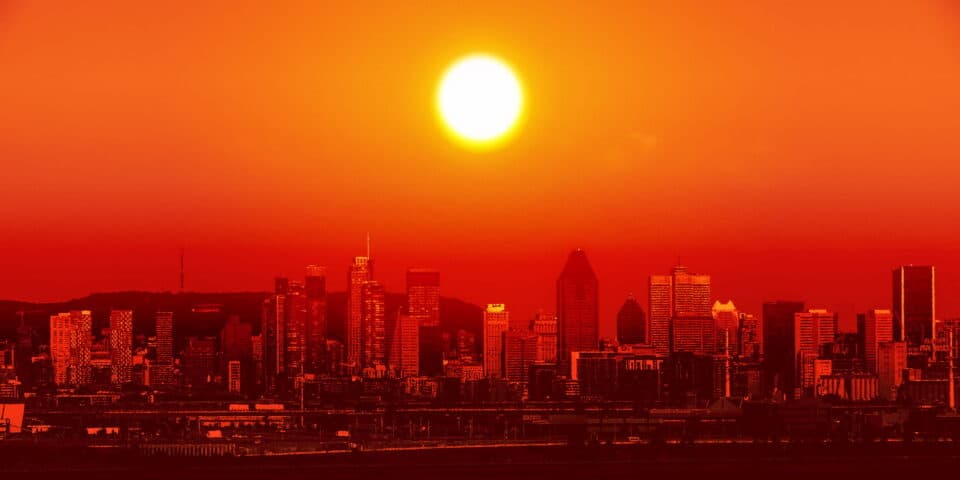
Then, reading a Washington Post article on July 4, 2026, I had the strange feeling that I was reading science fiction, a milder version of the opening pages of Ministry for the Future. On the 250th anniversary of American independence, the celebrations meant to honor our freedom were being shut down, not by any government or enemy, but by the heat. In Washington, DC, organizers canceled the Independence Day Parade outright as temperatures climbed past 100 degrees. Philadelphia also scrapped its parade, expected to be among the nation’s largest. Town after town followed suit.
We are fond of talking about American freedom in grand, abstract terms—liberty, self-determination, the pursuit of happiness. But freedom also lives in the ordinary, including the freedom to watch your child march in a parade. This year, the heat took that away for many people. The intensity of this heat and humidity would have been virtually impossible without climate change. This was not bad luck. This is the consequence of choices we have made.
In the weeks since, more extreme versions of this story have unfolded elsewhere, including wildfires sweeping across southwestern France and central Spain, fed by repeated heat waves that had left the landscape dangerously dry. Together, the two countries have seen hundreds of thousands of acres burn and hundreds of thousands of people forced from their homes. There have already been approximately 10,000 more wildfires in the U.S. so far this year than during the same period in 2016—an increase of 28%.
That the line between Robinson’s fiction and our headlines has blurred should unsettle us. And what we experienced this Independence Day could be close to the best-case version of many summers to come, not the worst. This is not an anomaly; it is a preview.
So what do we do? We hold two truths at once, and we act on both.
First, adaptation. We cannot wish away the warming already locked into the system, so we must adapt to it. Adaptation is not surrender. It is the work of protecting lives and livelihoods, and the freedoms we still have.
But adaptation alone is a losing game, because there is a limit to how much we can adapt. This is why mitigation remains essential. Every ton of carbon we keep out of the atmosphere is a future parade that still happens, a future home that doesn’t burn, a future summer our grandchildren can spend outdoors. Bringing emissions down is the only way to keep the preview from becoming the feature.
The freedoms we take for granted are already being curtailed by climate change.
The most patriotic thing we can do now is refusing complacency, adapting to the heat that is here, and fighting to reduce the heat that is coming.
At Woodwell, that has always been our goal—to apply our rigorous scientific research in pursuit of impactful and scalable solutions. As always, thank you for your ongoing support.
Onward,