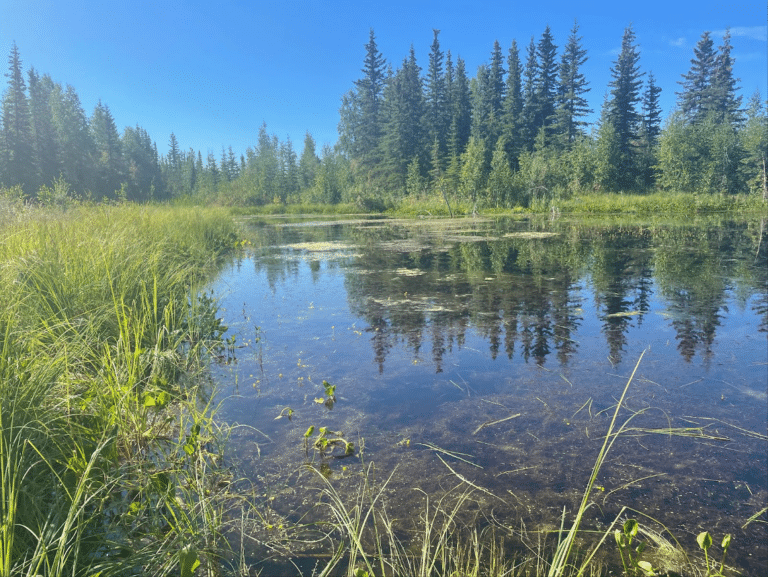

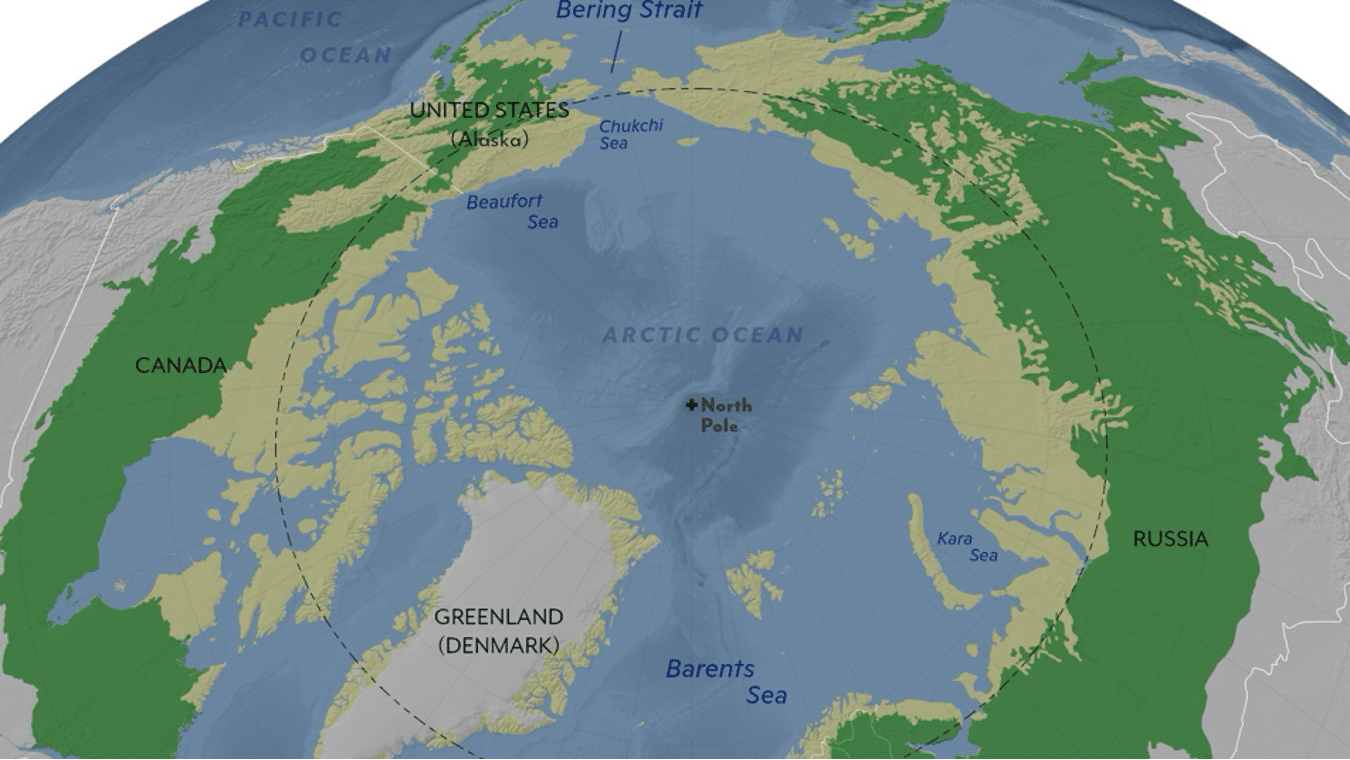
The Arctic-boreal region is undergoing more pronounced and rapid changes than any other area on Earth.
Wetlands are shifting, permafrost is thawing, wildfire frequency is increasing, and vegetation patterns are changing. These transformations impact many processes which regulate carbon cycling within the Earth’s systems.
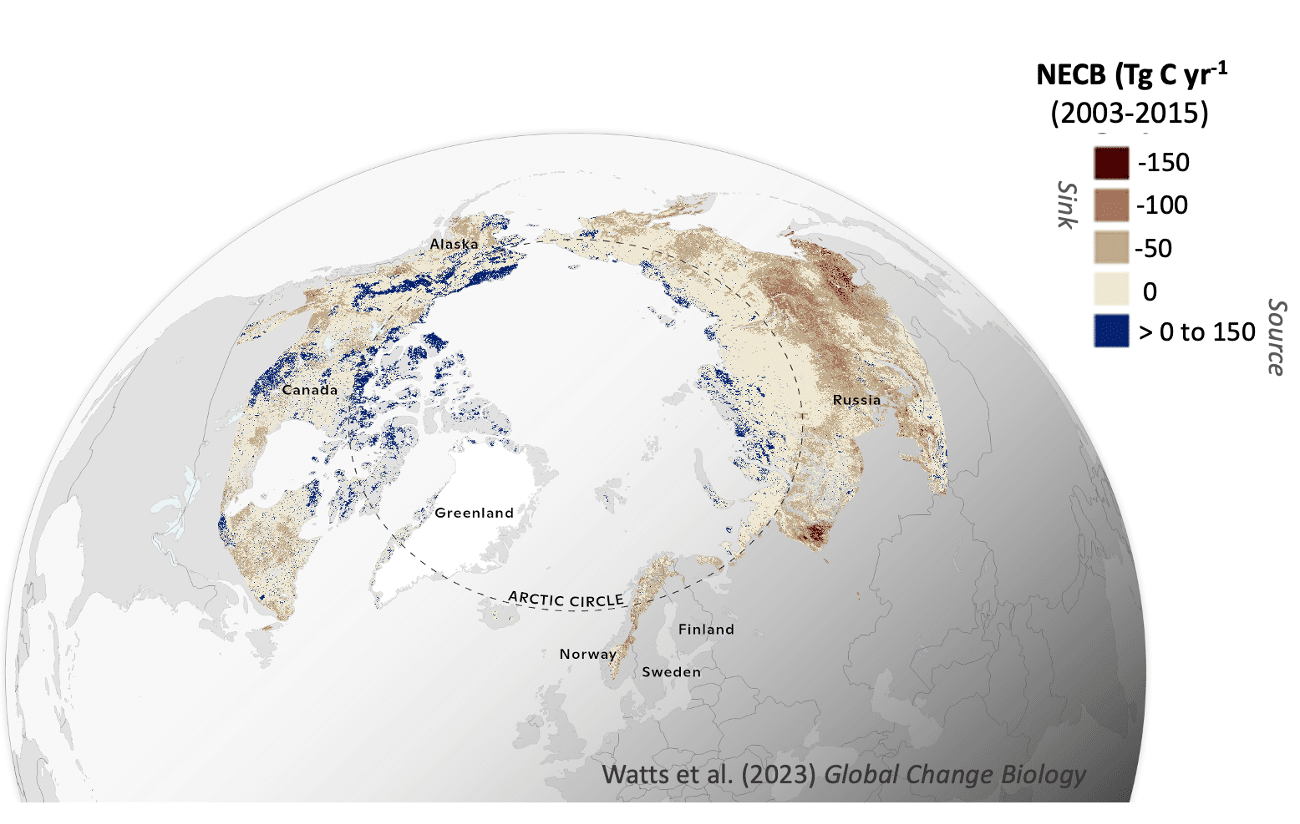
Considerable effort and ingenuity have been dedicated to understanding the Arctic carbon cycle, yet substantial uncertainty remains regarding how the high latitudes will ultimately influence our changing climate. Many processes—such as changes in albedo (how much energy from the sun is reflected, instead of absorbed, by a material), plant carbon uptake, ecosystem greenhouse gas (GHG) emissions, and fire emissions—must be evaluated simultaneously. Some of these processes are likely to contribute to warming, while others may help mitigate it.
Our Work
Most previous studies have focused on determining greenhouse gas emissions in the Northern tundra-boreal region, without fully quantifying their impact on radiative forcing—a measure of the changes in the energy balance of Earth’s atmosphere. This project aims to take the next step by more deeply investigating the perturbation to Earth’s energy balance caused by terrestrial and aquatic greenhouse gas emissions, while also considering fire impacts and albedo.